
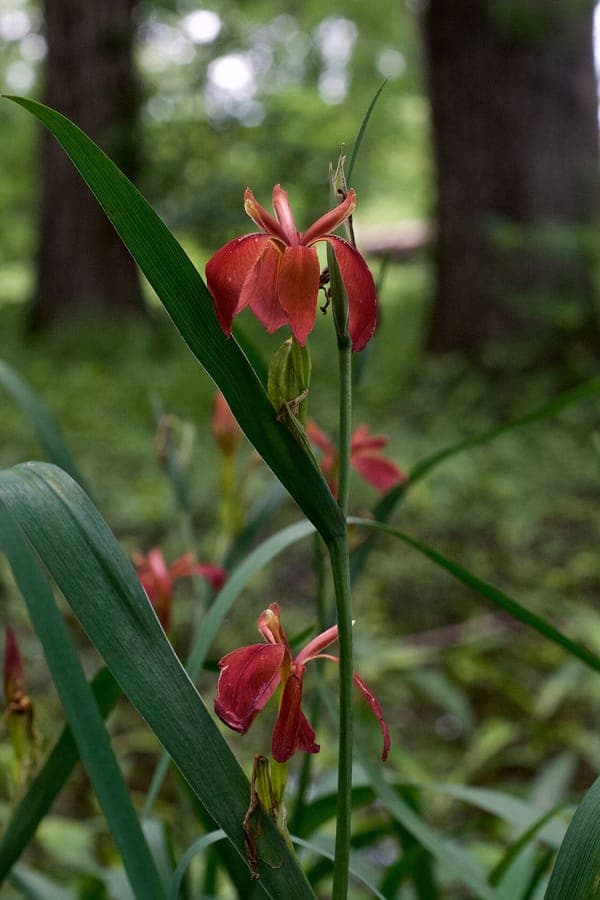
Eric Hunt / CC BY-SA 4.0, via Wikimedia Commons
Iris fulva: complete guide
Iris fulva
¿Quieres ver Iris fulva: complete guide en tu jardín?
1 minuto, sin tarjeta de crédito
Overview
Iris fulva, commonly known as copper iris or red iris, is a relatively underappreciated iris species native to the southeastern United States. This plant grows naturally in swamps, marshland, and along water courses in states like Louisiana, Mississippi, and Arkansas. The copper iris is a true water plant that distinctly prefers wet, acidic soil conditions.
First described in 1812, this species has since become a treasured find for gardeners seeking something different from standard beardless irises. With its characteristic rust-brown to copper-red flowers, this iris adds a warm, exotic dimension to gardens featuring water or wetland elements.
Appearance and bloom
The copper iris grows 50 to 75 centimeters tall with grass-like, upright leaves forming long strands. The flowers are the true showpiece: they display a characteristic rusty, copper-red to brown color that's uniquely striking for irises. Each flower consists of three upright petals (standards) and three drooping petals (falls), typical of the Iris genus.
The blooming period occurs between April and June, depending on your location. Flowers appear in clusters with multiple blooms per stem, providing a full, impressive flowering period. After flowering, seed pods develop into interesting structural elements visible through late autumn.
Ideal location
The copper iris is a plant for wet to very wet positions. Ideally place it near water, such as at pond edges, in wetland beds, or in garden depressions where water collects after heavy rainfall. This iris can tolerate brief periods of inundation, though prolonged submersion is harmful.
Like other water plants, this iris requires full sun to part shade for optimal growth. Provide at least 5 to 6 hours of direct sunlight daily for maximum flowering. In full shade the plant will grow but flowering may be limited.
Soil
The most important soil characteristic is moisture retention. The copper iris thrives best in acidic to neutral, organically rich soils. Unlike many garden plants, this iris has no drainage requirements and accepts heavy loam or clay soils readily.
When planting, incorporate coarse organic material such as peat, compost, or leaf mold. This improves water retention and nutrition. For container growing, use a mix of potting soil and acid-loving plant soil (e.g., 50% potting soil, 50% peat moss or leaf mold). Avoid standard garden potting soil, which typically drains too quickly.
Watering
This isn't really a question for this iris: it wants constant moisture. During seasons with normal rainfall you typically don't need to add extra water. During dry periods, especially in summer, water regularly so the soil doesn't dry out. Ideally keep the top layer slightly moist, never completely dry.
It's nearly impossible to overwater this plant. It's made for wet conditions. If growing in containers, check more regularly since pots dry faster than planted beds.
Diseño gratis
¿Quieres ver Iris fulva: complete guide en tu jardín? Crea un diseño gratis ahora.
Maintenance
The copper iris is extremely low-maintenance. During active growth there's little else needed beyond monitoring for unwanted growth. Remove dead or damaged leaves to keep the plant tidy. After flowering you can remove spent flower stems, though this isn't strictly necessary.
Every 3 to 4 years you can divide the plant if it becomes too large. Do this in autumn after growth slows. Carefully dig the rhizome, divide it into sections with at least 2 to 3 young shoots each, and replant at the same depth in moist soil.
Maintenance calendar
Spring: From March to April new shoots begin emerging. If the plant left significant dead material last season, remove it. Plant new additions during this period.
Summer: Provide regular watering and monitor for unwanted growth. Enjoy blooming from April to June. Remove spent flowers if desired.
Autumn: From September to October the above-ground portions die back. You can remove this material or leave it as winter protection. This is also the right time to divide plants.
Winter: The plant rests underground. In very cold climates (below zone 6) add extra mulch for protection.
Winter hardiness
The copper iris is extremely cold-hardy. In its natural habitats the species easily survives temperatures to -10 degrees Celsius. In most of Western and Central Europe this iris is fully hardy. In very cold regions (deep inland, high altitude) add several centimeters of mulch around the planting area in November through December for extra protection.
Companion planting
The copper iris combines well with other water plants and wetland species. When growing it alongside other iris species in wetland conditions, choose especially other water plants such as:
- Flowering rush (Butomus umbellatus)
- Bogbean varieties
- Marsh spiraea (Filipendula)
- Water lily (Nymphaea) in the water column behind
- Japanese sweet flag (Acorus gramineus)
In sunnier wetland situations combine it with:
- Acute sedge (Carex acuta)
- Spiky globe thistle (Echinops ritro)
- Reedgrass varieties
Closing
The copper iris is an underappreciated jewel for gardens with wet conditions. With its unique rust-brown flowers, minimal maintenance needs, and extreme cold-hardiness, it's perfect for those wanting something special in their garden. At your local garden center you may find water iris varieties, though iris fulva specifically may require more specialized searching. Through gardenworld.app you can view more pictures of water plants in action. With proper care you'll enjoy this marsh beauty in your own garden for many years!
As an extra benefit: it's a valuable nectar source and useful for local insects. If you're pursuing an ecological garden, this is an ideal choice. Through gardenworld.app find more water plants that can grow harmoniously together.
¿Quieres ver Iris fulva: complete guide en tu jardín? Crea un diseño gratis ahora.
Sube una foto, elige un estilo y obtén un diseño fotorrealista con lista de plantas en menos de un minuto.
Más de 10.000 jardines diseñados
Sin tarjeta de crédito


Plantas similares
Iris tingitana: complete guide
Iris tingitana
Iris tingitana, the Morocco iris, is the bulb species behind the Dutch iris: early blue-violet blooms that need a sunny, well-drained position.
Iris hookeri: complete guide
Iris hookeri
Hooker's Iris is a compact North American native plant with blue flowers. Low-growing and moisture-loving water plant.
Siskiyou iris: complete guide
Iris bracteata
Complete guide to Iris bracteata, the Siskiyou iris: location, soil, bloom cycle, watering, pruning and companion plants for this rare Pacific Coast iris.