
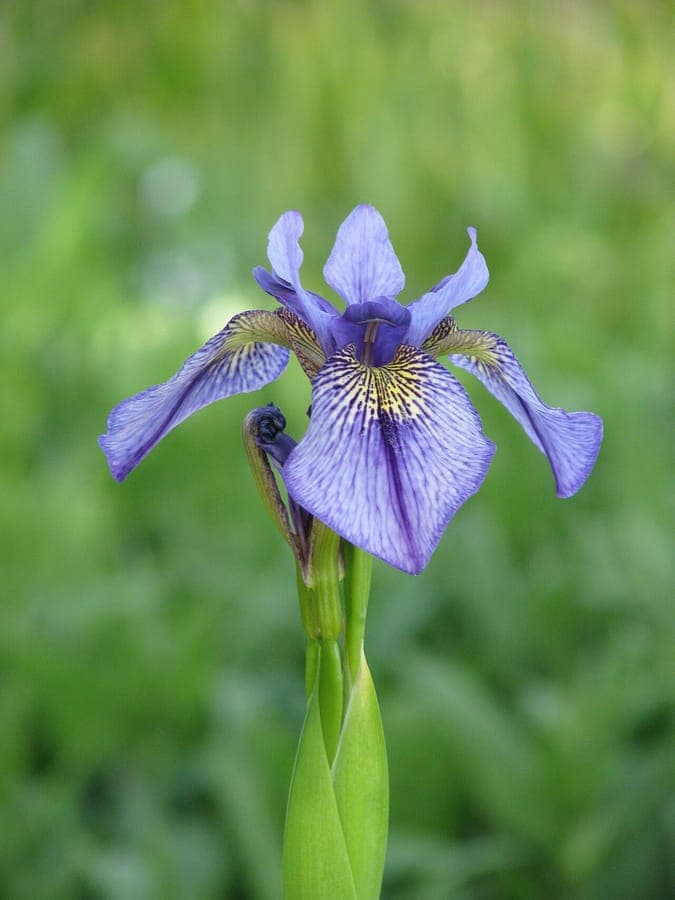
peganum from Henfield, England / CC BY-SA 2.0, via Wikimedia Commons
Iris delavayi: complete guide
Iris delavayi
¿Quieres ver Iris delavayi: complete guide en tu jardín?
1 minuto, sin tarjeta de crédito
Overview
Iris delavayi, also known as long-scape iris or Delavay iris, is an exotic alpine flower from the mountainous regions of Tibet and south-central China. This elegant perennial is celebrated for its striking, long-stemmed flowers featuring purplish-blue tepals with yellow markings. The plant is named after Père Delavay, a French Jesuit botanist who collected many plant specimens from Asia and brought them to Europe.
Unlike many iris species that are compact, low-growing plants, Iris delavayi distinguishes itself with long, slender stems reaching 40 to 80 centimeters. This gives the plant an elegant, graceful appearance. The plant grows from underground rhizomes and is a perennial that can occupy the same spot for many years.
Delavay iris is ideal for gardeners seeking something exotic and different: an alpine flower that rewards good drainage and sunny locations.
Appearance and Bloom
Iris delavayi grows as an upright, slender perennial with grass-like, blue-green leaves measuring approximately 30 to 40 centimeters long. The leaves are narrow, sword-shaped, and form attractive clumps. Unlike many other irises, the plant doesn't form dense mats but grows as distinct, elegant tufts.
The flowers are the highlight of this plant. They grow on long, slender stems that extend well above the foliage. Flowers have six tepal groups (petals): three upright 'standards' in purplish-blue to violet-blue, and three drooping 'falls' with the same color plus yellow markings or 'beard'. Flowers measure approximately 5 to 7 centimeters across. Blooming occurs in May to June.
Because the plant is low (with only 30-40 cm foliage), the long flowering stems are all the more striking and elegant.
Ideal Location
Delavay iris thrives best in a sunny location with at least 6 hours of direct daily sunlight. A south or west-facing position is ideal. The plant can tolerate light shade but will produce fewer flowers in insufficient light.
Alpine flowers appreciate cooler environments. Plant Iris delavayi in locations where summers aren't extremely hot, or where morning and afternoon shade provides some relief. In very warm regions, autumn re-blooming can occur if conditions favor it.
Ensure good air circulation to prevent fungal diseases.
Soil
Delavay iris is an alpine flower requiring excellent drainage. It thrives best in sandy, well-draining soil with substantial amounts of sand, gravel, and organic material. An ideal mix consists of garden soil (40%), sand or gravel (40%), and compost or leaf mold (20%).
Optimal pH is neutral to slightly acidic (6.0 to 7.0). Heavy clay soils that retain water are deadly for this plant. If you have heavy clay, dig deep and significantly improve the soil with sand and minerals, or grow in raised beds.
Good drainage is critical: waterlogging almost certainly leads to rhizome rot.
Diseño gratis
¿Quieres ver Iris delavayi: complete guide en tu jardín? Crea un diseño gratis ahora.
Planting Location and Preparation
Plant rhizomes in autumn (September-October) or early spring (March-April). Dig holes at least 20 centimeters deep. Place a handful of sandy mixture at the bottom of the hole, position the rhizome horizontally on this bed (not vertically), and fill carefully.
Delavay iris appears stronger and blooms better when grouped (3-5 rhizomes close together), so consider clusters rather than scattered plantings.
Watering
After initial planting, water moderately until the plant is well-established. Once established, Iris delavayi is quite drought-tolerant. Water only if very dry.
During blooming and growth in spring-summer, water regularly but not heavily. Ensure water drains well and rhizomes never sit in standing water.
In autumn, as growth declines, water minimally. In frost zones, water can almost cease in winter.
Feeding
Delavay iris is not very nutrient-hungry. Plant in nutritious soil, and feeding is usually unnecessary. In poor soils, you can apply a light balanced fertilizer once per year (in spring), but avoid nitrogen-rich formulas that promote leaf growth at the expense of flowers.
Support and Pruning
Long stems may require support in windy locations. Use discreet staking or bamboo stakes as needed.
After blooming, cut off flower heads, but allow foliage to grow until it naturally withers (usually August-September). This allows the plant to store energy for next season. Carefully remove dead foliage in autumn.
Maintenance Calendar
March-April: Spring growth; regular water; prepare supports May-June: Blooming period; water moderately July-August: Foliage gradually dies; minimal water September: Plant rhizomes for next season October: Winter preparation November-February: Winter rest; minimal care
Winter Hardiness
Delavay iris is reasonably winter-hardy. It thrives in USDA zones 5-9 (tolerates temperatures down to -25°C), though it performs best in zones 6-8. In very cold areas (zone 4 and colder), plant in raised beds for better winter drainage.
In very warm, humid regions where root rot is a problem, you can grow rhizomes in pots and overwinter indoors, though this is not ideal.
Propagation
Delavay iris can easily be propagated by dividing rhizomes. After blooming (August-September), carefully dig up and divide rhizomes so each piece has several growing eyes. Replant immediately in carefully prepared soil.
Seed: seed is slow to germinate (can take 6+ months) and seedlings don't bloom for 3-4 years, so division is preferred.
Companion Plants
Delavay iris combines beautifully with:
- Saxifrage (rock plants) for contrast
- Small rock garden companions
- Mountain alpines like Draba
- Low gentians
- Hellebore for early spring color
Closing
Iris delavayi is a jewel for gardeners seeking something elegant and different. With its long graceful stems, purple flowers, and alpine character, it brings sophistication to any garden. Source rhizomes from specialized nurseries or online suppliers. Plant in well-draining soil and enjoy years of this Tibetan beauty. GardenWorld.app helps you find the perfect alpine plant corner. Begin growing today!
¿Quieres ver Iris delavayi: complete guide en tu jardín? Crea un diseño gratis ahora.
Sube una foto, elige un estilo y obtén un diseño fotorrealista con lista de plantas en menos de un minuto.
Más de 10.000 jardines diseñados
Sin tarjeta de crédito


Plantas similares
Iris tingitana: complete guide
Iris tingitana
Iris tingitana, the Morocco iris, is the bulb species behind the Dutch iris: early blue-violet blooms that need a sunny, well-drained position.
Iris hookeri: complete guide
Iris hookeri
Hooker's Iris is a compact North American native plant with blue flowers. Low-growing and moisture-loving water plant.
Siskiyou iris: complete guide
Iris bracteata
Complete guide to Iris bracteata, the Siskiyou iris: location, soil, bloom cycle, watering, pruning and companion plants for this rare Pacific Coast iris.