
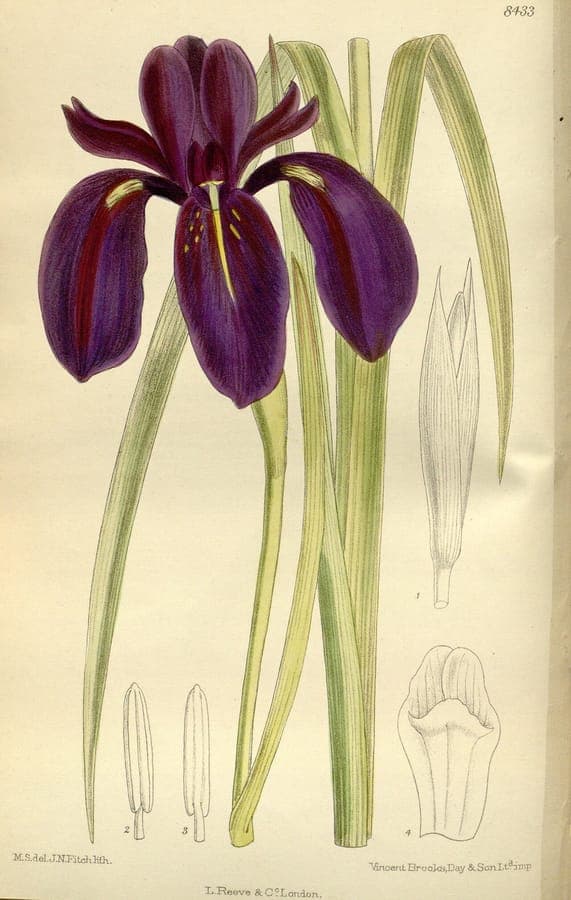
M.S. del, J.N.Fitch, lith. / Public domain, via Wikimedia Commons
Iris chrysographes: complete guide
Iris chrysographes
¿Quieres ver Iris chrysographes: complete guide en tu jardín?
1 minuto, sin tarjeta de crédito
Overview
Iris chrysographes, known as Gold-vein iris or Velvet iris, is a rare and fascinating iris from the mountainous regions of Tibet and Myanmar. This plant is named after the golden stripes or "golden veins" visible on the flowers. It is a true collector's plant for enthusiasts of exclusive and unusual irises.
Appearance and Bloom Time
Iris chrysographes grows to approximately 30 to 60 centimeters tall and produces spectacular dark red to nearly black flowers with a velvety texture. The characteristic golden lines or "chrysographes" run across the drooping sepals and add a unique decorative dimension. The flowers appear in June and July and have a fine, elegant appearance.
Ideal Location
This iris prefers cool alpine environments with good light but protection from intense midday sun. Perfect for well-drained borders. In more temperate climates, gentle morning sun may be ideal.
Soil
Iris chrysographes feels at home in well-draining, nutrient-rich soil with organic matter. The pH should be around neutral to slightly acidic. This plant is recommended for gardeners with experience as it is more sensitive than many other irises.
Diseño gratis
¿Quieres ver Iris chrysographes: complete guide en tu jardín? Crea un diseño gratis ahora.
Watering
Regular watering is essential, especially during growth and blooming. The plant prefers consistent moisture without waterlogging. After blooming, water can be gradually reduced.
Pruning
Remove faded flowers to prevent seed formation. After blooming, faded stems can be cut back. Foliage can be removed in autumn.
Maintenance Calendar
April-May: Active growth, foliage development. June-July: Blooming period, full bloom expected. August-September: Bloom ends, plant weakens. October-March: Rest, minimal water.
Winter Hardiness
Iris chrysographes is hardy in zones where temperatures don't drop below -10 degrees Celsius. In very cold regions, winter protection is recommended.
Companion Plants
Suitable for combining with:
- Other Japanese and Chinese irises
- Hosta species
- Astilbe species
- Hakonechloa macra
- Acorus gramineus
Conclusion
Iris chrysographes is an exclusive choice for adventurous gardeners seeking something special. This rare alpine iris brings unique beauty to gardens. For this special plant, consult major garden centers for availability. More inspiration can be found at gardenworld.app. Further advice about this special iris at gardenworld.app.
¿Quieres ver Iris chrysographes: complete guide en tu jardín? Crea un diseño gratis ahora.
Sube una foto, elige un estilo y obtén un diseño fotorrealista con lista de plantas en menos de un minuto.
Más de 10.000 jardines diseñados
Sin tarjeta de crédito


Plantas similares
Iris tingitana: complete guide
Iris tingitana
Iris tingitana, the Morocco iris, is the bulb species behind the Dutch iris: early blue-violet blooms that need a sunny, well-drained position.
Iris hookeri: complete guide
Iris hookeri
Hooker's Iris is a compact North American native plant with blue flowers. Low-growing and moisture-loving water plant.
Siskiyou iris: complete guide
Iris bracteata
Complete guide to Iris bracteata, the Siskiyou iris: location, soil, bloom cycle, watering, pruning and companion plants for this rare Pacific Coast iris.