
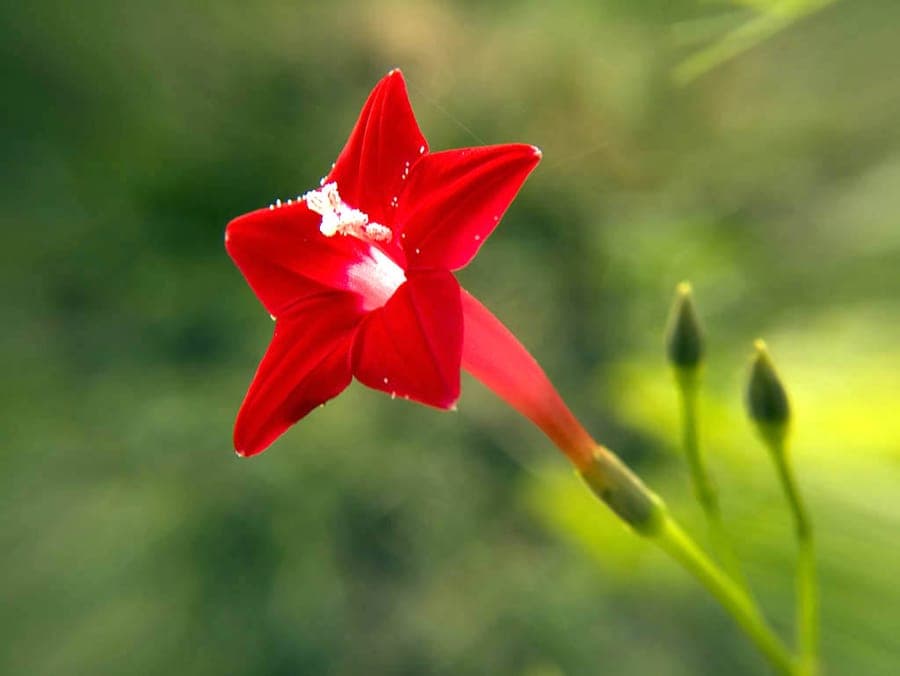
https://www.flickr.com/photos/opyadav/ / CC BY 2.0, via Wikimedia Commons
Ipomoea quamoclit: complete guide to cypress vine
Ipomoea quamoclit
¿Quieres ver Ipomoea quamoclit: complete guide to cypress vine en tu jardín?
1 minuto, sin tarjeta de crédito
Overview
Ipomoea quamoclit, commonly known as cypress vine or cardinal climber, is a stunning annual climbing plant native to Central America and Mexico. This rapid-growing vine is prized for its delicate, thread-like feathery foliage and brilliant red star-shaped flowers that appear abundantly throughout summer and fall.
Cypress vine can reach heights of 10-13 feet (3-4 meters) in a single season, making it an excellent choice for quick coverage of trellises, pergolas, and garden walls. The combination of airy, decorative foliage and prolific red blooms creates a romantic, Mediterranean atmosphere in any garden setting.
Appearance & Bloom
The foliage of cypress vine is exceptionally fine and thread-like, giving the plant an ethereal, feathery appearance. Each leaf is deeply dissected and resembles cypress needles, hence the common name.
The flowers are the true stars: bright red to scarlet, trumpet-shaped, and typically 1-1.5 inches (2.5-4 cm) long. Blooms appear continuously from June through October. Each flower is short-lived, opening in morning and closing by evening, but the prolific production ensures color throughout the season. The flowers are highly attractive to hummingbirds and other pollinators.
Ideal Location
Cypress vine thrives in full sun, requiring a minimum of 6-8 hours of direct sunlight daily. Choose a warm, sheltered spot for best results. The plant appreciates heat and performs best in warm growing conditions.
Provide sturdy support such as a trellis, pergola, or fence for the vine to climb. A location with afternoon shade in extremely hot climates can prevent flower stress.
Soil
Cypress vine is not fussy about soil type, growing well in average to poor soils. Well-draining soil is essential; poor drainage leads to root rot. Enrich planting holes with compost or organic matter, but avoid overly rich soils which promote leafy growth at the expense of flowers.
Neutral to slightly acidic soil is preferred. The plant tolerates various soil pH levels. Sandy or loamy soils work best.
Diseño gratis
¿Quieres ver Ipomoea quamoclit: complete guide to cypress vine en tu jardín? Crea un diseño gratis ahora.
Watering
Water regularly during the growing and blooming season, keeping soil consistently moist but not waterlogged. In hot weather, daily watering may be necessary. Mulch around the base to conserve moisture and regulate soil temperature.
Once established, the plant becomes somewhat drought-tolerant, but consistent moisture ensures vigorous growth and abundant flowering. Drip irrigation works well for this plant.
Pruning
Minimal pruning is necessary. Remove dead, diseased, or damaged stems as needed. Light pinching of growing tips in early summer can encourage bushier growth and more branching.
Since cypress vine is an annual, no major pruning is required. Simply cut the plant to the ground after the first frost, or allow it to die back naturally.
Maintenance Calendar
March to May: Start seeds indoors 6 weeks before last frost. Maintain warm, moist conditions. Harden off and transplant after frost danger passes.
June to September: Water regularly and fertilize every two weeks. Train vine onto support. Enjoy continuous blooming.
October: Reduce watering as temperatures cool. Flowers continue until first frost.
November onward: Plant dies after first frost. Remove and compost. Save seeds for next season if desired.
Winter Hardiness
Cypress vine is an annual and not winter-hardy in most climates. It dies at the first hard frost. Treat as a tender annual and replant each season.
In very warm zones (USDA 9-11), it may persist in sheltered locations, but replanting annually is recommended for best results.
Companion Plants
Cypress vine pairs beautifully with:
- Ipomoea purpurea (morning glory) for color contrast
- Clematis varieties for structural elegance
- Mandevilla for tropical flair
- Salvia greggii for complementary red tones
- Heliotropium for fragrance and texture
Closing
Cypress vine is an elegant, fast-growing climber that brings color and movement to garden structures from summer through fall. Its feathery foliage and stunning red flowers create an instantly romantic atmosphere.
Design your dream garden with cypress vine using gardenworld.app. Our design tools help you visualize how this beautiful plant transforms vertical spaces and creates visual interest.
Available at major garden retailers. Create your perfect garden design today with gardenworld.app.
¿Quieres ver Ipomoea quamoclit: complete guide to cypress vine en tu jardín? Crea un diseño gratis ahora.
Sube una foto, elige un estilo y obtén un diseño fotorrealista con lista de plantas en menos de un minuto.
Más de 10.000 jardines diseñados
Sin tarjeta de crédito


Plantas similares
Spreading alkaliweed: complete guide
Cressa truxillensis
Full growing guide for Cressa truxillensis, the salt-tolerant groundcover of alkaline flats: location, soil, watering, pruning and winter care.
Betony-leaved bindweed: complete guide
Convolvulus betonicifolius
Full guide to betony-leaved bindweed (Convolvulus betonicifolius): origin, appearance, ideal site, soil, watering and garden uses.
Ivyleaf morning glory: complete guide
Ipomoea hederacea
Everything about Ipomoea hederacea: location, soil and climbing care. A fast-growing annual vine with blue funnel flowers for sunny walls and pergolas.