
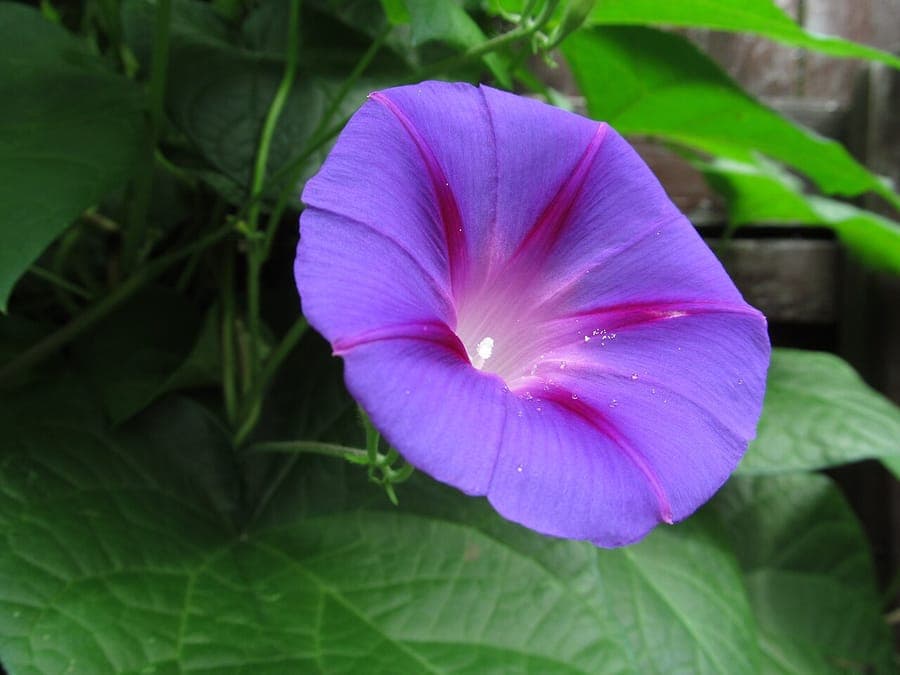
Cbaile19 / CC0, via Wikimedia Commons
Common morning-glory: complete guide
Ipomoea purpurea
¿Quieres ver Common morning-glory: complete guide en tu jardín?
1 minuto, sin tarjeta de crédito
Overview
Common morning-glory (Ipomoea purpurea) is an impressive, fast-growing annual climbing plant from the Convolvulaceae family, famous for its large, beautiful trumpet-shaped flowers in violet, purple, pink, and white. This South American climber can grow 2-3 meters in a single season and forms dense, green decoration against fences, pergolas, and walls. Flowers open in the morning and close in the afternoon, creating a daily-renewing flower display. Common morning-glory is ideal for quick screening, wall decoration, and pot culture on balconies. The plant requires minimal maintenance and blooms until October.
Appearance & bloom period
Common morning-glory grows to 2-3 meters long (sometimes 4m in favorable conditions) with ornamental, heart-shaped green leaves. The flowers are spectacular: large (3-5 cm across) trumpet-shaped flowers in violet, purple, pink to white, sometimes with striped or bicolor patterns. Depending on cultivar, flowers can be solid or with contrasting centers. Flowers open in the morning by the millions and close in the afternoon, creating continuous renewal from June through October. The plant is completely harmless and non-toxic to children/pets.
Ideal location
Common morning-glory thrives optimally in sunny locations with at least 6-8 hours of direct sunlight daily. Full sun produces the richest blooming. Partial shade is tolerable but flowering becomes thinner. The plant fits perfectly against south-facing walls, pergolas, fences, and garden structures. Ideal for quick screening. Also grows beautifully in large pots on sunny balconies. Avoid low, dry corners. Windy locations can damage vines, so shelter helps.
Soil
Common morning-glory accepts various soil types but thrives on well-drained, moderately nutrient-rich soils. Heavy clay (if not waterlogged) is acceptable. Sandy, poor soils improve with compost addition. pH range 5.5-7.5 is ideal. When planting, add moderate compost (not too much!) to loosen soil. For pot culture: standard potting soil with some sand mix. Don't over-fertilize (promotes foliage over flowers). A light mulch layer helps moisture balance.
Diseño gratis
¿Quieres ver Common morning-glory: complete guide en tu jardín? Crea un diseño gratis ahora.
Watering
Common morning-glory requires regular moisture during growth period (May-October). Water 2-3 times weekly so soil stays lightly moist without stagnation. For potted plants: check daily and water when top layer feels dry. During rainy periods minimize watering. During summer dry spells water more. Drought stress can inhibit flowering. Evening watering is better than morning. Mulch around plant base helps limit moisture loss.
Pruning
Common morning-glory requires minimal pruning. To prevent dense mass: topping in June can encourage lateral stem formation (optional). Remove damaged vines as needed. Spent flowers drop naturally (no deadheading needed). For pot culture: vigorous vines can be trimmed early to prevent container overloading. Let plant grow freely for natural effect. Work carefully - damaged vines recover slowly.
Maintenance calendar
April-May: Sow seed (direct in moist soil or in trays 3-4 weeks before planting). May: Prick out seedlings and plant permanently when frost danger passes and soil is above 15°C. June-September: Water regularly, feed once monthly (half-strength). Remove damaged parts. July-August: Topping can encourage lateral growth (optional). September: Bloom continues; keep watering. October: Plant dies after first frost. Collect seed from dried pods for next season.
Winter hardiness
Common morning-glory is not winter hardy. The plant dies at first frost (around October-November). This is an annual - don't attempt overwintering. Seed can be saved for next season: let seed pods ripen on plant, collect when brown, store dry until next spring. Pre-soak seed in warm water (24 hours) for better germination.
Companion plants
Common morning-glory combines beautifully with other summer bloomers: white lobelia, silver-leaved dusty miller, and fuchsia create lovely contrasts. For pergolas: morning-glory with clematis or nasturtium creates layered color effect. In mixed borders: position behind low plants. For pot culture: large containers with multiple seedlings give dense flower volumes. You'll find seeds at garden centers. Gardenworld.app advises on pergola designs.
Conclusion
Common morning-glory is an excellent, economical climber for those seeking rapid color and growth without fuss. Seeds are inexpensive. Plant transforms bare walls in weeks into flower-covered facades. Start today: sow in May, enjoy three months of flowering through October. Gardenworld.app helps you design pergola and wall climber gardens.
¿Quieres ver Common morning-glory: complete guide en tu jardín? Crea un diseño gratis ahora.
Sube una foto, elige un estilo y obtén un diseño fotorrealista con lista de plantas en menos de un minuto.
Más de 10.000 jardines diseñados
Sin tarjeta de crédito


Plantas similares
Spreading alkaliweed: complete guide
Cressa truxillensis
Full growing guide for Cressa truxillensis, the salt-tolerant groundcover of alkaline flats: location, soil, watering, pruning and winter care.
Betony-leaved bindweed: complete guide
Convolvulus betonicifolius
Full guide to betony-leaved bindweed (Convolvulus betonicifolius): origin, appearance, ideal site, soil, watering and garden uses.
Ivyleaf morning glory: complete guide
Ipomoea hederacea
Everything about Ipomoea hederacea: location, soil and climbing care. A fast-growing annual vine with blue funnel flowers for sunny walls and pergolas.