
Llez / CC BY-SA 3.0, via Wikimedia Commons
Sweetpotato: complete guide
Ipomoea batatas
¿Quieres ver Sweetpotato: complete guide en tu jardín?
1 minuto, sin tarjeta de crédito
Overview
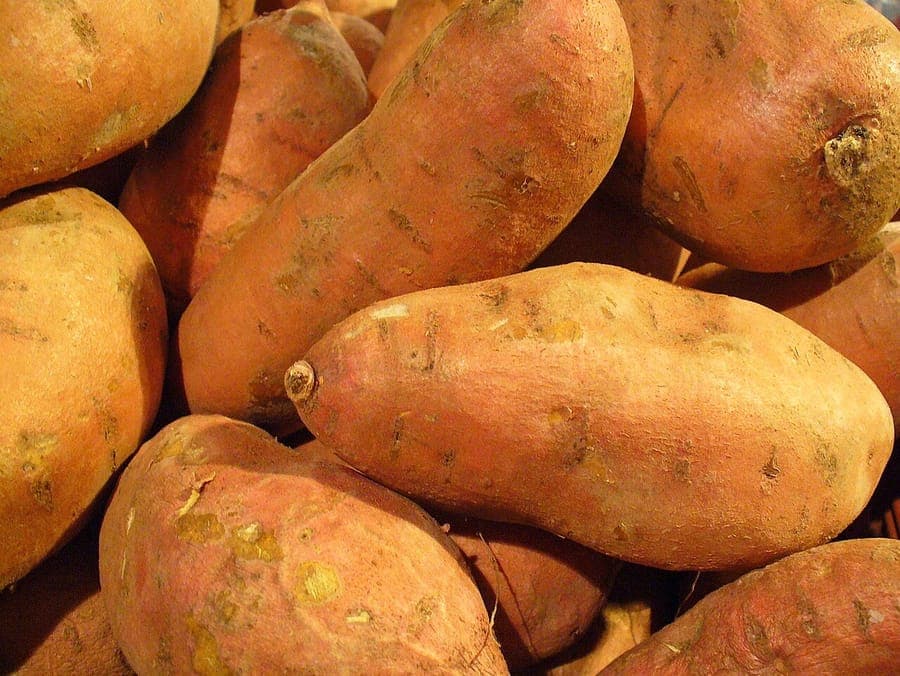
Sweetpotato (Ipomoea batatas) is a globally important food crop from the Convolvulaceae family, cultivated for its nutritious, sweet tubers. This South American climbing plant grows rapidly and forms long, ornamental foliage with heart-shaped leaves. In warm climates (Southern Europe, warm parts of Northern Europe) tubers can be grown directly in ground; in cold regions, cultivation begins indoors or with purchased seedlings. Sweetpotatoes are nutritionally rich in beta-carotene, vitamins, and fiber - an ideal vegetable crop. Also great ornamental value through purple-leaved cultivars.
Appearance & bloom period
Sweetpotato plants grow to 3-4 meters long in climbing form or as groundcover, depending on support. Leaves are large (8-15 cm), heart-shaped with swollen petioles. Color ranges from green to deep purple (purple cultivars). Flowers appear in warm summers, are small pink or purple trumpet-like (convolvulus-style). Underground, long stolons form whose thickened ends swell into sweetpotatoes. Tuber formation begins July-August and reaches harvest size October-November.
Ideal location
Sweetpotatoes thrive optimally in warm, fully sunny locations (at least 6-8 hours sun). The plant tolerates cool nighttime temperatures poorly (below 10°C growth stagnates). In warm climates: direct ground planting is possible. In temperate climates (Benelux): use plastic mulch or tunnel cloches, or plant seedlings May-June in well-warmed soil. Avoid windy locations. A south-facing wall helps concentrate heat. For pot culture: large pots (at least 20 liters) in the sunniest spot.
Soil
Sweetpotatoes thrive on loose, well-drained, moderately nutrient-rich soils. Sandy-loam soils are ideal - heavy clay often causes cracking and lower yields. pH may be 5.5-7.0. Add plenty of sand, wood chips, or compost to loosen heavy soils. Don't over-fertilize with nitrogen (promotes foliage at tuber expense): limit compost at planting, begin feeding mid-July. Drainage trenches help in wet areas prevent waterlogging.
Watering
Sweetpotatoes require regular moisture during growth period (May-October), especially July-August. Water 2-3 times weekly so soil stays lightly moist but not waterlogged. Excessive water promotes fungal diseases and tuber cracking. In wet regions: raised beds or ridges improve drainage. Drought gives lower yields. Fall watering reduction (October) can benefit harvest timing but never stop completely. Mulch (5cm) helps moisture balance.
Diseño gratis
¿Quieres ver Sweetpotato: complete guide en tu jardín? Crea un diseño gratis ahora.
Pruning
Sweetpotatoes require minimal pruning. With excessive foliage growth (especially on nitrogen-rich soils), topping can encourage lateral branching and direct energy to tuber formation. Do this best in July-August. Underground stolons grow freely without pruning needs. For pot culture: vigorous vines can be trimmed to prevent spilling over. Work carefully - stolon damage disrupts tuber formation.
Maintenance calendar
February-March: In cold regions: start pre-sprouting in warm greenhouse. April-May: Mature seedlings; prepare garden beds. May-June (North): transplant seedlings outdoors. June: Rapid plant growth; begin regular watering. July: Tuber formation starts; feeding may begin. July-September: Regular watering as tubers develop; no pruning. October: Growth slows; reduce watering. October-November: Harvest when foliage wilts. Storage: dark, cool (8-12°C), dry environment.
Winter hardiness
Sweetpotatoes are not winter hardy. Frost (-2°C or lower) destroys foliage; tubers survive brief frosts but are stressed. In frost-prone regions: harvest before first hard frost (October-November). Stored tubers in cool (8-12°C), dry conditions can keep 6 months. For next season: save several healthy tubers intact and place in warmth March-April for sprouting.
Companion plants
Sweetpotatoes grow well in mixed vegetable gardens, especially where heat concentration is possible (south wall). Underplanting with low crops (lettuce, spinach) makes efficient use. Traditional companions: corn (providing support), squash (shade-tolerant). For ornament: purple-leaved cultivars combine beautifully with silver-foliaged groundcovers. You'll find plants at specialized vegetable nurseries. Gardenworld.app advises on vegetable garden layouts for warm zones.
Conclusion
Sweetpotatoes are nutritious, delicious, and ornamental - a win-win for front garden design. Cultivation requires planning (heat!) but minimal maintenance once established. Seeds/plants cost just euros. For warmer gardens: essential. For cold climates with cloches: rewarding experiment. Gardenworld.app helps you design warm-zone vegetable gardens.
¿Quieres ver Sweetpotato: complete guide en tu jardín? Crea un diseño gratis ahora.
Sube una foto, elige un estilo y obtén un diseño fotorrealista con lista de plantas en menos de un minuto.
Más de 10.000 jardines diseñados
Sin tarjeta de crédito


Plantas similares
Spreading alkaliweed: complete guide
Cressa truxillensis
Full growing guide for Cressa truxillensis, the salt-tolerant groundcover of alkaline flats: location, soil, watering, pruning and winter care.
Betony-leaved bindweed: complete guide
Convolvulus betonicifolius
Full guide to betony-leaved bindweed (Convolvulus betonicifolius): origin, appearance, ideal site, soil, watering and garden uses.
Ivyleaf morning glory: complete guide
Ipomoea hederacea
Everything about Ipomoea hederacea: location, soil and climbing care. A fast-growing annual vine with blue funnel flowers for sunny walls and pergolas.