
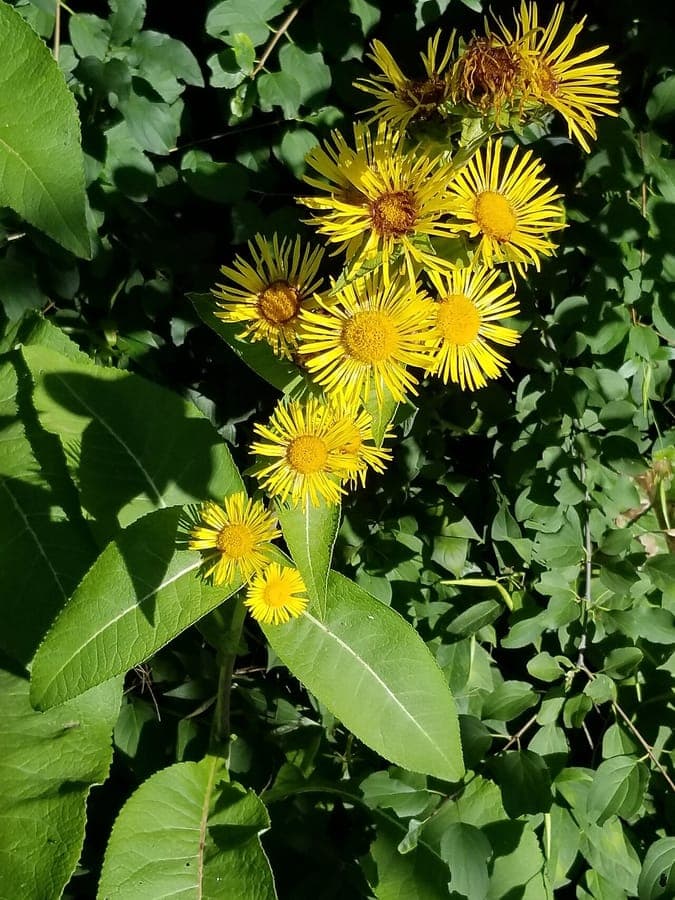
Hume Douglas / CC BY 4.0, via Wikimedia Commons
Indian Elecampane: complete guide
Inula racemosa
¿Quieres ver Indian Elecampane: complete guide en tu jardín?
1 minuto, sin tarjeta de crédito
Overview
Indian elecampane, scientifically Inula racemosa, is a hardy perennial native to the Himalayan mountains and Central Asia. This distinctive plant belongs to the Asteraceae family (daisy family) and captivates gardeners with its delicate golden-yellow flowers arranged in attractive terminal clusters. The plant's common name directly references its distinctive flower racemes, which bloom prolifically throughout summer into early autumn.
Originally adapted to high-altitude mountain conditions, Indian elecampane brings the rugged beauty of alpine regions to temperate gardens worldwide. Its drought tolerance and resilience make it an excellent choice for sustainable landscaping.
Appearance and Bloom
Indian elecampane forms an upright, bushy mound reaching 60-80 centimeters in height. The foliage is lance-shaped and green with a distinctive rough texture typical of Inula species. Stems are sturdy and hold flowers well above the foliage.
Flowers emerge from July through September, creating loose, golden-yellow clusters with fine, thread-like petals reminiscent of small chrysanthemums. Each bloom lasts several weeks, and the extended blooming period provides continuous color and nectar resources for bees and butterflies. The plant's aerial habit makes it excellent for cut flower arrangements.
Ideal Location
Indian elecampane thrives in full sun conditions with at least six hours of direct daily sunlight. Maximum blooming potential requires unobstructed light exposure. In partial shade, plants grow taller with fewer flowers and less compact form.
The plant is hardy to -20 degrees Celsius and requires no winter protection in temperate regions. Select planting locations with good winter drainage, as excessive moisture poses greater risk than frost alone.
Soil Requirements
This mountain native prefers well-draining soils with sandy, gravelly, or rocky composition. Heavy clay soils should be amended with coarse sand or gravel to ensure proper drainage. The plant is pH-tolerant, thriving in neutral to slightly acidic conditions.
Moderate humus incorporation supports growth without promoting excessive foliage at the expense of flowering. Overly rich soils encourage vegetative growth and reduce bloom production. In alpine conditions, the plant withstands nutrient-poor substrates with ease.
Diseño gratis
¿Quieres ver Indian Elecampane: complete guide en tu jardín? Crea un diseño gratis ahora.
Watering
Once established, Indian elecampane demonstrates considerable drought tolerance. During the active growing season (May to September), regular watering supports optimal growth, but allow soil to partially dry between waterings. Apply water thoroughly at the base, avoiding wet foliage which promotes fungal issues.
Winter watering is minimal. In hot, dry summers, daily watering may be necessary. The plant's deep root system accesses moisture unavailable to shallow-rooted species.
Pruning
Pruning is optional but beneficial. Deadheading spent flower clusters encourages extended blooming and maintains neat appearance. In October, cut stems back to 10-15 centimeters above ground, which prevents sprawling and encourages more compact growth the following season.
Pinching shoot tips during vigorous growth produces bushier, more branched plants with increased flower production.
Maintenance Calendar
March-April: Soil preparation, compost incorporation, planting season.
May-June: Regular watering, weed management, early flowers emerge.
July-September: Peak flowering. Adjust watering based on rainfall. Remove spent blooms.
October: Cut back to base. Remove dead foliage.
November-February: Winter dormancy. Minimal intervention required.
Winter Hardiness
Indian elecampane is highly winter-hardy, requiring no protection in temperate zones. Foliage dies back with frost, but the root system survives intact and regenerates annually stronger. The plant improves with age, forming larger clumps each season.
Excessive winter moisture poses greater threat than cold. Ensure adequate drainage and prevent water accumulation on developing shoots, which promotes rot.
Companion Plants
Indian elecampane pairs beautifully with other alpine plants including sedums, sempervivums, saxifrages, and ornamental grasses. The golden flowers contrast striking against purple sages, blue-flowering companions, and silvery foliage plants like artemisia.
In mixed borders, combine with lavender, catmint, and ornamental alliums. The long blooming period provides late-season color when many other plants fade.
Closing
Indian elecampane represents an underrated alpine perennial deserving prominent placement in ecological and sustainable gardens. With minimal maintenance, the plant provides months of golden blooms and vital nectar resources for beneficial insects. Available at specialty nurseries and garden centers. For comprehensive garden design and plant discovery, visit gardenworld.app where you'll find tools to transform outdoor spaces into thriving naturalistic landscapes. Indian elecampane proves that beauty and low-maintenance cultivation need not be mutually exclusive.
¿Quieres ver Indian Elecampane: complete guide en tu jardín? Crea un diseño gratis ahora.
Sube una foto, elige un estilo y obtén un diseño fotorrealista con lista de plantas en menos de un minuto.
Sin tarjeta de crédito


Plantas similares
Calendula stellata: complete guide
Calendula stellata
Complete guide to Calendula stellata, the star-flowered marigold from Sicily: location, soil, watering and companion planting tips.
Korean chrysanthemum: complete guide
Chrysanthemum x rubellum
Chrysanthemum x rubellum is a hardy autumn perennial with single pink to copper flowers from August to November. Care and combinations.
Helianthus divaricatus: complete guide
Helianthus divaricatus
Helianthus divaricatus is a North American woodland sunflower with yellow summer blooms, ideal for naturalistic borders and shady edges.