
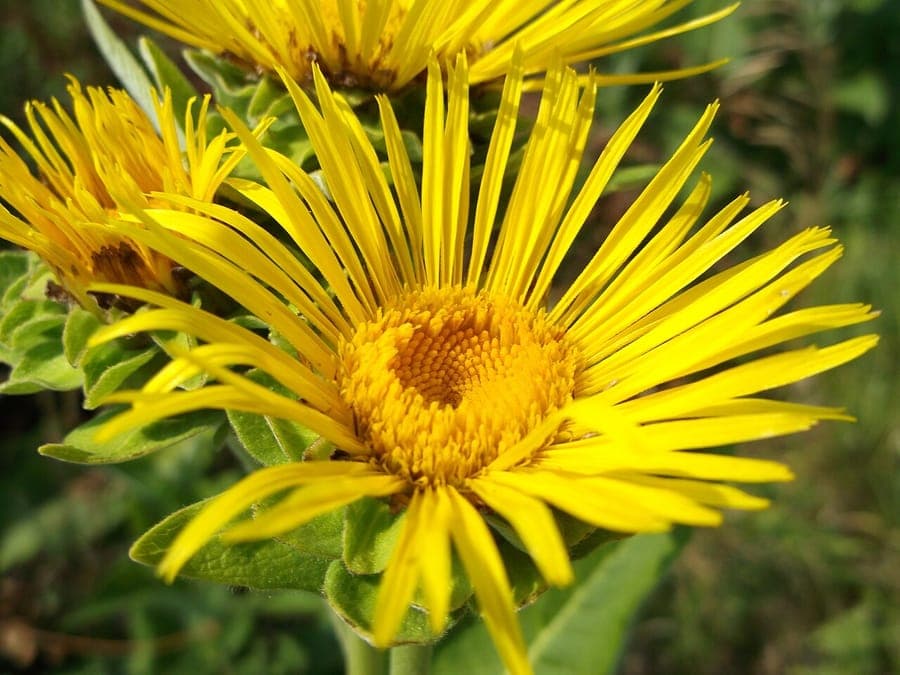
Natthager / CC BY-SA 4.0, via Wikimedia Commons
Elecampane: complete guide
Inula helenium
¿Quieres ver Elecampane: complete guide en tu jardín?
1 minuto, sin tarjeta de crédito
Overview
Elecampane (Inula helenium) is an impressive, tall-growing perennial from the Asteraceae family, renowned for its massive, golden-yellow flowers and vigorous growth. This traditional medicinal plant from Southeast Europe and Asia often reaches 1 to 2 meters tall and forms robust, ornamental clumps. Elecampane blooms prolifically from June through September and attracts swarms of butterflies and bees. The plant is completely winter hardy and maintenance-free once established. Traditionally, the root is used for medicinal tea preparation. Elecampane is ideal for natural garden settings, border plantings, and mixed perennial beds.
Appearance & bloom period
Elecampane grows to 1.2-2 meters tall and forms wide, robust rosette groups. The plant bears large, rough, elliptical leaves (up to 40 cm long) with prominent veining. The flowers are brilliant yellow and large (4-6 cm across), with many fine ray florets surrounding yellow disk florets - classic Asteraceae form. Flowers appear on stem tips and lateral stems from June through September. The entire plant is aromatic, especially the leaves. Seed heads form decorative, brown spheres in fall.
Ideal location
Elecampane thrives optimally on full sun locations, though partial shade is also tolerable. Sunny spots produce the richest blooms and strongest growth. The plant fits well in the background of mixed borders, along property lines, and in natural gardens. Sheltered locations (against walls, hedges) give best results. Wind-exposed tall specimens may need staking; provide support stakes here. In partial shade, plants become more slender and less floriferous.
Soil
Elecampane accepts various soil types but thrives on moderately moist, well-drained soils. Heavy clay is acceptable if not waterlogged. Sandy soils should be well-enriched with organic matter. pH range 5.5 to 7.5 is ideal. When planting, add generous compost or well-ripened manure to improve soil structure. For long-term growth: a mulch layer (5-7 cm) around the plant base aids moisture retention and weed suppression.
Watering
Once established, elecampane is fairly drought-tolerant, especially in well-prepared soils with organic matter. However, regular moisture during growth period (May-August) promotes continuous growth and blooming. During dry summers water 2-3 times weekly to keep soil lightly moist. Young plants (first year) require more water than established plants. Mulching minimizes water loss. Fall and winter: moisture levels may decrease; preventing winter stagnation matters more than watering.
Diseño gratis
¿Quieres ver Elecampane: complete guide en tu jardín? Crea un diseño gratis ahora.
Pruning
Elecampane requires annual spring pruning. In March-April, cut back all dead and damaged stem sections to about 10cm above ground. This stimulates vigorous, healthy new growth. Spent flower stems can be removed after blooming but this isn't strictly necessary. Fall-dried flower heads can remain for decoration through winter, then removed. This supports bird feeding and naturalness. Avoid heavy pruning after frosts - wait until April for safe pruning work.
Maintenance calendar
March-April: Cut back previous year's stems to 10cm height. Add compost around plant. May: Young shoot growth appears; water regularly. June: First flowers; feeding may start (once monthly, half-strength natural fertilizer). July-August: Deadheading can encourage lateral stem formation (optional). September: Bloom reaches peak. October: Collect seed heads for own seed harvest or leave for bird feeding. November-February: Plant rests; minimal maintenance. February: Prepare for spring pruning.
Winter hardiness
Elecampane is completely winter hardy to at least -15°C and grows without any protection in all Benelux climates. Established plants overwinter underground perfectly. Extremely late frosts (April) may damage young shoots but the plant recovers quickly. Winter-wet soils are more problematic than frost - ensure good drainage. In very wet winters, root rot can occur: adjust planting height or improve drainage to prevent this.
Companion plants
Elecampane combines beautifully with other tall perennials: Verbascum, Rudbeckia, and Echinacea form natural volume groups. In border plantings with low plants (lavender, sage, nepeta), layered effects emerge. For medicinal gardens: combine elecampane with St. John's Wort, Vervain, and other healing herbs. You'll find seed at garden centers. Gardenworld.app advises on medicinal garden designs.
Conclusion
Elecampane is an excellent, long-lived perennial for those seeking tall, ornamental, and drought-tolerant plants. Traditional medicinal value adds character. Once planted, it grows years without fuss. Seed sowing is economical. Start today: elecampane slowly transforms gray corners into golden summer splendor. Gardenworld.app helps you design wild-herb gardens.
¿Quieres ver Elecampane: complete guide en tu jardín? Crea un diseño gratis ahora.
Sube una foto, elige un estilo y obtén un diseño fotorrealista con lista de plantas en menos de un minuto.
Más de 10.000 jardines diseñados
Sin tarjeta de crédito


Plantas similares
Calendula stellata: complete guide
Calendula stellata
Complete guide to Calendula stellata, the star-flowered marigold from Sicily: location, soil, watering and companion planting tips.
Korean chrysanthemum: complete guide
Chrysanthemum x rubellum
Chrysanthemum x rubellum is a hardy autumn perennial with single pink to copper flowers from August to November. Care and combinations.
Helianthus divaricatus: complete guide
Helianthus divaricatus
Helianthus divaricatus is a North American woodland sunflower with yellow summer blooms, ideal for naturalistic borders and shady edges.