
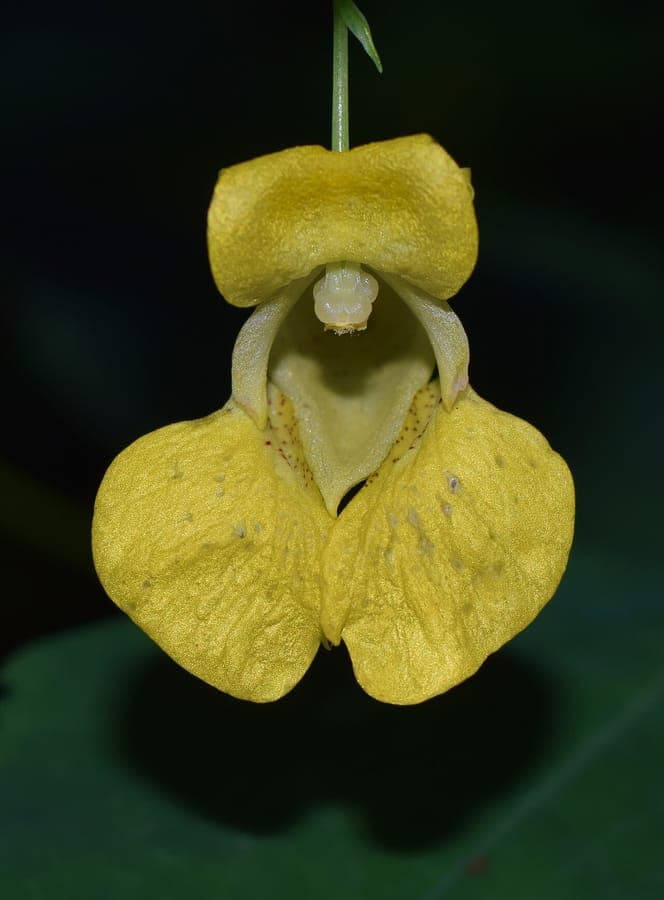
СССР / CC BY-SA 2.5 ca, via Wikimedia Commons
Pale Jewelweed: complete guide
Impatiens pallida
¿Quieres ver Pale Jewelweed: complete guide en tu jardín?
1 minuto, sin tarjeta de crédito
Overview
Pale Jewelweed (Impatiens pallida) is a delicate, moisture-loving plant that grows wild from Canada to the central United States. This plant is known by various names, including Pale Touch-Me-Not and Yellow Jewelweed. It belongs to the Balsaminaceae family, a family of plants that primarily occur in wet areas.
In its natural habitat, Pale Jewelweed grows along streams, swamps, and shaded wet places. The plant is highly valued by wildlife enthusiasts because it provides food for birds and insects.
The plant is an annual, fast-growing herb that spreads its seeds by a spring mechanism (hence the name Touch-Me-Not). For gardeners, it offers an interesting addition to shady, moist garden corners.
Appearance and Bloom
Pale Jewelweed typically reaches 30-100 centimeters in height, depending on moisture levels and soil fertility. The plant grows upright with strong, succulent green stems that are sometimes red-tinged. The leaves are mainly green, oval to lance-shaped with prominent veins and a slightly rough surface.
The flowers are the signature feature. They are soft yellow to cream-colored, with a light orange tint below, and have a characteristic shoe-like petal structure. The flowers appear abundantly along the stems and open throughout the growing season.
After pollination, the plant forms distinctive, thick seed capsules that become swollen. When ripe, these snap open with energy and scatter seeds up to several meters away.
Ideal Location
Pale Jewelweed thrives best in shaded to semi-shaded locations. Direct sun can damage the leaves, especially in hot climates. A location under deciduous trees, on the north side of a building, or in a deeply shaded corner is ideal.
Indoors, it can grow in moderate light, away from direct sun. An east-facing window or shaded south side is suitable. The plant appreciates good air circulation without drafts.
Pale Jewelweed is perfect for those difficult corners of your garden where other plants refuse to grow.
Soil
The ideal soil for Pale Jewelweed is very moisture-retentive, humus-rich soil. It grows best in a mixture of leaf mold, fine peat moss, and nutrient-rich garden soil. The pH should be around 6.5-7.5.
Drainage is important; ensure water doesn't pool around the plant, but keep the soil constantly moist. Add organic material to the soil regularly. The plant grows better with richer, more nutrient-filled soil.
Use a quality potting mix with extra peat or coconut coir for container growing.
Diseño gratis
¿Quieres ver Pale Jewelweed: complete guide en tu jardín? Crea un diseño gratis ahora.
Watering
Pale Jewelweed is very moisture-loving. Keep the soil constantly moist during the growing season. This means regular watering, especially in summer and dry weather.
The plant tolerates some waterlogging better than many others, but prolonged saturation causes root rot. In pots, water more thoroughly and frequently than in the ground.
Regularly mist the leaves with lukewarm water for extra moisture. This helps stimulate flowers and prevent diseases.
Pruning
Pale Jewelweed needs minimal pruning. Remove dead flowers and damaged stems during the growing season. You can lightly cut back the plant in spring for a more compact form.
Remove lower, grayed-out leaves to improve air flow. This helps prevent fungal diseases.
If the plant grows too tall and leggy, you can cut it back halfway through the season to encourage bushier growth.
Maintenance Calendar
April-May: Start of growing season. Begin regular watering. Plant in moisture-rich soil.
June-July: Full growth and bloom. Water regularly, daily in hot periods. Feed weekly.
August-September: Continuous blooming. Continue watering. Allow seeds to ripen if desired.
October-November: Blooming slows. Stop feeding. Collect seeds from ripe capsules.
December-February: Plant disappears. Store seeds in cool, dry place for next season.
Winter Hardiness
Pale Jewelweed is not winter hardy in temperate climates. It dies after the first frost. However, it is a plant that often self-seeds if you allow the seeds to ripen and fall.
You can collect seeds in September and October and store them for the next spring. Direct seeding in April usually gives better results than stored seeds.
Companion Plants
Pale Jewelweed grows beautifully with other shade plants such as ferns, Helleborus, and Tiarella. Other Impatiens species also form nice combinations.
Plant it at the base of deciduous trees or shrubs for optimal shading. It also works well as an underplanting in ground covers.
At gardenworld.app, you can discover this moisture-loving plant.
Conclusion
Pale Jewelweed is a beautiful plant for those difficult, dark, wet corners of your garden. With its soft yellow flowers and moisture-loving nature, it offers a unique option for landscaping in challenging conditions. Reseed it each spring and enjoy years of blooms in the shade!
¿Quieres ver Pale Jewelweed: complete guide en tu jardín? Crea un diseño gratis ahora.
Sube una foto, elige un estilo y obtén un diseño fotorrealista con lista de plantas en menos de un minuto.
Más de 10.000 jardines diseñados
Sin tarjeta de crédito


Plantas similares
Impatiens aurella: complete guide
Impatiens aurella
Pale yellow touch-me-not is a North American moisture-loving wildflower with golden blooms. Master cultivation of this delicate jewelweed in moist, shaded garden spaces.
Balfour's touch-me-not: complete guide
Impatiens balfourii
Discover Balfour's impatiens (Impatiens balfourii), a fascinating bicolor flower from the Himalayas. Growing and care tips.
Balsam: complete guide
Impatiens balsamina
Learn everything about garden balsam (Impatiens balsamina), a classic with colorful flowers. Growing and care tips.