
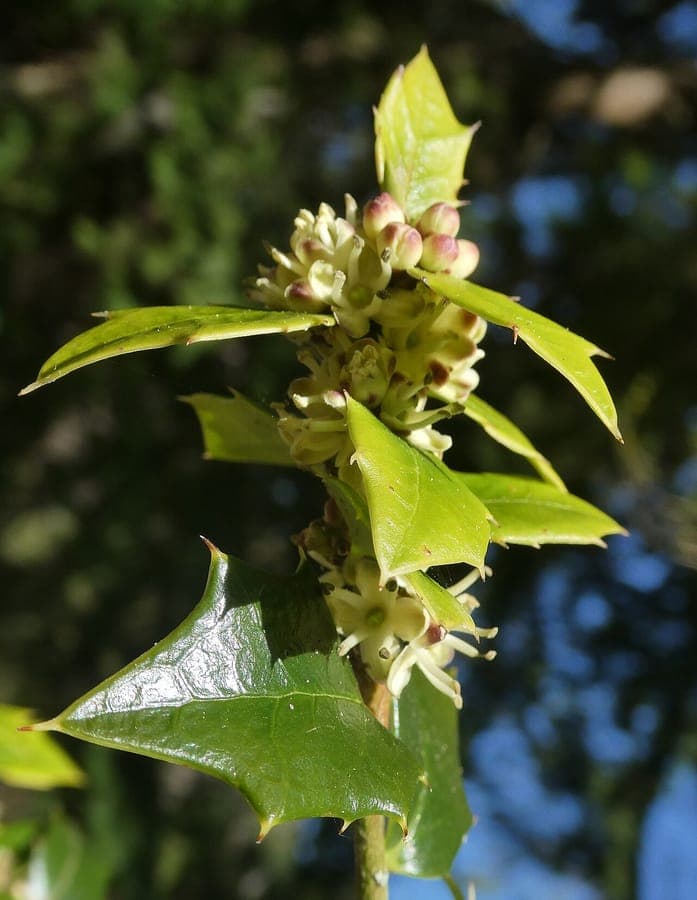
Velella / CC BY-SA 4.0, via Wikimedia Commons
Ilex pernyi: complete guide to this elegant Chinese holly
Ilex pernyi
¿Quieres ver Ilex pernyi: complete guide to this elegant Chinese holly en tu jardín?
1 minuto, sin tarjeta de crédito
Overview
Ilex pernyi, commonly known as Perny's Holly, is a fascinating evergreen shrub native to the mountain regions of Tibet, central China, and south-central China. This Chinese holly offers years of structure and winter interest in the garden. The plant was formally described in 1883 and is named after the French botanist Jean Auguste Alfred Perny.
These are robust, fine-leaved hollies ideal for gardens seeking durability and elegance. With its compact growth habit and beautiful dark green foliage, this plant creates visual interest throughout all seasons.
Appearance and Bloom
Ilex pernyi distinguishes itself through its unique leaf shapes and growth pattern. The leaves are remarkably diamond-shaped to lanceolate, small and firm, with a dark green gloss that persists year-round. Unlike many other holly varieties, the leaves are not as distinctly serrated, giving it a more refined appearance.
The plant is dioecious in its flowering organization, with minute white flowers appearing in spring. These modest blooms are followed by small red or orange berries on female plants, provided a male pollinator is nearby. The berries add ornamental value throughout autumn and winter months.
Ideal Location
Ilex pernyi thrives best in locations with full sun to partial shade. In warm climates, light afternoon shade can be beneficial to prevent premature wilting. The plant is highly frost-hardy and tolerates cold mountain climates exceptionally well, making it suitable for cooler regions of the Netherlands and Belgium.
Plant this holly where you can enjoy the winter structure and potential berries. Because the plant doesn't grow very tall, it fits perfectly in narrow gardens or along border lines.
Soil
This Chinese holly thrives best on well-draining soil with acidic to neutral pH. The plant is adaptable and grows in various soil types, but slower growth may occur in highly chalky soils. Ensure organically enriched soil when planting to improve moisture infiltration.
On heavy clay soils, I recommend digging a hole and adding a mixture of garden compost, peat, and sand. This improves drainage and prevents waterlogging during heavy rainfall.
Watering
Once established, Ilex pernyi is fairly drought-tolerant and requires minimal additional watering. Young plants should be regularly watered during their first growing seasons to encourage deep root development.
Water when the top 2-3 cm feels dry, especially during summer dry periods. Avoid waterlogging, which can cause leaf drop. In rainy years, natural rainfall will likely be sufficient.
Diseño gratis
¿Quieres ver Ilex pernyi: complete guide to this elegant Chinese holly en tu jardín? Crea un diseño gratis ahora.
Pruning
Ilex pernyi requires minimal maintenance in terms of pruning. The plant grows slowly and naturally compact. If you wish to encourage shaping or control size, you can prune lightly at the end of winter or beginning of spring, before new growth starts.
Remove dead or damaged branches at any time. For formal shapes (such as spheres or pyramids), you'll need to prune more frequently, but untrained plants are equally attractive.
Maintenance Calendar
January-February: Inspect for winter damage; perform light pruning. March-April: Provide supplemental water if spring drought occurs; add organic mulch. May-June: Monitor for pest pressure; spray with soapy water if needed. July-August: Water during dry periods; no fertilizing needed. September-October: Flowers and berries increase; no maintenance needed. November-December: Enjoy winter interest; prepare for frost periods.
Winter Hardiness
This holly is excellently winter-hardy and tolerates temperatures to -20degC and below. Plants from the mountain regions of Tibet show particular frost resistance. In the Netherlands and Belgium, the plant can remain outdoors without winter protection.
In very cold winters, some leaf drop may occur on the most exposed plants, but it recovers quickly in spring.
Companion Plants
Ilex pernyi combines beautifully with:
- Mahonia aquifolium for yellow flowers and textural contrast
- Fatsia japonica for dramatic leaf forms
- Helleborus niger (Christmas roses) for low white flowers
- Buxus (Boxwood) for compact green forms
- Polystichum setiferum (soft shield fern) for fine texture
This mixture creates winter interest and fragrant spring bloomers throughout the growing season.
Closing Thoughts
Ilex pernyi is an elegant choice for gardeners seeking durable, winter-hardy, and low-maintenance plants. Its compact growth, refined foliage, and frost resistance make it ideal for Dutch and Belgian gardens.
You can purchase it at major garden centers offering specialized cultivars. This beautiful Asian holly will add years of structure and winter interest to your garden design. Visit gardenworld.app for more inspiration when selecting garden plants. Discover how Ilex pernyi can strengthen your garden design and enjoy the benefits of a winter-hardy, elegant shrub throughout all seasons on gardenworld.app.
¿Quieres ver Ilex pernyi: complete guide to this elegant Chinese holly en tu jardín? Crea un diseño gratis ahora.
Sube una foto, elige un estilo y obtén un diseño fotorrealista con lista de plantas en menos de un minuto.
Más de 10.000 jardines diseñados
Sin tarjeta de crédito


Plantas similares
Ilex glabra: complete guide to American inkberry holly
Ilex glabra
Discover Ilex glabra (inkberry), a North American evergreen holly with fine foliage and black berries. Ideal for natural gardens, privacy screens, and year-round structure.
Ilex perado: complete guide to Azorean holly from Madeira
Ilex perado
Discover Ilex perado, an exotic evergreen holly from the Azores and Madeira with lovely foliage and red berries. Perfect choice for Mediterranean and coastal garden design.