
Hectonichus / CC BY-SA 3.0, via Wikimedia Commons
Garden candytuft: complete guide
Iberis umbellata
¿Quieres ver Garden candytuft: complete guide en tu jardín?
1 minuto, sin tarjeta de crédito
Overview
Garden candytuft (Iberis umbellata) is a vigorous-growing annual plant from the Brassicaceae family, known for its rich color palette and compact, ball-shaped flower clusters. This Southern European beauty delivers endless color from May through October in any front garden. With fragrant, delicate flowers and lush growth habit, this plant is ideal for flower-filled borders, containers, and balcony boxes. Garden candytuft tolerates full sun and partial shade equally well, demands minimal maintenance, and blooms prolifically throughout the entire summer season.
Appearance & bloom period
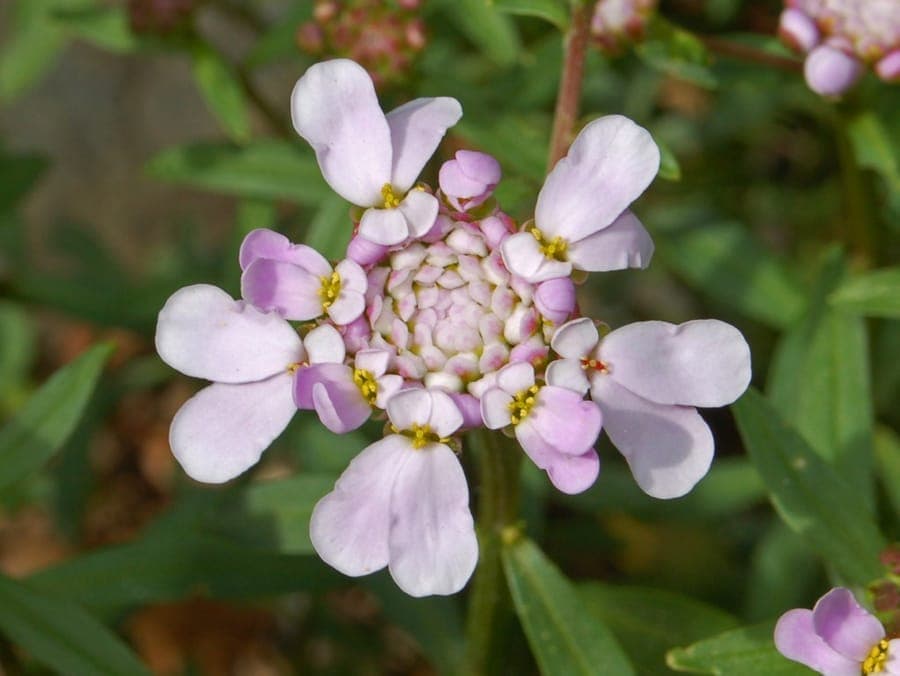
Garden candytuft grows to approximately 30-40 cm tall and forms a rounded, compact shrub. The plant bears narrow, linear green leaves that serve as a fine green foil for the spectacular flowers. The flowers grow in characteristic umbrella-shaped clusters (umbel) at the stem tips, hence the botanical name umbellata. Depending on the variety, colors range from pink, purple, red to white, with some cultivars displaying bicolor blooms. The plant flowers abundantly from May through October, especially during months with abundant sunlight. Each flower is small and six-petaled, but together they create an impressive color display. The strongly fragrant flowers attract numerous insects.
Ideal location
Garden candytuft thrives optimally in a location receiving at least six hours of direct sunlight daily. Although the plant is tolerant and grows in partial shade as well, full sun positions produce the richest blooming. Avoid low, waterless corners of the front garden. The plant grows without issue in containers on balconies and terraces, where it also handles full sunlight beautifully. In warm regions, afternoon shade offers benefits, especially in southern areas, as it prevents flowers from wilting in extreme heat. Choose a windless spot if you wish to prevent hay fever issues.
Soil
Garden candytuft is undemanding regarding soil type but thrives best on light, well-draining, moderately nutrient-rich soil. Loamy, sandy soils are ideal. Heavy clay soils can cause problems through water stagnation. The pH range should lie between 6.0 and 7.5. When planting, add some ripened compost or peat to improve soil structure and promote drainage. For potted plants, use loose potting soil (such as multipurpose potting soil with sand) that drains well. Avoid excessive nitrogen richness, which encourages foliage at the expense of flowering.
Watering
Garden candytuft is quite drought-tolerant once established, but grows better with regular moisture. During the growth period (spring through fall), water regularly so the soil stays lightly moist without stagnation. For potted plants this applies even more - check daily and water when the top centimeter feels dry. During rainy periods, you can minimize watering. In summer during dry spells, water every two to three days, depending on pot size, soil type, and air temperature. Underwater to prevent root rot. Evening watering is better than morning to prevent fungal issues. Conserve moisture in pots with a light mulch layer.
Diseño gratis
¿Quieres ver Garden candytuft: complete guide en tu jardín? Crea un diseño gratis ahora.
Pruning
Garden candytuft requires minimal pruning work. However, removing spent flower clusters significantly stimulates new blooming. Regularly pinch off wilted flowers (deadheading) and you'll have full flowering through October. Gently trim back overgrown, messy plants in late September to maintain compact forms. For potted plants, you can perform light shaping or maintenance pruning after summer. Prevention is better than cure: keep your plant compact, healthy, and fully flowering by consistently removing dead flowers. Once the plant stops blooming in early fall, many gardeners pull it out as an annual. Harvest your own seeds in fall for next summer.
Maintenance calendar
March-April: Sow seeds in trays indoors or directly outside once no more frost threatens. You can also purchase pre-grown seedlings. May: Prick out seedlings and plant them permanently when they have four true leaves. June-September: Water regularly, remove dead flowers, and feed every two weeks with dilute fertilizer (half strength). October: Gradually reduce feeding, remove wilted plant material. November: Pull out the plant after the first frost. Harvest your own seed (collect seed pods in October when they turn brown) or purchase new seed for next season.
Winter hardiness
Garden candytuft is a frost-tender annual without winter hardiness outdoors. It dies when temperatures drop below 0°C. In milder climates you might see plants self-seed, but don't rely on this. Protecting from frost doesn't really help - better to treat the plant as a seasonal annual and reseed or buy new plants yearly. Exception: in very mild regions (coastal zones) a few plants might overwinter under protection, but this is uncertain.
Companion plants
Garden candytuft combines beautifully with other compact annuals like lobelia, petunia, and bacopa in mixed borders and containers. With perennials, combine with lavender, chamomile, and silver-leaved dusty miller. For garden galleries, a border of candytuft with silver dust (Senecio jacobaea) as backdrop works wonderfully. You'll find seeds and plants at garden centers from March onward. Gardenworld.app offers inspiration for additional plant combinations.
Conclusion
Garden candytuft is a safe, reliable choice for any garden seeking color without fuss. With minimal maintenance, this classic annual brings joy for months. Seeding is economical and costs just a few euros. Start your front garden transformation today: pick a color that appeals to you, sow, and enjoy a summer-full floral display. Gardenworld.app helps you design the perfect front garden.
¿Quieres ver Garden candytuft: complete guide en tu jardín? Crea un diseño gratis ahora.
Sube una foto, elige un estilo y obtén un diseño fotorrealista con lista de plantas en menos de un minuto.
Más de 10.000 jardines diseñados
Sin tarjeta de crédito


Plantas similares
Brassica cretica: complete guide
Brassica cretica
Brassica cretica, the Cretan cabbage, grows wild on Aegean cliffs. Discover how to grow this drought-tolerant, yellow-flowered Mediterranean perennial.
Corsican cabbage: complete guide
Brassica insularis
Corsican cabbage is a rare Mediterranean rock cabbage with white flowers and blue-green leaves. Location, soil and winter protection.
Prostrate cabbage: complete guide
Brassica procumbens
Prostrate cabbage is a creeping North African cliff plant with yellow flowers. Discover location, soil type and winter protection.