
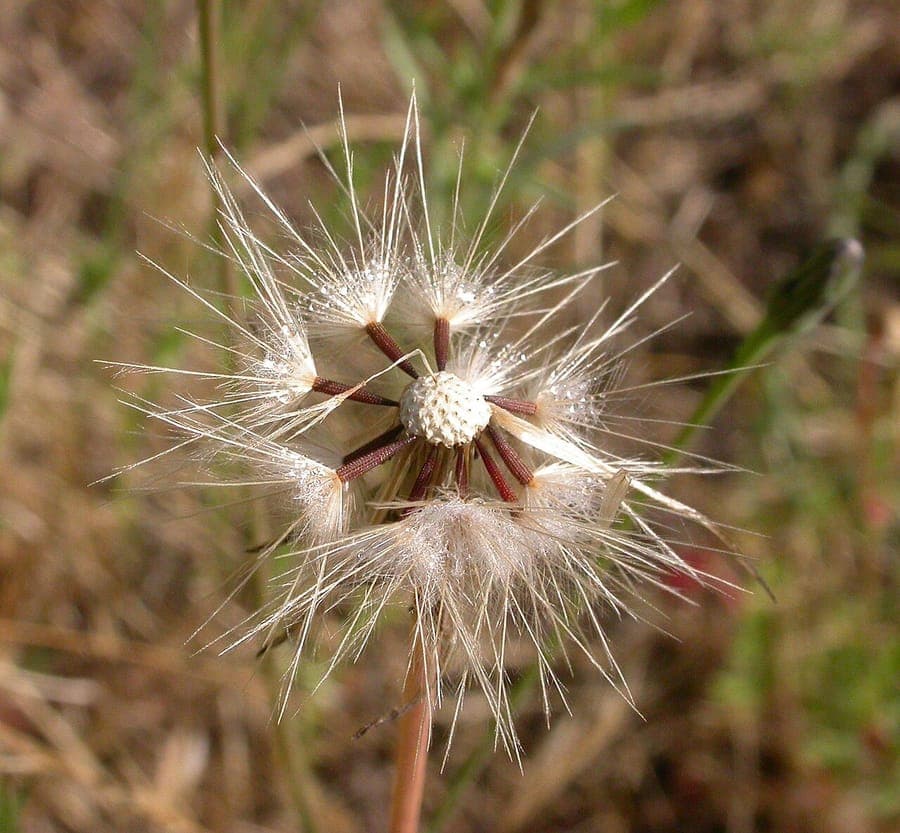
Copyright by Curtis Clark, licensed as noted / CC BY-SA 2.5, via Wikimedia Commons
Smooth cat's-ear: complete guide
Hypochaeris glabra
¿Quieres ver Smooth cat's-ear: complete guide en tu jardín?
1 minuto, sin tarjeta de crédito
Overview
Smooth cat's-ear, scientifically known as Hypochaeris glabra, represents a fascinating wildflower belonging to the Asteraceae family (composite flowers) that naturally occurs throughout Europe, Mediterranean regions, and parts of the Middle East. This delicate plant distinguishes itself through characteristic yellow flowers resembling dandelions but displaying greater refinement and elegance. While many gardeners categorize smooth cat's-ear as troublesome weed, contemporary natural garden designs increasingly appreciate this unpretentious plant. It contributes substantially to biodiversity, particularly supporting pollinators and beneficial insects, while demanding virtually no cultivation effort.
The plant thrives in sunny, dry locations with modest soil fertility, making it ideal for extensive garden areas, gravel paths, and neglected corners where other plants struggle. With gardenworld.app, you can design wildflower gardens where smooth cat's-ear functions as part of a diverse, self-sustaining plant community. The plant typically reaches 15 to 40 centimeters in height, varying according to growing conditions, forming an open structure that permits light and air penetration, ideal for understory applications.
Appearance & bloom cycle
Smooth cat's-ear grows as an unbranched or sparsely-branched plant with slender, upright stems or multiple shoots arising from a basal rosette. The leaves are linear to lance-shaped, 10 to 20 centimeters long, with uniform green coloration explaining the "smooth" designation. Flowers appear from May through August, depending on sowing time and climate. Each flower measures approximately 15 to 20 millimeters in diameter, with pure yellow petals arranged in multiple layers creating a charming button-like appearance. Flowers close in evening and reopen each morning, a characteristic behavior of many Asteraceae family members.
Following bloom, the plant develops small, lightly-haired seeds equipped with feathery dispersal structures (pappus), allowing wind distribution. These distinctive seed heads retain ornamental appeal even after flowers fade. A single plant produces hundreds of seeds, explaining its easy naturalization in gardens. Typically an annual plant, smooth cat's-ear occasionally behaves as a biennial in certain climates, depending on sowing season and local conditions.
Ideal location
Smooth cat's-ear performs optimally in sunny locations receiving minimum 6 to 8 hours direct daily sunlight. Full sun exposure produces superior flowering, though the plant tolerates light part-shade in warm climates where intense afternoon heat requires amelioration. The plant handles wind exposure excellently, thriving in wind-prone gardens. Avoid densely-shaded or dappled-shade locations, as these produce minimal or no flowering. As a natural meadow plant, it performs best in open, unobstructed positions where it doesn't compete with aggressive, dominant species.
Smooth cat's-ear works beautifully as understory planting in larger landscapes, along pathways, or within extensive living roofs and green infrastructure. For wildflower mixtures, it combines excellently with cornflower (Centaurea cyanus), common poppy (Papaver rhoeas), and musk mallow (Malva moschata).
Soil requirements
Smooth cat's-ear tolerates virtually all soil types, from sandy through clay, provided drainage remains good. The plant demonstrates remarkable indifference to soil pH, thriving across the range from acidic pH 4.5 through alkaline pH 8.0, though pH 6.0 to 7.0 proves optimal. Avoid heavy fertilization; in fact, smooth cat's-ear performs better on nutrient-poor soils. This distinguishes it from many cultivated plants requiring rich growing media. Dry soils present no obstacle; the plant demonstrates excellent drought tolerance and excels on sandy, well-draining substrates.
Add organic matter only if soil is severely degraded. For wildflower seeding areas, incorporate 2 to 3 centimeters of sand and modest compost to improve structure without excessively elevating nutrient levels. Avoiding fertilization rather than applying it represents the correct approach for this species.
Diseño gratis
¿Quieres ver Smooth cat's-ear: complete guide en tu jardín? Crea un diseño gratis ahora.
Watering
Smooth cat's-ear is a drought-tolerant plant requiring minimal watering once established. Newly-sown plants and young seedlings require consistent moisture for the first 3 to 4 weeks following sowing or transplanting, after which the plant gradually requires less water. For mature plants, no supplemental watering is necessary except during extreme drought conditions. In hot, arid regions, occasional summer irrigation during peak heat stress (July-August) when plants show wilting may extend flowering, but overall, the plant operates with exceptional water efficiency.
Water in morning hours rather than evening to minimize foliar diseases. Over-watering proves more detrimental than under-watering for this drought-preferring species; ensure soil dries between waterings.
Pruning
Smooth cat's-ear requires no pruning in conventional terms. Spent flowers may be removed for tidier appearance, but retain some blooms for seed production if you wish plants to self-propagate in subsequent years. If concerned about excessive seed dispersal, remove seed heads before maturation, typically occurring in September. For wildflower mixtures and naturalization projects, simply allow the plant to complete its natural lifecycle, including seed production.
Maintenance calendar
March-April: Sow seeds directly into prepared ground as soon as soil becomes workable. Seeds may be pre-chilled by refrigerating for two weeks before sowing to improve germination rates. Keep seeded areas moderately moist until germination occurs (typically 7 to 14 days).
May: Young seedlings emerge and establish growth. Water regularly if drought occurs. Remove competing weeds around young plants.
June-July: Flowering commences. Plants reach full size. Provide regular watering if extreme heat occurs. Enjoy initial flower displays.
August-September: Peak flowering and seed development. Seed heads mature. Retain some seed heads for naturalization or remove them for neater appearance.
October-November: Plant naturally declines. Seeds fully ripen and disperse. Leave leaf litter in place for protection of perennial variants.
December-February: Dormancy. Plants die if annual. Bare soil provides frost protection for overwintering seeds germinating next spring.
Winter hardiness
Smooth cat's-ear is fully hardy throughout Dutch and Belgian regions. As an annual plant, individual plants don't survive winter, but seeds persist in soil, germinating next spring. Biennial cultivars (depending on sowing timing) tolerate temperatures to -15 degrees Celsius without difficulty. The plant requires no special winter protection.
Companion plants
Smooth cat's-ear integrates beautifully in wildflower mixtures with cornflowers (Centaurea cyanus), corn poppies (Papaver rhoeas), ox-eye daisy (Leucanthemum vulgare), and delphinium (Consolida regalis). In formal gardens, specify yellow-flowering plantings to complement purple-flowering plants like woodland sage (Salvia nemorosa) or dense blazing star (Liatris spicata). In Mediterranean gardens, smooth cat's-ear combines well with lavender (Lavandula), cotton lavender (Santolina), and other heat-loving plants. On gardenworld.app, design complete wildflower gardens where smooth cat's-ear functions as part of diverse ecosystem plantings.
Closing
Smooth cat's-ear represents an effortless, rewarding wildflower offering substantial biodiversity value while minimizing maintenance expectations. Perfect for natural gardens, wildflower mixtures, and extensive landscape applications. The plant asks little while giving abundantly: simplicity, cheerful yellow color, and minimal care. Sow seeds in full sun on well-draining soil and allow natural growth processes to unfold. Visit gardenworld.app for comprehensive guidance on designing low-maintenance wildflower gardens.
¿Quieres ver Smooth cat's-ear: complete guide en tu jardín? Crea un diseño gratis ahora.
Sube una foto, elige un estilo y obtén un diseño fotorrealista con lista de plantas en menos de un minuto.
Más de 10.000 jardines diseñados
Sin tarjeta de crédito


Plantas similares
Calendula stellata: complete guide
Calendula stellata
Complete guide to Calendula stellata, the star-flowered marigold from Sicily: location, soil, watering and companion planting tips.
Korean chrysanthemum: complete guide
Chrysanthemum x rubellum
Chrysanthemum x rubellum is a hardy autumn perennial with single pink to copper flowers from August to November. Care and combinations.
Helianthus divaricatus: complete guide
Helianthus divaricatus
Helianthus divaricatus is a North American woodland sunflower with yellow summer blooms, ideal for naturalistic borders and shady edges.