
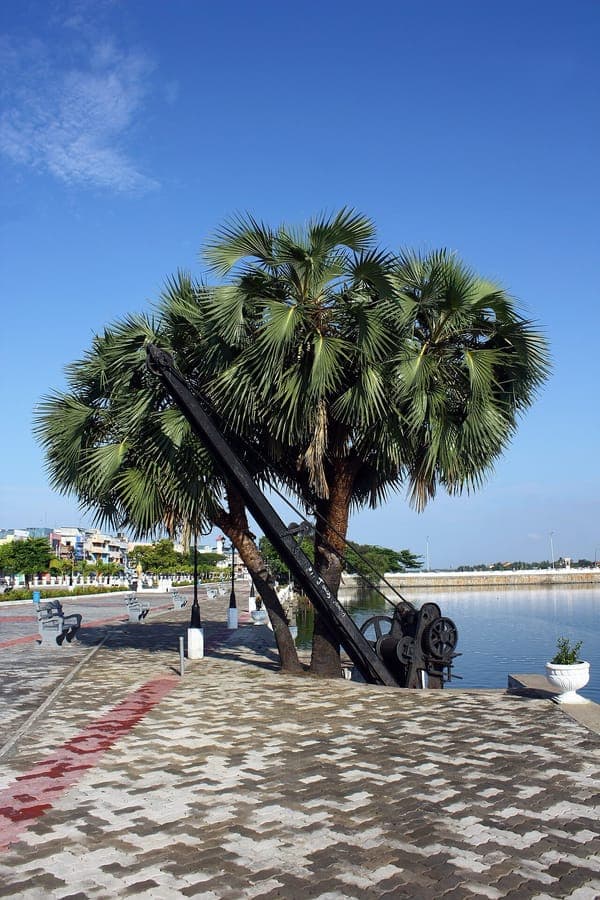
AntanO / CC BY-SA 3.0, via Wikimedia Commons
Doum Palm: complete guide
Hyphaene thebaica
¿Quieres ver Doum Palm: complete guide en tu jardín?
1 minuto, sin tarjeta de crédito
Overview
The Egyptian doum palm (Hyphaene thebaica) is a remarkable palm native to tropical Africa and the Middle East. This species is known for its unique naturally branched growth form, a characteristic rare among palms. The tree can reach impressive heights and is widely used in its native habitat for food and other purposes.
The doum palm distinguishes itself from other palms through exceptional adaptation to hot, dry climates. This makes it an interesting choice for gardeners seeking an exotic, sustainable plant. The tree produces nutritious fruits that are traditionally eaten and used in various culinary applications.
Appearance and bloom
Hyphaene thebaica grows as a medium to large palm, often reaching heights of 8 to 15 meters. The key visual feature is the natural branching of the trunk, something uncommon in most palms. This gives the tree a characteristic multi-branched silhouette.
The fronds are arranged spirally and have a fine, green appearance. The leaflets can become quite large and create attractive shade areas. In summer, small yellow flowers appear in dense clusters. These flowers have a subtle fragrance and attract insects. After pollination, round to oval fruits form, approximately 4 to 6 centimeters in diameter, changing from green to brown as they ripen.
Ideal location
The doum palm thrives best in sunny locations. Place the tree where it receives at least 6 to 8 hours of direct sunlight daily. This promotes healthy growth and fruit production.
Choose a sheltered spot where the plant is not exposed to strong winds, particularly in young years. A south or southwest-facing location is ideal for temperate climates. In tropical settings, the palm can also grow in partial shade, though full sun is preferred.
The plant can be grown both in ground and in large containers. If you live in a cooler climate, consider greenhouse protection in winter or container cultivation that can be moved indoors.
Soil
The Egyptian doum palm is not particular about soil type but thrives best in well-draining soil. Heavy clay soils should be amended with sand and organic matter.
The pH can be neutral to slightly alkaline (pH 6.5 to 8.0). The plant tolerates salt reasonably well, useful in coastal areas. For container growing, use a tropical palm-specific soil mix: at least 40% coarse bark, 30% sieved sand, and 30% peat substitute or coco fiber.
Ensure excellent drainage. Stagnant water causes root rot.
Diseño gratis
¿Quieres ver Doum Palm: complete guide en tu jardín? Crea un diseño gratis ahora.
Watering
One strength of the doum palm is drought resistance once established. In the first year, however, water regularly until the root system is well-developed.
Moderate watering is best. Water deeply but infrequently. Between waterings, allow the topsoil to dry somewhat. During dry seasons, water once every 2 to 3 weeks. Once established, the palm tolerates wetter conditions better than many other palms.
During winter or in containers, reduce watering significantly.
Pruning
The doum palm requires minimal maintenance pruning. Carefully remove dead or damaged fronds. Never remove living fronds unless necessary, as this can slow growth.
If the plant is in containers and becomes too large, gentle pruning of the sides can help. However, avoid pruning the central growing tip, as this may damage the plant.
Ripe seed pods can be carefully removed.
Maintenance calendar
Fruits are produced in summer to autumn, depending on climate. Peak growth occurs from late spring to early summer.
Fertilizing: Once monthly during growing season with balanced palm fertilizer (NPK approximately 10-10-10 or similar). Reduce feeding in winter.
Pest and disease control: Check regularly for scale, whitefly, and mites. These particularly affect potted plants. Prefer biological control with soapy water or neem oil.
Winter hardiness
The doum palm is not frost-tolerant. The plant cannot endure severe winters. In temperate climates (zone 8 to 9 and warmer) it can overwinter outdoors with protection. In colder zones, container cultivation is necessary with relocation to protected areas in winter.
Minimum temperature: approximately 5 to 10 degrees Celsius. Below -5 degrees, the plant will likely die.
Companions
The doum palm grows well with:
- Other drought-tolerant palms: Phoenix dactylifera (date palm), Washingtonia robusta
- Drought-resistant shrubs: Nerium oleander (oleander), some Acacia species
- Succulents: Aloe, Agave and Opuntia species
- Garden flowers: Lantana, Salvia
For excellent plant selection, visit gardenworld.app for professional design advice and plant recommendations specific to your garden.
Combine with stone hardscape for Mediterranean or African garden aesthetics.
Closing
The Egyptian doum palm is an impressive, sustainable palm species that brings character and a sense of exotic tropical environments to a garden. With minimal maintenance, drought tolerance, and interesting branched growth, this tree deserves more attention in gardens outside purely tropical regions. Container cultivation allows gardeners in temperate climates to enjoy this unique palm.
Want more information about tropical garden design? Visit gardenworld.app for professional design advice tailored to your garden.
¿Quieres ver Doum Palm: complete guide en tu jardín? Crea un diseño gratis ahora.
Sube una foto, elige un estilo y obtén un diseño fotorrealista con lista de plantas en menos de un minuto.
Más de 10.000 jardines diseñados
Sin tarjeta de crédito


Plantas similares
Needle palm: complete guide
Rhapidophyllum hystrix
Everything about the needle palm: the world's hardiest palm, suitable for gardens in temperate climates down to USDA zone 7b.
Saw palmetto: complete guide
Serenoa repens
A complete guide to saw palmetto (Serenoa repens), the iconic fan palm from Florida and the southeastern United States, prized for its toughness.
Puerto Rican hat palm: complete guide
Sabal causiarum
Grow Puerto Rican hat palm successfully. A majestic fan palm with tropical presence suited to sheltered Mediterranean-style gardens.