
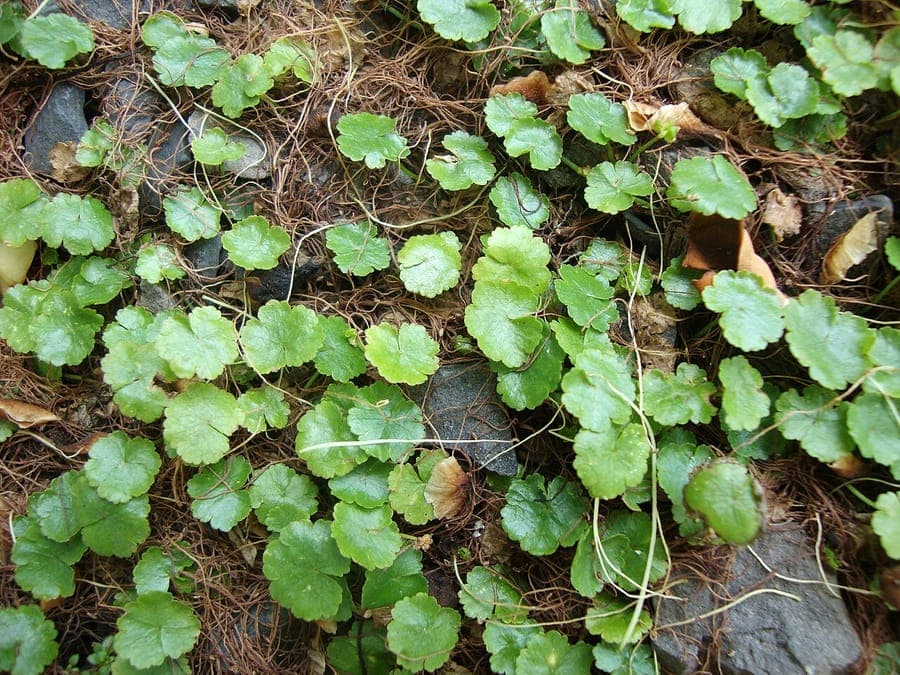
Prenn / CC BY-SA 3.0, via Wikimedia Commons
Hydrocotyle sibthorpioides: complete guide
Hydrocotyle sibthorpioides
¿Quieres ver Hydrocotyle sibthorpioides: complete guide en tu jardín?
1 minuto, sin tarjeta de crédito
Overview
Hydrocotyle sibthorpioides, better known as lawn pennywort or dwarf pennywort, is a fascinating herbaceous plant from the Araliaceae family. This tropical and subtropical plant originates from Africa and Asia and is known for its characteristic round leaves and moisture-loving growing habits. It is an ideal choice for water gardens, wetlands and moisture-loving borders.
Appearance and bloom
Hydrocotyle sibthorpioides grows as a low, spreading groundcover with small, round shield-shaped leaves. The leaves are just 1-2 cm in diameter and give the plant a delicate appearance. Small white flowers appear in summer (June to September), followed by tiny fruits. The plant reaches maximum 5-10 cm in height, making it highly suitable for aquatic settings.
Ideal location
Pennywort thrives best in half-shade to full sun, depending on moisture availability. In wet/boggy terrain it can tolerate full sun. In dry conditions, half-shade is preferable. The plant is very flexible regarding light conditions.
Soil
Hydrocotyle sibthorpioides thrives best in moisture-rich to wet soils. Heavy, clayey soils are actually beneficial. The plant tolerates even temporarily flooded areas. For container growing, use moisture-rich potting soil with extra perlite or peat moss. A pH of neutral to slightly acidic is ideal.
Diseño gratis
¿Quieres ver Hydrocotyle sibthorpioides: complete guide en tu jardín? Crea un diseño gratis ahora.
Watering
Regular watering is essential. Keep the soil consistently moist. In warm seasons, daily watering may be necessary. The plant can be planted in shallow water (up to 5 cm submerged). Overwatering is practically impossible with this plant - the more water, the better.
Pruning
Minimal pruning required. The plant grows compact and organizes itself well. Remove only dead or damaged leaves. The plant spreads quickly and can be cut back as needed to maintain compactness.
Maintenance calendar
APRIL-MAY: Growth begins as water warms. JUNE-AUGUST: Peak growth and blooming, regular watering. SEPTEMBER-OCTOBER: Growth slows, water still regularly. NOVEMBER-MARCH: Rest period in colder climates.
Winter hardiness
Hydrocotyle sibthorpioides is frost-sensitive (not winter-hardy in zones below 8-9). At temperatures below 5C the above-ground portion dies back. In warmer regions (southern France, Spain, Portugal) it can overwinter outdoors. In more northern countries, container cultivation or winter protection is needed.
Companion plants
Pennywort works well beside: Wetland plants: Iris pseudacorus, Pontederia. Water plants: Nymphaea (water lilies), Sagittaria. Other moisture-loving plants: Astilbe, Hosta.
Closing
Hydrocotyle sibthorpioides is a unique, moisture-loving groundcover. Perfect for water gardens, pond edges and boggy areas. For more water and wetland plant recommendations, visit gardenworld.app/en.
Gardenworld.app helps you with aquatic garden design and moisture-loving plant combinations.
¿Quieres ver Hydrocotyle sibthorpioides: complete guide en tu jardín? Crea un diseño gratis ahora.
Sube una foto, elige un estilo y obtén un diseño fotorrealista con lista de plantas en menos de un minuto.
Más de 10.000 jardines diseñados
Sin tarjeta de crédito


Plantas similares
American marsh pennywort: complete guide
Hydrocotyle americana
Everything about Hydrocotyle americana: location, soil, moisture and winter care. A delicate groundcover for shaded pond edges and boggy garden borders.
Devil's club: complete guide
Oplopanax horridus
Full guide to growing Oplopanax horridus: ideal site, soil, watering, and care for this dramatic spiny woodland shrub.
Water pennywort: complete guide
Hydrocotyle umbellata
Everything about Hydrocotyle umbellata: ideal location, soil, watering, winter care and pond planting. A versatile aquatic plant for garden ponds and boggy spots.