
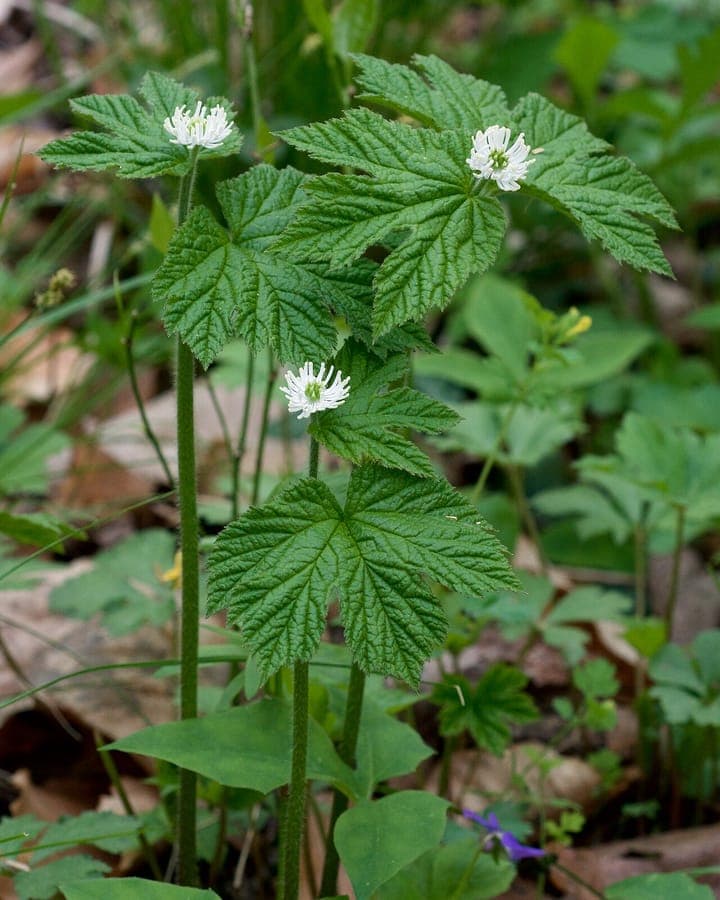
Eric Hunt / CC BY-SA 4.0, via Wikimedia Commons
Hydrastis canadensis: complete guide
Hydrastis canadensis
¿Quieres ver Hydrastis canadensis: complete guide en tu jardín?
1 minuto, sin tarjeta de crédito
Overview
Hydrastis canadensis, commonly known as goldenseal or orangeroot, is a rare perennial from the Ranunculaceae family. This beautiful woodland plant originates from the eastern and midwestern United States, from Ontario to North Carolina. The plant produces unique yellow flowers and red berries, distinguishing it from many other species. Goldenseal is special for multiple reasons: its historical significance in herbal medicine, its distinctive yellow roots, and its role in natural ecosystems.
The plant grows best in shady forest environments where it can maintain adequate moisture. For years, goldenseal has been used in traditional medicines, which has unfortunately depleted wild populations significantly. However, home cultivation is becoming increasingly popular among nature enthusiasts and gardeners who want to protect this remarkable plant.
Appearance and Bloom
Hydrastis canadensis reaches heights of 30 to 50 centimeters. The plant bears two lobed leaves per stem, each approximately 15-25 centimeters wide. The leaves have deep divisions with sharp edges, giving it interesting texture in the garden. In spring, small, inconspicuous greenish-yellow flowers appear before the leaves fully unfold. These flowers are followed by red berries that ripen in August and September.
The characteristic yellow roots of goldenseal give this plant its common name and are valuable underground. In autumn, the leaves turn golden-yellow to brown before dropping. This seasonal pattern makes goldenseal an attractive choice for celebrating seasonal changes in the garden.
Ideal Location
Goldenseal grows best in deep shade to partial shade. This plant species prefers conditions similar to its natural forest habitat. In full sun, the plant may experience stress, especially in warmer climates. Ideally, place goldenseal beneath deciduous trees or in a shaded corner of your garden.
The plant needs protection from strong wind and direct afternoon sun. A location under shrubs or against a north or east-facing wall is ideal. This protects delicate foliage and limits evaporation, helping maintain optimal moisture balance.
Soil
Goldenseal thrives best in loose, nutrient-rich forest soil with high humus content. The soil must drain well while remaining consistently moist. Sandy and pure clay soils are less suitable; incorporate compost or leaves into the soil. A pH between 6.0 and 7.0 is ideal.
For container cultivation, many gardeners use a mixture of garden soil, cocoa husk, and leafmold. This creates a light, nutrient-rich growing medium that promotes moisture retention without stagnation. Adding leafmold or compost annually is essential for maintaining soil quality.
Diseño gratis
¿Quieres ver Hydrastis canadensis: complete guide en tu jardín? Crea un diseño gratis ahora.
Watering
Goldenseal requires consistently moist soil, especially during the growing season. Water regularly, particularly during dry periods. Ensure the soil never dries out completely. In hot summers, daily watering may be necessary. In winter, when the plant is dormant, significantly reduce watering frequency.
In containers, you must be more careful with watering. Check that water drains well and the plant is not sitting in water. Many gardeners use rainwater for goldenseal, as this mimics its natural forest environment.
Pruning
Goldenseal does not require regular pruning. In spring, remove dead or damaged leaves. If the plant becomes too dense, you can gently remove some leaves to improve air circulation. Seed-bearing berries can be removed in autumn if you want to collect seed yourself.
After blooming, you can remove spent flowers. This doesn't directly encourage reblooming, but it tidies the plant's appearance. Avoid aggressive pruning: goldenseal recovers slowly from heavy pruning wounds.
Maintenance Calendar
Spring (March-May): Check soil moisture as temperatures rise. Prepare planting holes if you want to add new plants. Monitor for pests. Blooms appear and flowers emerge.
Early Summer (May-June): Water regularly. Watch for flowering. Monitor for diseases.
Summer (July-August): Hand water during dry periods. Apply mulch as groundcover. Check leaves for disease.
Autumn (September-October): Leaf color change begins. Collect seed if desired. Prepare for winter. Add leafmold.
Winter (November-March): Rest and dormancy period. Minimal watering. Provide frost protection.
Winter Hardiness
Goldenseal is very cold hardy. The plant can tolerate temperatures down to -30 degrees Celsius. In hardiness zones 3 to 8, goldenseal grows outdoors without protection. In cold climates, thick mulch layers prevent shallow roots from freezing.
During extreme frost with little snow cover, you can carefully apply thick mulch for protection. This should be done cautiously to prevent rot. In mild climates, no winter protection is needed.
Companion Plants
Goldenseal grows well with other woodland plants. Companion plants include trillium, astilbe, heuchera, and hostas. These combinations create beautiful shade gardens with varied textures and tones.
Under deciduous trees, goldenseal and other shade lovers like cyclamen and epimedium combine beautifully. Avoid strong root competition by not planting goldenseal directly next to large tree roots.
Conclusion
Hydrastis canadensis is a special choice for shaded gardens. Although cultivation requires patience, this rare plant rewards your efforts with unique beauty and historical significance. With proper care, you create a piece of natural forest in your own garden. Goldenseal is available through specialty plant nurseries. Learn more about woodland plants at gardenworld.app.
¿Quieres ver Hydrastis canadensis: complete guide en tu jardín? Crea un diseño gratis ahora.
Sube una foto, elige un estilo y obtén un diseño fotorrealista con lista de plantas en menos de un minuto.
Más de 10.000 jardines diseñados
Sin tarjeta de crédito


Plantas similares
Drummond's anemone: complete guide
Anemone drummondii
Discover Drummond's anemone (Anemone drummondii): a silvery-grey mountain plant for cool rock gardens and alpine troughs.
Korean clematis: complete guide
Clematis serratifolia
Clematis serratifolia is a hardy climber with fragrant yellow bell flowers in August-September. Pruning group 3, location and care tips.
Aquilegia brevistyla: complete guide
Aquilegia brevistyla
Discover Aquilegia brevistyla, the elegant North American columbine. Growing tips, shade tolerance, and design ideas for woodland and shadowed gardens.