
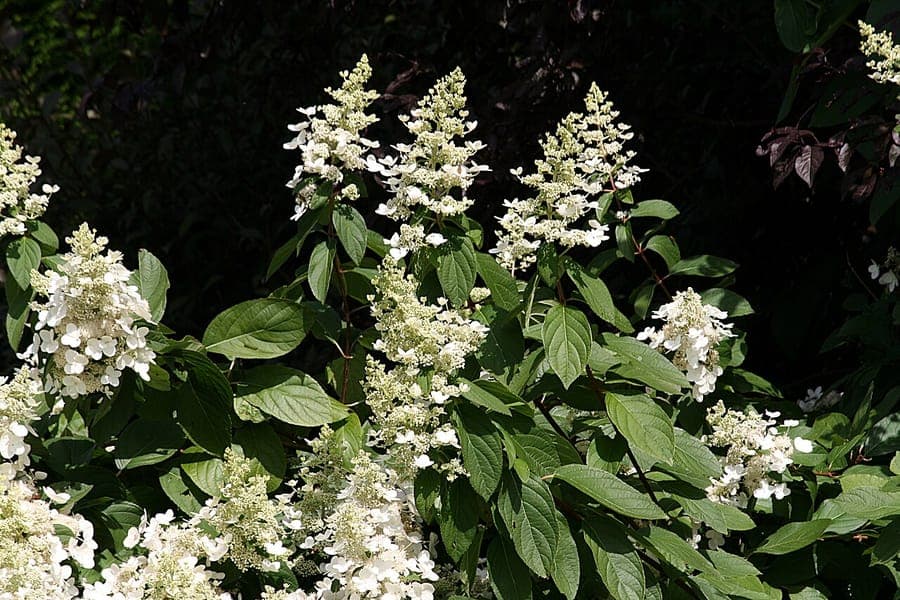
Hedwig Storch / CC BY-SA 3.0, via Wikimedia Commons
Panicle hydrangea: complete guide
Hydrangea paniculata
¿Quieres ver Panicle hydrangea: complete guide en tu jardín?
1 minuto, sin tarjeta de crédito
Overview
The panicle hydrangea, scientifically known as Hydrangea paniculata, represents one of the most spectacular summer-flowering shrubs, distinguished by its characteristic cone-shaped flower panicles that differ markedly from other hydrangea species. This Japanese shrub belongs to the Hydrangeaceae family and integrates beautifully into modern garden designs, from contemporary minimalist schemes to traditional cottage gardens. With its exceptional hardiness, adaptability to diverse soil conditions, and reliable performance across varying climates, the panicle hydrangea has become essential for Dutch and Belgian gardeners seeking dependable midsummer color. The plant's greatest asset lies in its late flowering period, extending from August through October, providing visual interest when many garden borders fade toward dormancy.
Native to the mountains of China and Japan, the panicle hydrangea has evolved to tolerate varying moisture levels and light conditions. In cultivation, mature plants typically reach heights of 150 to 250 centimeters, with certain cultivars exceeding 300 centimeters, while width generally spans 120 to 180 centimeters. With gardenworld.app, you can design comprehensive garden schemes where this robust shrub functions as either a structural backdrop or a commanding focal point within mixed borders. The panicle hydrangea responds excellently to pruning and shaping, making it ideal for gardeners who wish to maintain precise plant forms. Contemporary cultivars offer fascinating color variations, from pure white through soft pink to intense red hues.
Appearance & bloom cycle
The panicle hydrangea develops into an upright-growing, moderately-branched shrub with a naturally pyramidal habit. The opposite leaves are elliptical to lance-shaped, measuring 6 to 12 centimeters long with dark green coloration, providing attractive contrast against flowers. Blooming extends from August through October, with initial flowers typically appearing in early August, varying by region and seasonal conditions. The flower panicles display a characteristic cone to pyramid shape, measuring 15 to 30 centimeters long, with exceptional specimens under nutrient-rich conditions reaching 45 centimeters. Each panicle contains numerous small flowers, many sterile with only scattered fertile flowers capable of seed production.
Flowers typically open white and gradually age to pink and reddish tones during the bloom period, particularly in cultivars like "Pinky Winky," "Fire Light," and "Limelight." This color transformation through the growing season creates dynamic visual interest in garden compositions. The flowers emit a delicate fragrance, attracting bees and butterflies throughout the season. Following autumn bloom completion, typically by late October, flowers dry to brown tones, maintaining ornamental value through winter and providing architectural interest during otherwise bare-branched months.
Ideal location
Paricle hydrangeas perform optimally in full sun to light part-shade positions. For maximum blooming performance, provide minimum 6 hours direct daily sunlight, with 8 to 10 hours ideal. In intensely hot regions (southern Netherlands and Belgium), afternoon shade offers beneficial relief from excessive heat stress, particularly during July and August heat waves. Avoid dense shade, which results in sparse blooming and weak growth. The plant tolerates wind exposure reasonably well but prefers shelter from intense coastal gales in maritime regions. Panicle hydrangeas serve multiple landscape functions: specimen shrubs within borders, formal hedging, informal screening, or even small tree form through careful central-stem training.
For hedge applications, space plants 90 to 120 centimeters apart to achieve dense coverage. In formal gardens, this hydrangea integrates beautifully with other late-season bloomers. Ensure locations receive good air circulation to prevent fungal diseases like powdery mildew, which occasionally affects this species in humid conditions.
Soil requirements
The panicle hydrangea accommodates virtually all soil types, from acidic pH 4.5 to neutral pH 7.0, distinguished from blue hydrangea cultivars which require specific acidity for blue flower coloration. In heavy clay soils, incorporate 20 to 30 percent compost or leaf mold at planting time to improve drainage and aeration. The plant demonstrates greater drought tolerance than many hydrangea relatives, though consistent moisture availability promotes superior growth and flowering. Annual application of 3 to 5 centimeters of organic matter as compost or leaf mold around the plant improves soil structure and nutrient availability.
Provide fertilization in April using balanced formulations like 10-10-10 NPK or hydrangea-specific products to support vigorous growth. A second feeding in June sustains continued flower development. Avoid excess nitrogen fertilization, which promotes excessive leafy growth at the expense of flowers, reducing ornamental value.
Diseño gratis
¿Quieres ver Panicle hydrangea: complete guide en tu jardín? Crea un diseño gratis ahora.
Watering
Paricle hydrangeas require consistent moisture during the active growing season (April through September). Maintain soil moisture such that the top 2 to 3 centimeters dry between waterings, typically requiring two to three weekly applications during summer. More frequent watering proves better than sparse irrigation, though ensure the soil doesn't become waterlogged, as excellent drainage remains essential. Newly planted specimens require more frequent watering than established specimens, typically needing irrigation two to three times weekly for at least six weeks following planting. Once established, mature plants tolerate moderate drought better and may require watering only once weekly unless extreme heat events occur.
Container-grown specimens demand more frequent watering, potentially daily during warm months. Maintain moisture availability into fall (September-October) until frost arrives, after which irrigation ceases entirely.
Pruning
The panicle hydrangea responds favorably to annual pruning, which encourages flower production and maintains attractive plant form. Pruning occurs in early spring (March-April), before new growth initiates. Cutting back approximately one-third of the plant height produces a fuller, more compact specimen with enhanced flower production. For larger specimens, cutting to half the previous year's height results in acceptable regrowth to full flower-bearing height by season's end.
Always remove dead or damaged wood first, cutting immediately above healthy outward-facing buds. For gardeners preferring fewer, larger flowers, implement heavier pruning, resulting in a reduced number of larger panicles. Conversely, for abundant smaller flowers, prune more lightly. Spent flowers may be removed in October for neater appearance, though many gardeners prefer leaving them for attractive winter structure and bird food sources.
Maintenance calendar
March-April: Perform spring pruning, removing dead wood and cutting back approximately one-third for fuller growth. Growth commences rapidly. Ensure regular watering as temperatures rise. Apply balanced fertilizer.
May-June: Active vegetative growth with continuous new leaf emergence. Maintain consistent soil moisture throughout. Apply second fertilizer application in June. Monitor for pest damage, particularly spider mites during dry years.
July-September: Peak flowering period. Provide regular watering, especially during heat waves. Prevent waterlogging. Enjoy progressive flower color transformation from white through pink to reddish tones.
October-November: Flowering concludes and foliage yellows. Maintain moisture until frost arrives. Optionally remove spent flowers for tidier appearance.
December-February: Dormancy. No watering required. Snow and frost cause no damage. The plant's bare-branched structure provides winter interest.
Winter hardiness
The panicle hydrangea demonstrates exceptional cold tolerance, surviving temperatures to -25 degrees Celsius, making it suitable for all Dutch and Belgian regions without protective measures. The plant rates USDA hardiness zones 3 through 9, earning designation as one of the hardiest hydrangea species. Even in extreme continental climates (zones 3-4), severe winter freezing rarely kills plants outright; they readily regenerate from root systems. For extra protection in exceptionally harsh climates, mulch around the base with 10 to 15 centimeters of leaf mold.
Companion plants
The panicle hydrangea combines beautifully with other late-season bloomers. Gaura lindheimeri and Buddleja davidii (butterfly bush) flower concurrently, creating intriguing color combinations with pink-flowered hydrangea cultivars. Rudbeckia, Echinacea, and other late-season bloomers in yellow and purple tones provide striking contrasts. Evergreen background plantings such as Taxus (yew) or Ilex (holly) contribute structural permanence. For sophisticated schemes, incorporate Heuchera cultivars with purple foliage to provide compelling contrast with white-flowering hydrangea selections. On gardenworld.app, design comprehensive border plans featuring panicle hydrangea as a core design element.
Closing
The panicle hydrangea remains one of the most underappreciated shrubs in Dutch-Belgian gardens, yet deserves substantially wider application. Its exceptional climate adaptability, low-maintenance character, extended flowering period, and fascinating flower color progression through the season offer numerous advantages. The plant responds beautifully to pruning and shaping, suiting diverse garden styles. Whether you seek a formal hedge, informal border component, or specimen focal point, the panicle hydrangea delivers reliably. Provide sufficient sunlight, consistent soil moisture, and annual spring pruning, and you'll enjoy decades of abundant flowering and garden satisfaction. Visit gardenworld.app to design integrated garden schemes where this invaluable plant achieves its full ornamental potential.
¿Quieres ver Panicle hydrangea: complete guide en tu jardín? Crea un diseño gratis ahora.
Sube una foto, elige un estilo y obtén un diseño fotorrealista con lista de plantas en menos de un minuto.
Más de 10.000 jardines diseñados
Sin tarjeta de crédito


Plantas similares
Cliff fendlerbush: complete guide
Fendlera rupicola
Everything about Fendlera rupicola, the rare rocky-slope shrub with fragrant white spring flowers that thrives on lean, dry, calcareous soils.
Fivepetal cliffbush: complete guide
Jamesia americana
Everything about Jamesia americana, the fivepetal cliffbush: rocky sites, white blooms, autumn colour, winter hardiness and garden care.
Deutzia parviflora: complete guide
Deutzia parviflora
Discover Deutzia parviflora, an elegant flowering shrub with white blossoms. Growing guide with tips for sunny placement, fertile soil, and regular pruning.