
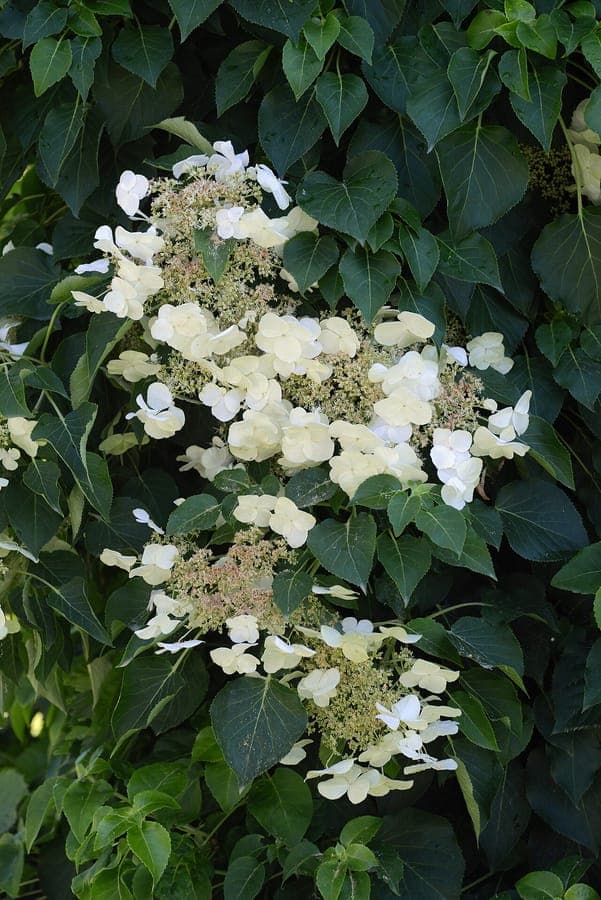
Alvesgaspar / CC BY-SA 3.0, via Wikimedia Commons
Hydrangea anomala: complete guide
Hydrangea anomala
¿Quieres ver Hydrangea anomala: complete guide en tu jardín?
1 minuto, sin tarjeta de crédito
Overview
Hydrangea anomala, commonly known as climbing hydrangea, is a vigorous climbing vine native to the Himalayas and eastern China. This remarkable plant uses aerial rootlets to climb walls, fences, and tree trunks, making it a versatile choice for vertical gardening. The climbing hydrangea is exceptionally hardy and can thrive in challenging conditions where other climbing plants struggle.
The plant is renowned for its ability to transform bare walls into lush, flowering displays. Once established, climbing hydrangea grows steadily each year, eventually reaching 10 meters or more. It flourishes in shade and partial shade, making it invaluable for north-facing walls where sunlight is limited.
Appearance and bloom
Climbing hydrangea features heart-shaped leaves approximately 5-10 centimeters long, arranged oppositely along stems. The foliage is deciduous, turning golden yellow in autumn before dropping. This seasonal change adds year-round visual interest to garden structures.
Flowers appear in June and July as flat-topped clusters called lacecap flowers. These creamy-white blooms feature conspicuous golden stamens in the center, creating delicate, lacy flower heads. Each flower cluster measures 10-15 centimeters across and attracts pollinators. The fragrance is subtle but pleasant. After flowering, ornamental seed heads persist through autumn.
Ideal location
Climbing hydrangea performs best in partial shade to full shade. It tolerates north-facing walls remarkably well, making it perfect for difficult locations. In warmer regions, afternoon shade protects leaves from scorching. The plant benefits from morning sunlight but needs protection from intense midday heat.
Ensure strong support structures such as wire trellises or wooden frameworks. Young plants need tying initially until aerial rootlets establish firm grip. The plant eventually anchors itself securely to rough surfaces.
Soil
Climbing hydrangea prefers fertile, humus-rich soil with excellent drainage. Before planting, amend soil with aged compost or peat moss. Target a slightly acidic pH between 5.5 and 7.0. The plant struggles in waterlogged conditions, so drainage is essential.
Add a 5-7 centimeter organic mulch layer around the base to retain moisture and regulate soil temperature. Mulch also suppresses weeds and gradually enriches soil as it decomposes.
Diseño gratis
¿Quieres ver Hydrangea anomala: complete guide en tu jardín? Crea un diseño gratis ahora.
Watering
During the growing season (April-September), water regularly and deeply. Young plants require consistent moisture until established. In dry spells, water daily. Mature established plants are more drought-tolerant but perform better with regular moisture.
Winter watering is minimal, though never allow soil to dry completely. Drip irrigation systems ensure consistent water delivery without overwatering. Mulching helps maintain even soil moisture throughout seasons.
Pruning
Climbing hydrangea requires minimal pruning. Remove dead, damaged, or diseased branches promptly. After flowering in August, thin out overcrowded stems to maintain shape and encourage dense growth. Avoid severe pruning as the plant recovers slowly from major cuts.
In early years, light pruning encourages branching and fuller coverage. Never strip the plant bare. Rather, selectively remove older canes to rejuvenate growth gradually.
Maintenance calendar
March: Apply balanced fertilizer. April-August: Regular watering and monitoring. June-July: Peak flowering period. August: Light pruning after flowers fade. September: Reduce watering as growth slows. October-February: Dormant period with minimal care. Monitor winter damage and prune affected growth in spring.
Winter hardiness
Climbing hydrangea is exceptionally hardy to -20 degrees Celsius, surviving harsh winters throughout Northern Europe. Established plants require no winter protection. Young plants benefit from mulch around the base and possibly frost cloth during the first winter.
Light frost damage to new growth is normal and not problematic. Plants recover fully during spring. The plant grows reliably in USDA zones 5-9.
Companion plants
Combine climbing hydrangea with shade-loving shrubs like boxwood, yew, and holly for layered effects. Underplant with shade perennials such as hostas or ferns. Ground covers like ivy work well beneath the climbing vine.
Avoid planting competing climbers on the same support to reduce competition. Allow sufficient space between climbing hydrangea and other vigorous vines.
Closing thoughts
Climbing hydrangea brings elegant, white-flowered charm to vertical garden spaces. This hardy, low-maintenance plant transforms walls into stunning floral displays for decades. Visit gardenworld.app for more growing inspiration and find quality plants at specialty nurseries. With minimal intervention, your climbing hydrangea will flourish beautifully for generations.
¿Quieres ver Hydrangea anomala: complete guide en tu jardín? Crea un diseño gratis ahora.
Sube una foto, elige un estilo y obtén un diseño fotorrealista con lista de plantas en menos de un minuto.
Más de 10.000 jardines diseñados
Sin tarjeta de crédito


Plantas similares
Cliff fendlerbush: complete guide
Fendlera rupicola
Everything about Fendlera rupicola, the rare rocky-slope shrub with fragrant white spring flowers that thrives on lean, dry, calcareous soils.
Fivepetal cliffbush: complete guide
Jamesia americana
Everything about Jamesia americana, the fivepetal cliffbush: rocky sites, white blooms, autumn colour, winter hardiness and garden care.
Deutzia parviflora: complete guide
Deutzia parviflora
Discover Deutzia parviflora, an elegant flowering shrub with white blossoms. Growing guide with tips for sunny placement, fertile soil, and regular pruning.