
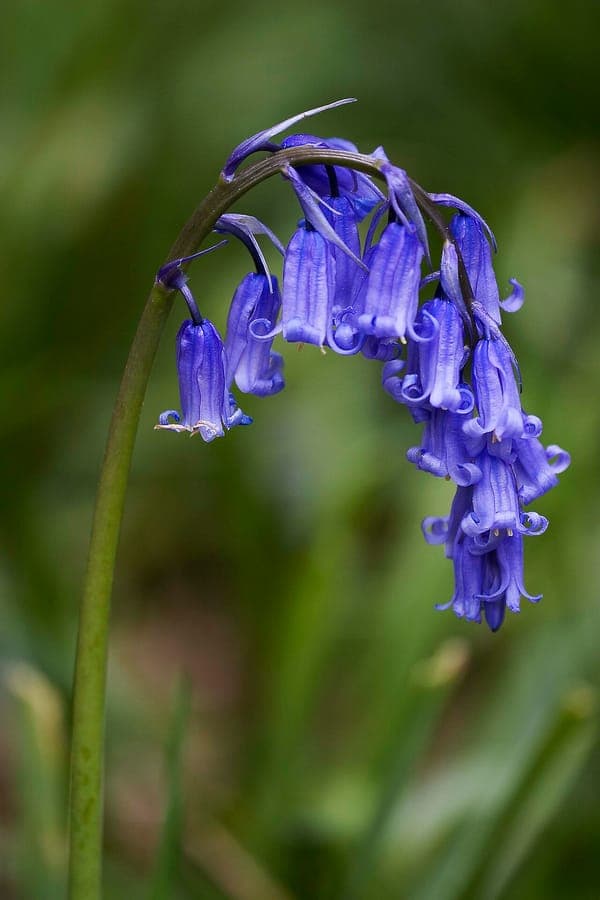
MichaelMaggs / CC BY-SA 3.0, via Wikimedia Commons
English bluebell: complete guide
Hyacinthoides non-scripta
¿Quieres ver English bluebell: complete guide en tu jardín?
1 minuto, sin tarjeta de crédito
Overview
The English bluebell, scientifically known as Hyacinthoides non-scripta, is one of the most enchanting spring-flowering bulbs found throughout Western European gardens and natural woodlands. This graceful bulbous plant belongs to the Asparagaceae family and enchants gardeners with its distinctive downward-hanging flowers in pure blue hues, though pink and white cultivars also exist. Unlike its larger cousin the Spanish bluebell, the English bluebell displays more refined flowers and a characteristically arching flower stem with blooms clustered primarily on one side. The name "bluebell" captures the essence of its appearance, though regional names vary from "harebell" to "wood hyacinth" across different English-speaking regions.
Native to Western Europe, particularly the United Kingdom and northwestern continental regions, the English bluebell originally thrived in deciduous woodlands and hedgerows where cool, moist conditions supported its growth cycle. Today, these magical flowers transform spring landscapes from single plantings into expansive naturalized drifts. With gardenworld.app, you can design a complete garden where these spring treasures integrate seamlessly with other seasonal plantings, creating a cohesive year-round aesthetic that celebrates the changing seasons. The plant excels at naturalizing beneath trees, along woodland edges, and in partially shaded corners where it multiplies reliably year after year.
Appearance & bloom cycle
English bluebells typically reach heights between 20 and 40 centimeters, with exceptional specimens under ideal conditions reaching 50 centimeters. The flowers emerge during April and May, occasionally as early as late March in mild seasons. Each flower measures approximately 8 to 10 millimeters in diameter, comprising six perianth segments in pure blue to lavender, creating a delicate bell-like appearance. The flowers emit a light fragrance and hang gracefully along the stem's sides in loose clusters, lending the plant its characteristic elegance. The blooming period for individual flowers spans 10 to 15 days, but across a naturalized population, the overall display extends 4 to 5 weeks as flowers progressively open from bottom to top.
The linear, strap-like leaves reach 15 to 25 centimeters in length and emerge simultaneously with or slightly before the flowering period. Following bloom, the foliage continues growing through June, channeling energy reserves into the underground bulbs for next season's performance. Leaf senescence occurs naturally between June and July, completing the annual cycle. Below ground, the plant produces small bulblets surrounding the mother bulb, enabling rapid colonization. A single planted bulb typically expands into a dense cluster containing dozens of flowering stems within three to four years, creating increasingly impressive displays without supplemental intervention.
Ideal location
English bluebells perform optimally in partial to half-shade environments, particularly beneath deciduous trees that maintain open canopies during the critical spring growing season. This ideal microclimate provides essential shelter from intense summer sun while allowing sufficient light penetration during the bulb's peak growth phase. Plantings in full sun struggle in warm, dry regions, though they manage reasonably well in temperate maritime climates. Avoid intense southwestern exposures that subject flower buds to afternoon heat stress and premature wilting. Woodland clearings, the shaded base of hedges, and beneath small ornamental shrubs create excellent planting sites. Ensure the location isn't completely dominated by aggressive tree roots that compete intensively for water and nutrients during the critical spring period.
The plant appreciates good air circulation to prevent fungal issues but dislikes exposed, windy locations that damage delicate flower stems. Gardens near water features benefit from the enhanced humidity English bluebells naturally prefer. Crucially, avoid sites that become waterlogged after spring thaws, as this triggers bulb rot and fungal disease. The ideal microhabitat maintains adequate moisture during the growing season but remains relatively dry during summer dormancy. You can achieve this by planting beneath woody plants where spring saturation naturally occurs but dense root competition and mulch layers create gradual drying through summer months.
Soil requirements
English bluebells thrive in well-draining, humus-rich soil with a pH ranging from 6.0 to 7.0, though they perform excellently across the broader 5.5 to 7.5 pH spectrum. Proper drainage is absolutely critical, as waterlogging causes catastrophic bulb rot. In heavy clay soils, improve drainage by incorporating coarse sand, leaf mold, and compost to depths of 15 to 20 centimeters, creating a looser, crumbly texture that allows water penetration without saturation. The plant excels in woodland-type soils abundant in organic matter, including decomposed leaf litter and aged wood particles. This enriched soil structure supports both physical root development and beneficial microbial communities essential for nutrient uptake and disease suppression.
For garden plantings, aim for annually improving the soil with 2 to 3 centimeters of well-aged compost or leaf mold, maintaining the crumbly structure and providing slow-release nutrients. Avoid excessive nitrogen fertilization, which stimulates leaf growth at the expense of flower production. A single spring application of balanced bulb fertilizer (such as 0-7-7 NPK formulations) in early March provides sufficient nutrition without promoting vegetative excess. Over-fertilization creates lush foliage but fewer flowers, negating the ornamental value.
Watering
English bluebells require consistent moisture during the active growing season (March through May), particularly during unusually dry periods when spring precipitation falls short. In typical British and European climates, spring rainfall naturally supplies adequate water. However, in arid years or water-stressed regions, supplemental irrigation becomes necessary, especially for newly planted bulblets. Maintain soil moisture around 60 to 70 percent of maximum water-holding capacity, achieved through two to three light waterings weekly during dry spells, totaling 15 to 25 millimeters distributed across several sessions rather than single heavy irrigations.
Following bloom and during the critical foliage growth period (May through June), continued regular watering supports bulb development, though less generously than during flowering. If natural precipitation drops below 15 to 20 millimeters weekly, provide supplemental irrigation to support bullet enlargement. From July through August, when the plant enters dormancy, allow the soil to dry naturally. Resume watering by late August, which stimulates new root growth and bulb expansion. Container-grown specimens require more frequent watering, as pots dry substantially faster than in-ground soil. Ensure excellent drainage in all containers, with multiple drainage holes to prevent stagnation.
Diseño gratis
¿Quieres ver English bluebell: complete guide en tu jardín? Crea un diseño gratis ahora.
Pruning
English bluebells require minimal pruning. After blooming ceases, you may carefully remove spent flower clusters, but preserve all foliage and stem tissue to allow energy reserves to accumulate in the developing bulbs. This critical growth phase extends through June and July, with foliage naturally yellowing and senescing. Removing green foliage prematurely severely compromises next season's flowering. Should naturalized populations become overcrowded, gently lift and relocate smaller bulblets in June when foliage weakens; this represents the primary maintenance intervention. Avoid any routine pruning during active growth, as leaf tissue is essential for photosynthesis and bulb development.
If you desire to limit seed production and reduce unwanted spread, remove spent flower clusters before seeds mature, though this requires regular monitoring and proves labor-intensive. In more naturalized settings, this intervention typically isn't necessary. Controlling population expansion primarily involves preventing seed set rather than removing vegetative growth. In structured garden designs, you may selectively remove older bulbs from overcrowded areas after several seasons if populations become excessive, though English bluebells rarely become truly invasive in temperate gardens with proper site selection.
Maintenance calendar
March: The growing season commences. Ensure sites don't become waterlogged following snowmelt. Avoid treading on soft, saturated ground that damages emerging shoots. Monitor recently planted bulblets for heaving caused by frost-thaw cycles.
April-May: Peak growth and flowering occurs during this period. Provide regular watering during dry spells and monitor for pest damage or disease. Remove spent flower clusters before seed development. Enjoy the spectacular natural display of massed flowers in their prime.
June: Foliage gradually declines. Gentle relocation of smaller bulblets to new sites can occur now. Continue regular watering while foliage remains green, supporting continued bulb development. Gradually reduce soil moisture as you approach July.
July-August: True dormancy period. Allow soil to remain relatively dry. No irrigation required except during severe drought. This period suits ground preparation for next season.
September-October: Resume watering by late August, stimulating new root development and bulb expansion. Maintain moderate moisture through first frost. Monitor for early emergence of foliage.
November-February: Complete dormancy. No watering necessary. Snow and frost cause no damage to hardy bulbs. Optional mulching with 5 to 10 centimeters of leaf mold provides extra cold protection in severe continental climates.
Winter hardiness
English bluebells demonstrate extraordinary cold hardiness, tolerating temperatures to -20 degrees Celsius, making them suitable for USDA hardiness zones 4 through 9. Throughout the Netherlands and Belgium, these bulbs require zero winter protection. In fact, bulbs require a genuine cold period for proper development and flower initiation, a process called vernalization. Because English bluebells evolved in European woodlands where severe winters are normal, cold poses no threat whatsoever.
In warmer climates (USDA zone 9 and above), you can provide artificial chilling by refrigerating bulbs at 4 degrees Celsius for three weeks before autumn planting. This satisfies the cold requirement and significantly improves flowering performance. Protection against bird predation matters in regions with large bird populations, particularly house sparrows and starlings that peck emerging flower buds. Insect damage to flowers remains rare, thanks to natural chemical defenses within the plant tissues.
Companion plants
English bluebells integrate beautifully with other spring ephemerals, particularly snowdrops (Galanthus nivalis), which bloom two to three weeks earlier and provide delicate white contrast. Anemones (Anemone blanda) in white or blue tones bloom concurrently, creating spectacular tapestries when combined with bluebells. For larger spring displays, add Ornithogalum nutans (drooping star-of-bethlehem) or Scilla siberica (Siberian squill), sharing identical growing requirements. Beneath flowering tree specimens like Malus (crabapple) or Prunus (cherry), whose young canopies remain semi-open in April-May, bluebells create stunning understory drifts. In formal settings, combine bluebells with other early ephemerals and Pulmonaria (lungwort) in contrasting white or pink tones for sophisticated color layering. Helleborus (Christmas rose) provides permanent green structure when positioned thoughtfully nearby. Shade-tolerant ferns like Polystichum setiferum coexist happily beneath large trees adjacent to bluebell plantings.
For container compositions, combine English bluebells with dwarf Reticulata iris varieties and Crocus vernus cultivars in complementary hues for compact spring celebrations. On gardenworld.app, design complete garden schemes where these precious bulbs interact harmoniously with other seasonal bloomers, creating year-round visual interest. Ensure companion plantings share similar moisture and shade preferences to minimize competition and disease pressure.
Closing
The English bluebell represents one of spring's most magical moments in temperate gardens. With straightforward requirements, absolute winter hardiness, and spectacular blooming displays, this bulb suits both novice and experienced gardeners perfectly. Whether you favor formal garden designs or prefer wild, naturalistic settings, English bluebells integrate seamlessly into any landscape vision. The plant multiplies autonomously, expanding into impressive drifts without intensive intervention. Provide basic necessities including proper drainage, partial shade, and spring moisture, and you'll enjoy decades of enchanting blooms. Visit gardenworld.app to design a complete garden where these wondrous spring bulbs partner with other seasonal performers, creating year-round garden magic.
¿Quieres ver English bluebell: complete guide en tu jardín? Crea un diseño gratis ahora.
Sube una foto, elige un estilo y obtén un diseño fotorrealista con lista de plantas en menos de un minuto.
Más de 10.000 jardines diseñados
Sin tarjeta de crédito


Plantas similares
Narrow-leaved dracaena: complete guide
Dracaena angustifolia
Everything about Dracaena angustifolia - the narrow-leaved dracaena: location, care, overwintering and use as a houseplant or patio plant.
Chaparral yucca: complete guide to Hesperoyucca whipplei
Hesperoyucca whipplei
Hesperoyucca whipplei (Our Lord's candle) is a dramatic rosette-forming plant from California that produces a towering flower spike, ideal for dry and gravel gardens.
False lily-of-the-valley: complete guide
Maianthemum dilatatum
Everything about Maianthemum dilatatum, the false lily-of-the-valley. Care, shade location, propagation and garden combinations for this popular shade ground cover.