
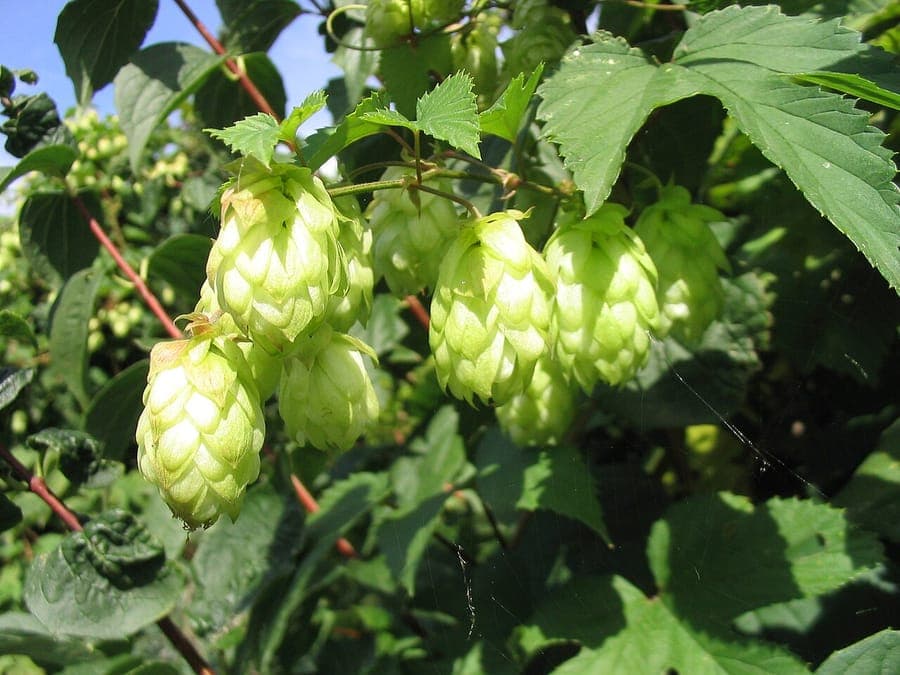
No machine-readable author provided. Hagen Graebner assumed (based on copyright claims). / CC BY-SA 2.5, via Wikimedia Commons
Humulus lupulus: complete guide
Humulus lupulus
¿Quieres ver Humulus lupulus: complete guide en tu jardín?
1 minuto, sin tarjeta de crédito
Overview
Humulus lupulus, commonly known as Common Hop or Climbing Hop, is an exceptionally vigorous climbing plant distinguished by its rapid growth, decorative foliage, and famous aromatic female flowers known as hop cones. This native European plant grows naturally along riverbanks and forest margins throughout Europe extending to Siberia, from where it has spread to gardens and hop fields worldwide. In garden design contexts, Humulus lupulus proves invaluable for creating rapid vertical coverage on pergolas, fences, and other structures. The plant grows enormously fast, reaching up to 6 meters annually under ideal conditions, making it perfect for gardeners desiring quick visual results.
The female flowers of Humulus lupulus are not only extremely ornamental, featuring papery, greenish to yellowish cone-shaped composite flowers, but also tremendously valuable in the brewing industry as flavouring and preservative for beer. For homebrewers or enthusiasts experimenting with plant material, hop offers practical application. Through gardenworld.app, we can help create the perfect vertical design leveraging hop's rapid growth to establish a tangible privacy screen or shade structure.
Appearance and Foliage
Humulus lupulus is a climbing plant that winds its thin, hairy stemwork around supporting structures. The leaves are large, coarsely heart-shaped, deeply incised into three to five lobes, and display deep green coloration with distinctly visible veining. Each leaf can reach approximately 15 centimeters in length. The leaf stems are hairy and may display reddish coloration. The leaf surface feels rough owing to numerous tiny hairs.
However, the most distinctive feature of Humulus lupulus comprises the inflorescences. Female plants produce so-called hop cones, ovoid to cylindrical composite flowers measuring approximately 3 to 5 centimeters long. These consist of numerous small greenish scales with veination and are furnished with glandular hairs secreting aromatic compounds. Male plants produce small, greenish flowers in panicles, but these prove far less ornamental. Hop cones appear June through September, depending on cultivar.
The entire plant releases, especially in warmth or upon disturbance, a characteristic strong, aromatic bitter-like fragrance unmistakable to anyone familiar with beer.
Ideal Location
Humulus lupulus performs optimally in locations receiving full sun, minimum six to eight hours direct daily sunlight. The plant can tolerate some shade, but will grow considerably less vigorously and produce fewer hop cones. The plant also values a location with good air circulation, helping prevent fungal problems. A southeast or southwest-facing pergola proves ideal.
The plant requires strong, vertical support; weak or unstable structures cannot withstand the enormous weight of mature foliage in wind. Ensure trellis frames or ropes are robust and well-anchored.
Avoid very dry, windy sites where the plant might desiccate. Some protection against extreme wind proves beneficial.
Soil Requirements
Humulus lupulus thrives in well-drained, rich, moisture-retentive fertile soil with pH between 6.0 and 7.5. The plant dislikes excessively acidic or alkaline conditions. The ideal soil is deep, as the plant develops an extensive underground root system. Shallow or inferior soils will cause less vigorous growth.
When planting, incorporate generous organic material, at minimum 15 centimeters of well-rotted compost or leafmould. This promotes not only growth but also water and nutrient retention. Mulch around the plant base with 10 centimeters of organic material to maintain even soil temperatures.
Humulus is not a plant overwhelmed by nutrient-rich soil; indeed, it appreciates well-fed land. Annual application of organic fertilizer or slow-release synthetic fertilizer helps maintain vigorous growth.
Watering and Moisture Management
During the growing season, Humulus lupulus requires consistently moist soil, especially during its first growing year. Water deeply and regularly, certainly twice weekly during dry periods. The plant tolerates brief drought periods less well than many other climbing plants, so ensure adequate moisture availability.
Once established (after 2-3 years), the plant manages with reduced watering, especially if soil features well-prepared mulch. However, abundant watering during the growing season produces fuller foliage and better hop production.
Avoid waterlogging; well-drained soil is essential, especially after heavy rainfall. Should you observe soil regularly underwater, incorporate drainage improvements.
Diseño gratis
¿Quieres ver Humulus lupulus: complete guide en tu jardín? Crea un diseño gratis ahora.
Training and Support
Humulus lupulus is an exceptionally strong climbing plant requiring robust support. Plants can wind themselves around vertical strings or rope work, so provide clear paths for climbing. Traditionally, hop plants are grown on pergolas or between horizontal and vertical wires.
During the first growing year, it helps to gently wind plant length around support if it doesn't naturally twine. In subsequent years, it usually requires no further assistance.
Ensure shoots don't bunch too densely against the plant base; this traps moisture and encourages fungal disease. Maintain base area space for air circulation.
Harvesting and Processing
For homebrewers, hop cones represent the most valuable harvest product. Harvest hop cones when they feel papery and have turned yellow-green in color, typically August through September. You can use them fresh, but they are usually dried. Hang cones in bundles in warm, dark locations until reduced to approximately one-third their original weight. These dried cones store in cool closures for up to one year in sealed containers.
Young foliage can also be utilized; in some traditions, tender shoot tips are picked and cooked as a vegetable, similar in texture to asparagus though with a unique bitter undertone.
Pruning and Shaping
Humulus lupulus responds excellently to regular pruning, improving density and ornamental value. In early spring (March to April), cut all previous year's growth back to approximately 30 centimeters above ground. This stimulates new vigor and ensures the plant remains vital. Plants become increasingly bushier each season the more severely they're cut to ground.
During the growing season, trim back long, climbing growth extending far beyond your desired coverage. This focuses energy toward hop production and keeps the structure tidy.
Because this plant proves extremely vigorous, you can prune quite rigorously without harm. This actually proves beneficial, stimulating more side growth production, resulting in more hop cones.
Maintenance Calendar
March to April (Annually): Cut all dead growth back to approximately 30 centimeters above ground. Apply organic or slow-release fertilizer.
May to June: Begin regular watering once new growth appears. Observe climbing growth and ensure it proceeds around supports.
July to August: Peak foliage and growth production. Continue regular watering. Monitor for pest problems.
August to September: Hop cones reach maturity. Harvest as soon as papery.
October to February: Dormant period. Minimal watering. Plant preparation for next season.
Winter Hardiness and Overwintering
Humulus lupulus proves extremely hardy, winter hardy to zone 3 (-40 degrees Celsius and lower). This means it can overwinter in all Dutch, Belgian, and German gardens without any winter protection. It is a semiperennial plant, meaning its aboveground parts die annually, but underground roots survive producing new growth each spring.
Ensure no water stagnates around the plant base during winter; this damages roots. Good drainage proves essential.
Companion Planting
Humulus lupulus pairs beautifully with other climbing plants on the same structure, though it should be noted that it grows extremely dominantly and can overwhelm other plants. If combining it with other climbers, select robust species such as Clematis or climbing roses. They can grow side-by-side without one completely smothering the other.
At the base of the hop structure, plant shade-tolerant lower-growing plants such as hostas, fuchsias, or ornamental grasses. These create a layered effect.
Propagation
Humulus lupulus can be grown from seed, though female plants (producing hop cones) don't always come true from seed. It's easier to propagate from rhizome pieces or cuttings from existing female plants. This can be done in spring or autumn. Dip cutting in rooting hormone and plant in humidity-enhancing medium. Roots typically appear within 2-3 weeks.
Seeding can be done in spring, but seed isn't always readily available and germination percentages can be low.
Closing Thoughts
Humulus lupulus is indispensable for those desiring rapid results in vertical garden design. The combination of fast growth, attractive foliage, and practically usable hop cones makes it an excellent choice. With attention to watering, nutrition, and support requirements, you'll enjoy this vigorous plant for many years. For professional garden design optimally utilizing this plant, contact gardenworld.app for specialized guidance.
¿Quieres ver Humulus lupulus: complete guide en tu jardín? Crea un diseño gratis ahora.
Sube una foto, elige un estilo y obtén un diseño fotorrealista con lista de plantas en menos de un minuto.
Más de 10.000 jardines diseñados
Sin tarjeta de crédito


Plantas similares
Celtis sinensis: complete guide
Celtis sinensis
Chinese hackberry (enoki): comprehensive care guide. Discover this elegant Asian tree with fine leaves and bird food. Perfect for large gardens and parks.
Humulus scandens: complete guide
Humulus scandens
Japanese hop - a vigorous climbing plant with characteristic hop cones and exceptional ornamental value.
Hemp: complete guide
Cannabis sativa
Learn how to grow hemp (Cannabis sativa) in your garden. Tips on light, soil, watering, and care. Ideal for garden designs on gardenworld.app.