
Wikimedia Commons / CC BY-SA 3.0, via Wikimedia Commons
Chameleon Plant: complete guide
Houttuynia cordata
¿Quieres ver Chameleon Plant: complete guide en tu jardín?
1 minuto, sin tarjeta de crédito
Overview
Chameleon Plant, scientifically known as Houttuynia cordata, is a fascinating moisture-loving plant from the Saururaceae family. This plant naturally grows in moist forests and water edges from the Himalaya to Southeast Asia. With its colorful leaves that can be yellow, red and green (especially in the 'Chameleon' variety), this plant is a visual spectacle. Moreover, it is edible and used in Asian cuisines.
Appearance and Bloom
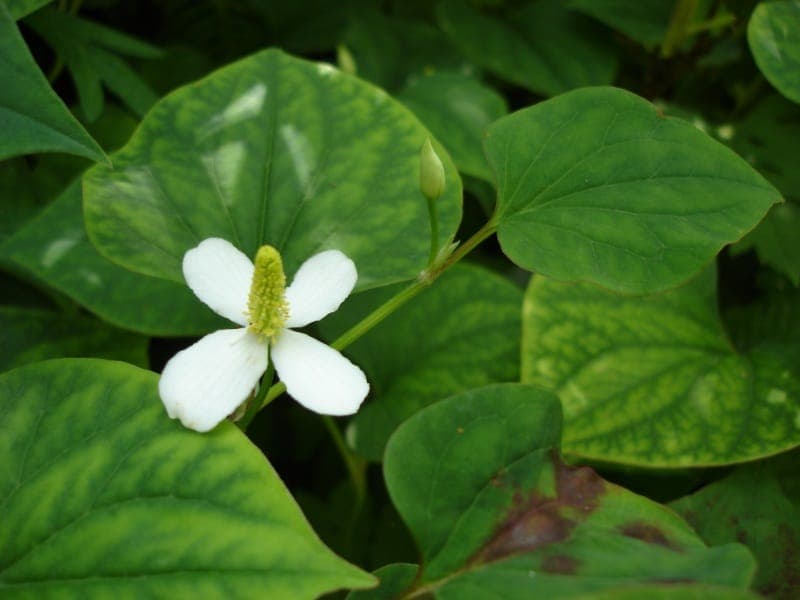
Chameleon Plant reaches heights of 30-45 cm and forms dense mats of heart-shaped leaves. The leaves of the standard form are green, but the popular 'Chameleon' variety displays colorful combinations of yellow, red and green. The stems are red-tinged. From May to August, small, yellow-green flowers appear in characteristic conical inflorescences without petals. This unusual flower structure is unique.
Ideal Location
Chameleon Plant grows best in partial shade to full shade, although it can also grow in moderate full sun. This plant loves moist environments. Ideal along ponds, streams and in bog gardens. Winter-hardy to USDA 6, suitable for temperate zones. Plant it close to water for optimal growth. Color is brightest in partial shade.
Soil Composition
Chameleon Plant grows best on moisture-rich, organic-rich soils. This plant loves natural bogs and marsh soil. Add plenty of compost and ensure moisture retention. Good drainage is always important to prevent root rot. The plant does not thrive on dry soils.
Diseño gratis
¿Quieres ver Chameleon Plant: complete guide en tu jardín? Crea un diseño gratis ahora.
Watering
Houttuynia cordata has high water needs. Ensure soil is continuously moist. Regular watering is essential, especially in dry spells. The plant can even grow in shallow water. In very warm months, water daily. Drought causes growth slowing and reduced color.
Pruning and Maintenance
Chameleon Plant grows aggressively and may need control. Overgrown parts can be cut back. The plant regrows quickly. Remove spent flowers for neater appearance. The plant can grow invasively without boundaries; plant screens can help. In autumn, dead parts can be removed.
Maintenance Calendar
March-April: Growth begins, moisture control May: Precautions against aggressive growth June-August: Blooming time, regular water and pruning September: Preparation for leaf drop October-November: Above-ground parts dying back December-February: Underground rhizomes active
Winter Hardiness
Chameleon Plant is winter-hardy to -10°C (USDA 6). In cold areas, above-ground growth dies back, but underground rhizomes survive. In very cold winters (below -15°C), mulching helps. In milder climates, it can remain quasi-evergreen.
Companion Plants
Chameleon Plant combines well with other moisture-loving plants such as iris, hostas and ferns. Also suitable for combination with aquatic plants. Plant spacing: 30-45 cm. In kitchen gardens, it can grow together with spice plants.
Closing
Chameleon Plant brings color and edible possibilities to moist garden spots. With minimal care and maximum visual impact, it's a wonderful choice. Discover how to integrate moisture-loving plants in your front yard on gardenworld.app. Create a vibrant, scientifically interesting garden atmosphere via gardenworld.app.
¿Quieres ver Chameleon Plant: complete guide en tu jardín? Crea un diseño gratis ahora.
Sube una foto, elige un estilo y obtén un diseño fotorrealista con lista de plantas en menos de un minuto.
Más de 10.000 jardines diseñados
Sin tarjeta de crédito


Plantas similares
Acer pycnanthum: complete guide
Acer pycnanthum
Acer pycnanthum, the Japanese swamp maple, is a fast-growing tree with early red flowers and brilliant autumn color, ideal for damp garden settings.
Freeman maple: complete guide
Acer × freemanii
Everything about the Freeman maple (Acer x freemanii): a fast-growing shade tree with spectacular autumn colour for large gardens.
Silver vine: complete guide
Actinidia polygama
Discover silver vine (Actinidia polygama): a hardy climbing plant with silvery foliage, loved by gardeners and cats alike.