
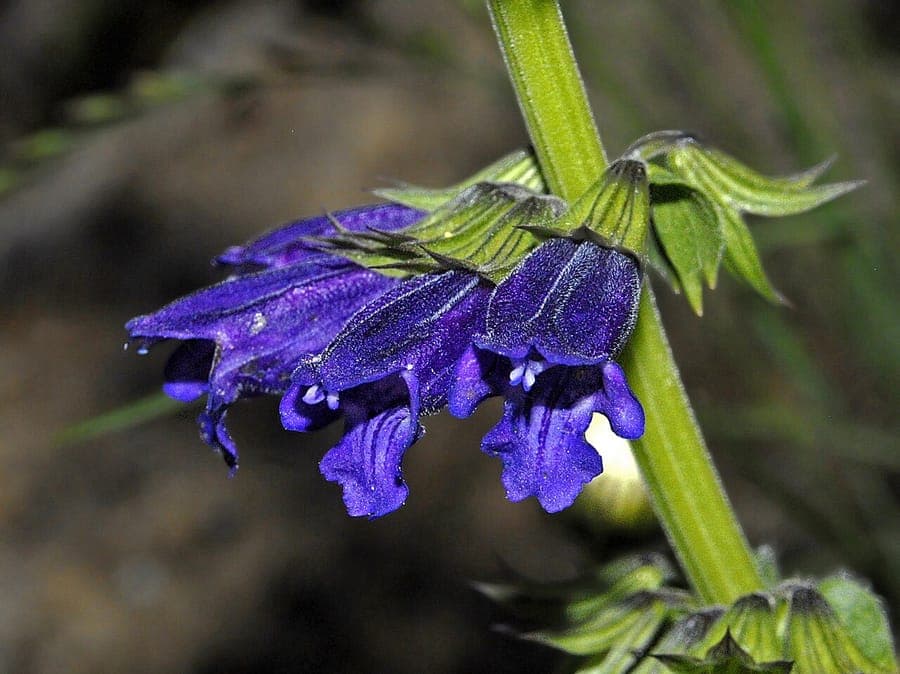
Hectonichus / CC BY-SA 3.0, via Wikimedia Commons
Horminum pyrenaicum: complete guide
Horminum pyrenaicum
¿Quieres ver Horminum pyrenaicum: complete guide en tu jardín?
1 minuto, sin tarjeta de crédito
Overview
Horminum pyrenaicum, commonly called Dragonmouth, is a remarkable alpine plant native to the Pyrenees and Alps of Europe. This relatively unknown plant earns its name from its distinctive flowers that resemble a dragon's mouth or dragon's jaw. With its deep blue flower color, it creates a striking appearance in alpine gardens and rock gardens. The plant belongs to the mint family (Lamiaceae) and naturally occurs in high mountains of France, Spain, Italy, Germany, Switzerland, and Eastern Europe.
This plant is not for beginners. Horminum pyrenaicum makes extreme demands on drainage, moisture, and nutrients. In its natural habitat, it grows on rocks and scree in mountain regions at least 1500 meters high, where conditions are harsh: intense sunlight, poor soils, and exceptionally well-drained substrates. Anyone wanting to grow this plant at home must replicate these mountain conditions as closely as possible.
Appearance and Bloom
Horminum pyrenaicum is a low, clump-forming perennial that rarely exceeds 15 to 20 centimeters in height. The plant grows densely and forms compact mats of narrow, elliptical leaves. The leaf surface is slightly rough and the leaf margins are finely toothed. The leaf color is dark green and remains visible throughout the year.
Flowers appear in June, July, and August in compact clusters at the top of short stems. Each flower is approximately 1 to 2 centimeters long and has the characteristic two-lipped form of mint family flowers. The flower color is an intense, deep blue - almost purple-blue - without any whitish variation. This color makes the plant phenomenally striking in alpine rock gardens.
The flowers are small but numerous and together form spectacular flower clusters. They attract pollinators, especially wild bees that feed on nectar. After flowering, small seed pods develop that ripen in August or September.
Ideal Location
Horminum pyrenaicum requires full sun to bloom well. Place the plant in a spot where it receives at least six to eight hours of direct sunlight daily. More is actually better - in alpine rock gardens, it grows under almost full sun.
Air circulation is equally critical. The plant does not tolerate still, humid conditions. Ensure a location with good air flow, for example on an elevated rock or scree garden in an open location. In warm climates, some afternoon shade can be beneficial, but this should never exceed two hours.
Avoid low-lying places where water stagnates in winter. This plant does not tolerate wet feet. Place it on elevated ground or slopes where water drains quickly.
Soil
The soil is perhaps the most critical aspect for success with Horminum pyrenaicum. This plant requires very well-drained, poor, rocky soil. In regular garden soil, it will likely rot or disappear.
Since the plant grows on scree or rubble in nature, you must replicate these conditions. Mix your garden soil with approximately 50% coarsely broken granite, broken slate, or other inert stone material. Add some sand for extra drainage. A small addition of aged garden compost (max 10-20% of volume) can help, but no more.
The soil pH can be neutral to alkaline, ideally around 8 to 9. This is the condition in its natural mountain habitat. In acidic soils, it grows poorly.
Because of the very good drainage required, the plant does not grow well in containers without actual drainage. Ensure your pot or rock garden has at least 30 centimeters of deep drainage holes.
Diseño gratis
¿Quieres ver Horminum pyrenaicum: complete guide en tu jardín? Crea un diseño gratis ahora.
Watering
Watering is a balancing act with Horminum pyrenaicum. While growing and flowering periods need adequate water, the soil must never become wet or waterlogged.
During the growing season (April to September), water when the soil feels dry at the top. In hot periods this might be two to three times per week, in other periods just once a week. Always test the soil before watering.
In winter, when the plant is dormant or growth stops, water much less - only when very dry. In a typical Northern European winter, this might be just once a month.
Always use water at room temperature. Cold water can shock the roots.
Pruning
Horminum pyrenaicum requires little pruning in the classical sense. After flowering in late August or September, you can remove the spent flower stems. This promotes new leaf growth and looks neater.
When the plant dies back in late fall (in cold climates), you can carefully remove dead leaf material. This helps prevent disease. However, be careful - the plant may still contain small green shoots that you don't want to damage.
If the plant becomes very dense, gentle thinning in spring (March-April) can be beneficial. This stimulates better air circulation in the heart of the plant.
Maintenance Calendar
March: Check the plant for frost damage. Remove dead leaf material from last season.
April-May: The growing season begins. Start watering regularly.
June-August: Flowering period. Water regularly. Watch out for weeds growing around the plant.
September: Remove spent flowers and stems.
October-November: Gradually reduce watering.
December-February: Minimal care. Protect against wet frost in very wet areas.
Winter Hardiness
Horminum pyrenaicum is frost hardy to approximately -15 to -18 degrees Celsius, meaning it can grow in most of the Netherlands, Belgium, and Germany without special protection.
The real problem in winter is not frost, but wet conditions. A wet, frozen soil can be fatal. Therefore, ensure perfect drainage in all seasons. In very wet climates, a glass roof or protective structure can be useful during the wettest months (November to February).
In snowy areas, some snow is actually beneficial - it insulates the plant against extreme temperature fluctuations.
Companion Plants
Horminum pyrenaicum combines well with other alpine and Mediterranean plants that require the same very good drainage. Try:
- Other alpine mint flowers such as Acinos alpinus or Thymus serpyllum
- Rock houseleeks such as Sempervivum or Aeonium species
- Alpine pinks such as small varieties of Dianthus
- Gray artemisia species for contrast
- Low-growing rock geraniums
Avoid combinations with plants that prefer moist and nutrient-rich conditions - these will overwhelm Horminum pyrenaicum or compete with it.
Conclusion
Horminum pyrenaicum is not a plant for the lazy gardener. With its exotic, deep blue dragonmouth-like flowers and demanding cultivation requirements, it is a plant that brings great satisfaction to those willing to make the effort. Success requires understanding of rock gardens, drainage, and dry mountain habitats. If this is what you seek, however, this rare Alpine inhabitant will significantly enrich your garden palette. Try a small patch in your well-drained rock or alpine garden, and enjoy this botanical rarity.
Buy Horminum pyrenaicum seeds or plants from specialized garden centers or via Intratuin or Gamma - these stores often have good contacts with breeders of alpine rarities.
¿Quieres ver Horminum pyrenaicum: complete guide en tu jardín? Crea un diseño gratis ahora.
Sube una foto, elige un estilo y obtén un diseño fotorrealista con lista de plantas en menos de un minuto.
Más de 10.000 jardines diseñados
Sin tarjeta de crédito


Plantas similares
Apple mint (Mentha x villosa): complete guide
Mentha x villosa
Meet apple mint (Mentha x villosa): a fruity-scented kitchen herb with woolly leaves, perfect for tea and mojitos.
Salvia peyronii: complete guide
Salvia peyronii
Discover Salvia peyronii, a rare Lebanese mountain sage. Growing tips, hardiness, and companion planting for a Mediterranean gravel garden.
Bigleaf mint (Mentha x rotundifolia): complete guide
Mentha x rotundifolia
Discover bigleaf mint: cultivation, care tips, and garden uses. Learn how to grow this aromatic herb with soft, hairy leaves.