
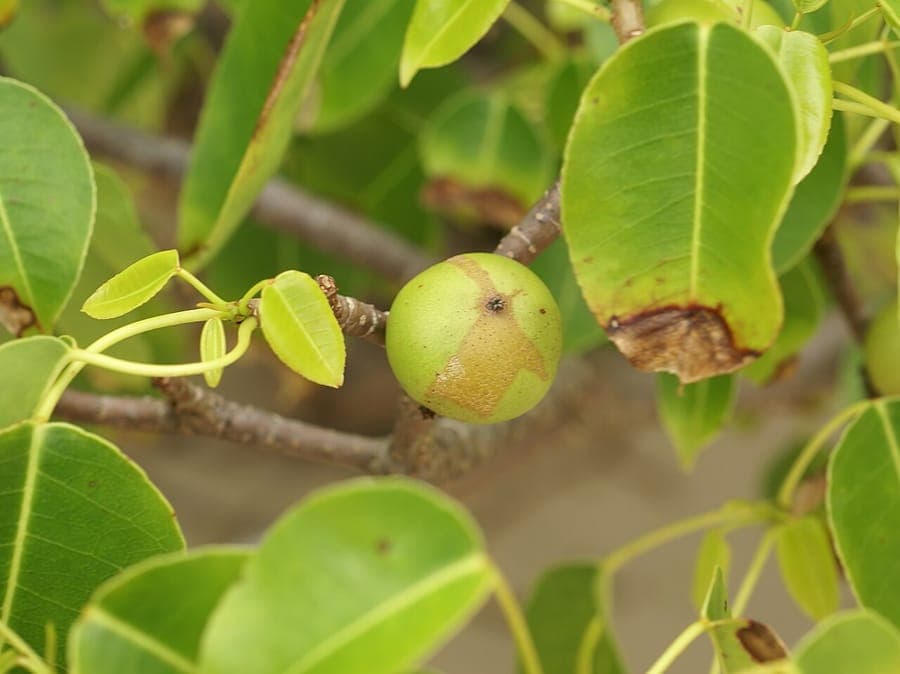
Hans Hillewaert / CC BY-SA 3.0, via Wikimedia Commons
Manchineel tree: complete guide
Hippomane mancinella
¿Quieres ver Manchineel tree: complete guide en tu jardín?
1 minuto, sin tarjeta de crédito
Overview
The manchineel tree (Hippomane mancinella) is an extremely toxic tropical tree native to Caribbean islands, northeastern coast of South America to Venezuela. The plant is widely known for its caustic sap that can cause severe skin conditions, nearly chemical burning. All plant parts are toxic: leaves, bark, fruits, sap. This tree is typically cultivated as a botanical curiosity and requires considerable safety precautions. Not suitable for families with children or pets.
Appearance and bloom
The manchineel tree grows up to 15 meters tall with a dense, compact canopy. The leaves are smooth, glossy and lance-shaped, 7-12 centimeters long. Flowers are inconspicuous, small and greenish, with male and female flowers separate. The fruits are extremely dangerous: they resemble small apples of 3-4 centimeters diameter, yellow to green when ripe. This closely resembles edible fruits which is particularly dangerous. Sap can cause harm even at distance.
Ideal location
Plant only in very warm, sheltered gardens or special greenhouses. Temperature must not drop below 15 degrees Celsius. Place in completely isolated location, out of reach of children, pets and unsuspecting visitors. Ensure complete protection against contact. Ensure good drainage and full sun to partial shade. No contact with other plants recommended.
Diseño gratis
¿Quieres ver Manchineel tree: complete guide en tu jardín? Crea un diseño gratis ahora.
Soil
Well-drained, sandy to loamy soil is ideal. pH between 6.0 and 7.5. Add extra sand and potting soil for optimal drainage. Avoid waterlogging absolutely.
Watering
Water carefully and regularly during growing season. Allow soil to partly dry between waterings. Avoid waterlogging absolutely. Do not use regular plant care workers without explicit warning.
Pruning
Minimal pruning without exception. ALWAYS wear protective gloves, eye protection and complete body coverage. Stop work at slightest sign of skin irritation. Wash thoroughly with copious water after contact. Do not delay in rinsing.
Maintenance calendar
April-May: Growing season begins cautiously. June-September: Regular care with caution. October-March: Rest period, minimal care.
Winter hardiness
Not winter hardy; protect very well or move indoors at temperatures below 15 degrees.
Companion plants
Do NOT plant close to other plants. Isolate completely due to toxicity. No shared gardens recommended.
Closing
This tree requires special attention and expertise. Research strict regulations for toxic and dangerous plants in your area. This plant is for experts only. Fully understand the risk. More information on gardenworld.app. EXERCISE EXTREME CAUTION!
¿Quieres ver Manchineel tree: complete guide en tu jardín? Crea un diseño gratis ahora.
Sube una foto, elige un estilo y obtén un diseño fotorrealista con lista de plantas en menos de un minuto.
Más de 10.000 jardines diseñados
Sin tarjeta de crédito


Plantas similares
Woolly mercury: complete guide
Mercurialis tomentosa
All about Mercurialis tomentosa, the woolly mercury from southwestern Europe: site, soil, watering, care and garden design tips.
Shurur: complete guide
Euphorbia fruticosa
Everything about Shurur: cultivation in dry climates, xeriscaping, care and tips for drought-resistant gardens in warm climates
Glary spurge: complete guide
Euphorbia glareosa
Everything about glary spurge: cultivation, maintenance, frost hardiness and use in Mediterranean and mountain-inspired gardens