
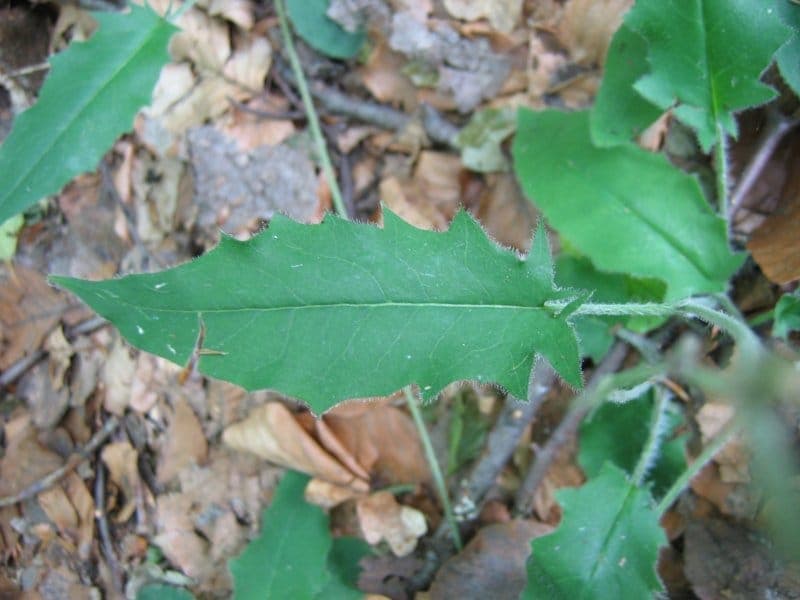
Kristian Peters -- Fabelfroh 07:57, 20 October 2006 (UTC) / CC BY-SA 3.0, via Wikimedia Commons
Wall hawkweed: complete guide
Hieracium murorum
¿Quieres ver Wall hawkweed: complete guide en tu jardín?
1 minuto, sin tarjeta de crédito
Overview
Hieracium murorum, or wall hawkweed, is an elegant wildflower that combines natural grace with practicality. This member of the daisy family displays delicate yellow flowers and adapts exceptionally well to diverse growing conditions. Originally distributed from South Greenland to the Caucasus, wall hawkweed is perfect for temperate gardens pursuing a more natural aesthetic.
The plant is especially beloved by naturalistic gardeners because it is a valuable food source for butterflies and bees. Its occurrence along ancient walls and woodland edges gives it its common name.
Appearance and Bloom
Wall hawkweed is an herbaceous perennial with rounded rosette-forming foliage. The leaves are elongated oval, often with dark spots or purplish tints. During bloom, an elegant stem with branches can reach up to 60 cm high.
The flowers are tiny, bright yellow, approximately 1 cm across, gathered in delicate flower clusters. Blooming period is from May through August. Plants usually self-seed, creating a naturalistic character in the garden.
Ideal Location
Wall hawkweed grows exceptionally well in partial shade to full sun. It prefers shaded woodland edges and niches. However, full sun is also acceptable, especially in cooler climates. The plant also does well against walls, hence its name.
The plant is highly resilient against seemingly unfavorable positions. It even grows in wall crevices and between stones, making it ideal for rock gardens.
Soil
Wall hawkweed is extraordinarily flexible with soil types. It accepts acidic to neutral, even slightly alkaline terrain. The plant grows well on lean, stony soils. Well-draining soil is preferred, but the plant is tolerant.
The plant establishes on barely improved soils. Heavy clay can be enhanced, but wall hawkweed accepts it as well. Organic matter is not a requirement.
Diseño gratis
¿Quieres ver Wall hawkweed: complete guide en tu jardín? Crea un diseño gratis ahora.
Watering
Once established, wall hawkweed is highly drought-tolerant. Newly planted specimens need regular water during the growing season. Mature plants usually survive on natural rainfall.
The plant prefers normally moist soils but can endure dry periods without problems. Excessive wet feet should be avoided.
Pruning
Wall hawkweed requires minimal pruning. The plant grows in its natural form without formal shaping. After blooming, spent flower clusters can be removed for neatness.
Allow the plant to spread naturally via seed. Remove only strong weed competitors. In spring, dead material can be removed.
Maintenance Calendar
May-August: Monitor flowering and seed production. September: Leave seed heads for dispersal. Fall-Winter: Natural foliage decline. Spring: Remove dead material.
Winter Hardiness
Wall hawkweed is fully hardy throughout Europe, even in Greenland. The plant survives temperatures well below -20 degrees C without protection. In very cold areas, light mulch helps.
The plant is a strong, healthy perennial that persists for many years.
Companion Plants
Wall hawkweed combines perfectly with wildflowers and woodland plants. Ideal companions include:
- Other Hieracium species
- Campanula (bellflower)
- Helleborus (hellebore)
- Ferns (ferns)
- Hedera (ivy)
Conclusion
Wall hawkweed is an indispensable choice for those seeking to establish a natural wildflower garden. Its flexibility, beauty, and ecological value make it incredibly valuable. You'll find it at most garden centers or through specialist wildflower suppliers.
Transform your garden with wall hawkweed on gardenworld.app. Discover more wildflower options at gardenworld.app/en and create a wildlife haven in your yard.
¿Quieres ver Wall hawkweed: complete guide en tu jardín? Crea un diseño gratis ahora.
Sube una foto, elige un estilo y obtén un diseño fotorrealista con lista de plantas en menos de un minuto.
Más de 10.000 jardines diseñados
Sin tarjeta de crédito


Plantas similares
Calendula stellata: complete guide
Calendula stellata
Complete guide to Calendula stellata, the star-flowered marigold from Sicily: location, soil, watering and companion planting tips.
Korean chrysanthemum: complete guide
Chrysanthemum x rubellum
Chrysanthemum x rubellum is a hardy autumn perennial with single pink to copper flowers from August to November. Care and combinations.
Helianthus divaricatus: complete guide
Helianthus divaricatus
Helianthus divaricatus is a North American woodland sunflower with yellow summer blooms, ideal for naturalistic borders and shady edges.