
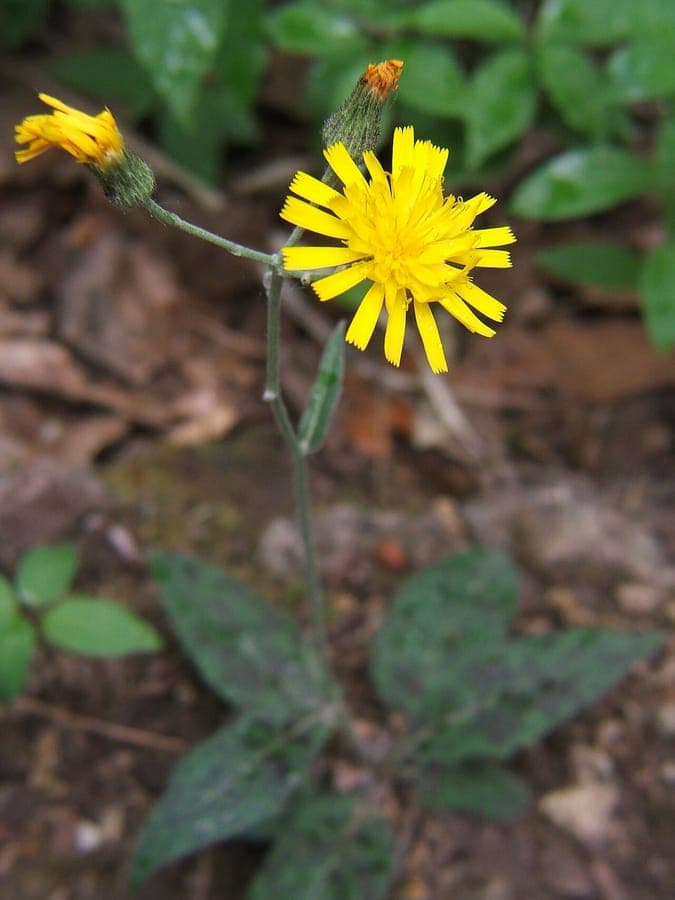
Pipi69e / Public domain, via Wikimedia Commons
Spotted hawkweed: complete guide
Hieracium maculatum
¿Quieres ver Spotted hawkweed: complete guide en tu jardín?
1 minuto, sin tarjeta de crédito
Overview
Hieracium maculatum, commonly known as spotted hawkweed, is a hardy and reliable plant for herbaceous borders and naturalistic gardens. This member of the Asteraceae family (daisy family) captivates with bright yellow flowers and a tolerant growth habit. With a range spanning Europe to the Caucasus, spotted hawkweed is perfect for temperate climates.
The plant is valued for its flexibility across different soil types and its appeal to pollinators. It is widely used in wildlife gardens and meadow plantings, where it imparts a natural aesthetic.
Appearance and Bloom
Spotted hawkweed is a herbaceous plant with a dense, compact growth pattern. The plant produces narrow leaves with subtle spots or markings, from which the botanical name derives. These markings are the distinctive feature of the species.
Yellow flowers appear from May through August in dense, ornamental clusters. These blooms are approximately 1-2 cm across and grow in multiple inflorescences above the foliage. The plant typically reaches 30-60 cm in height, making it ideal for mid-border positions.
Ideal Location
Spotted hawkweed thrives in sunny to partially shaded positions. In warm climates, partial shade may be preferred to prevent drought stress. The plant requires full sun (at least 6 hours of direct sunlight daily) for optimal flowering.
The plant is robust and tolerates some wind exposure. Position it where it can flourish without direct competition from vigorous neighbors.
Soil
Hieracium maculatum is not particular about soil composition. The plant grows well in acidic to neutral terrain (pH 5.0-5.5). Well-draining soil is essential. Heavy clay soils can be improved by adding sand or compost.
The plant tolerates lean soils well, making it excellent for poor gardens. However, organic matter such as leaf mold or incorporated compost can stimulate growth.
Diseño gratis
¿Quieres ver Spotted hawkweed: complete guide en tu jardín? Crea un diseño gratis ahora.
Watering
Once established, spotted hawkweed requires moderate watering. Water regularly during dry periods, especially for newly planted specimens. The plant prefers slightly moist soil but accepts drier conditions.
Avoid waterlogged conditions; well-adjusted drainage is essential. In average rainfall, the plant often gets sufficient water naturally. Water when the soil surface feels dry.
Pruning
Spotted hawkweed requires minimal pruning. After flowering (August-September), spent flowers can be removed to encourage further blooming and keep the plant tidy. Remove dead or damaged foliage in spring.
The plant is not invasive and grows in place without intensive shaping. Allow it to develop its natural form. Complete spring cutback helps rejuvenate aging specimens.
Maintenance Calendar
March-April: Remove dead foliage and perform light pruning. May-August: Monitor watering, especially during dry spells. September-October: Deadhead spent flowers. Winter: Protect from extreme frost in cold climates with mulch.
Winter Hardiness
Spotted hawkweed is fully hardy throughout Europe. The plant tolerates temperatures to -15 degrees C without problems. In very cold regions, a light mulch layer (5-10 cm) in November helps.
The plant grows as a perennial; foliage may disappear in extreme winters, but roots survive. In mild winters, the plant may remain evergreen.
Companion Plants
Spotted hawkweed combines well with other ground covers and ornamental grasses. Ideal companions include:
- Sedum species (stonecrops)
- Ornamental grasses (Stipa, Festuca)
- Nepeta cataria (catnip)
- Salvia species (sage)
- Geranium sanguineum (bloody cranesbill)
Conclusion
Hieracium maculatum is an unparalleled choice for those seeking a low-maintenance plant with attractive yellow flowers. The plant's versatility makes it suitable for diverse garden designs, from formal to naturalistic. It is available at most garden centers, including specialist nurseries.
Make use of this robust plant and create a pollinator-friendly garden on gardenworld.app. Discover more unique plant testimonies at gardenworld.app/en and begin transforming your garden today.
¿Quieres ver Spotted hawkweed: complete guide en tu jardín? Crea un diseño gratis ahora.
Sube una foto, elige un estilo y obtén un diseño fotorrealista con lista de plantas en menos de un minuto.
Más de 10.000 jardines diseñados
Sin tarjeta de crédito


Plantas similares
Calendula stellata: complete guide
Calendula stellata
Complete guide to Calendula stellata, the star-flowered marigold from Sicily: location, soil, watering and companion planting tips.
Korean chrysanthemum: complete guide
Chrysanthemum x rubellum
Chrysanthemum x rubellum is a hardy autumn perennial with single pink to copper flowers from August to November. Care and combinations.
Helianthus divaricatus: complete guide
Helianthus divaricatus
Helianthus divaricatus is a North American woodland sunflower with yellow summer blooms, ideal for naturalistic borders and shady edges.