
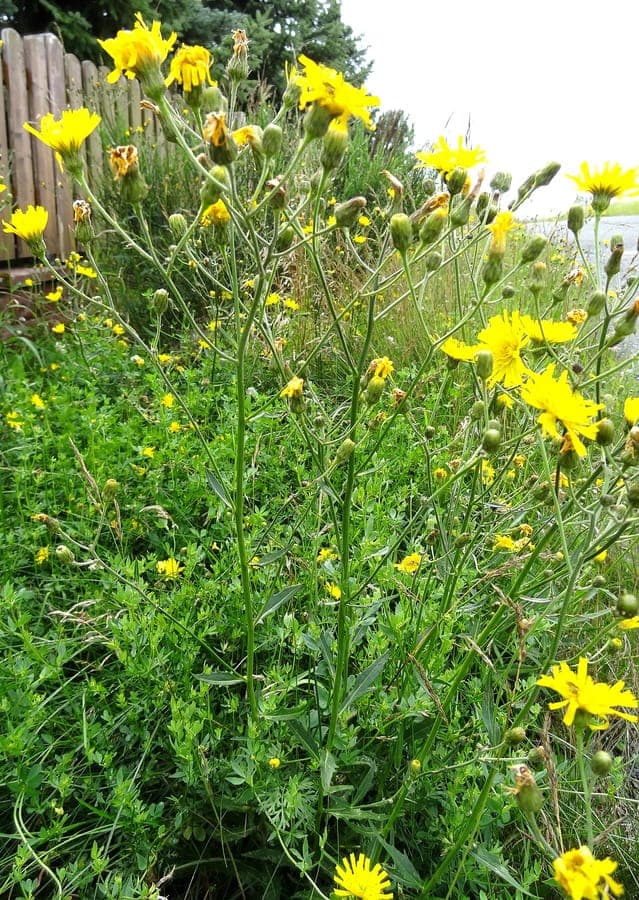
Udo Schmidt from Deutschland / CC BY-SA 2.0, via Wikimedia Commons
Hieracium laevigatum: complete guide
Hieracium laevigatum
¿Quieres ver Hieracium laevigatum: complete guide en tu jardín?
1 minuto, sin tarjeta de crédito
Overview
Hieracium laevigatum, commonly known as smooth hawkweed, is an elegant perennial from the Asteraceae family (the same family as asters and daisies). This European native grows low and produces charming yellow flowers from July through August. The plant is renowned for its frost tolerance and ease of cultivation, making it perfect for practical gardeners.
Smooth hawkweed is a plant that demands little attention yet offers much in return. With its grey, smooth foliage and cheerful yellow blooms, it adds both visual appeal and biological value to your garden. The plant attracts pollinators and serves as an excellent drought-tolerant ground cover.
Appearance and Flowering
Smooth hawkweed forms a low, dense growth habit with grey, hairless leaves that feel smooth to the touch. This characteristic inspired its common name. The plant typically reaches heights of 30 to 60 centimeters, depending on growing conditions. The foliage remains decorative throughout most seasons.
The flowering period runs from July through August, when the plant becomes covered with hundreds of small, yellow blooms. Each flower is only a few centimeters across, but the abundance creates a spectacular effect. The yellow color contrasts beautifully with the greyish-green foliage.
After flowering, interesting seed heads form that attract birds, adding ecological value to your garden.
Ideal Location
Smooth hawkweed grows best in full sun. The plant prefers six to eight hours of direct sunlight daily. In sunny locations, the plant develops its strongest growth and most abundant flowering.
The plant can also grow in partial shade but will become less compact and produce fewer flowers. Avoid shaded locations; the plant will weaken and become sparse.
Excellent for gravel gardens, alpine gardens, or as edging along pathways and garden walls. When planted in large groups, it creates spectacular displays in late summer.
Soil Requirements
Smooth hawkweed is not fussy about soil as long as it drains well. The plant tolerates lean, dry soils better than rich, wet ones. This makes it ideal for those difficult, dry corners of your garden that many plants refuse.
In heavy clay soils, add sand and gravel to improve drainage. A pH between 4.5 and 5.0 is ideal (slightly more acidic than Bohemian Cranesbill). The plant actually prefers poor, well-graveled soil.
Because the plant prefers lean soil, you need not fertilize. This makes it exceptionally low-maintenance.
Diseño gratis
¿Quieres ver Hieracium laevigatum: complete guide en tu jardín? Crea un diseño gratis ahora.
Watering
Once established, smooth hawkweed is extremely drought-tolerant. The plant develops deep roots that access moisture reserves efficiently. Regular watering during establishment helps, but afterwards is rarely necessary.
During extremely dry summers, occasional watering can help, though not excessively. Waterlogging is problematic and can cause rot. The plant performs far better under dry than wet conditions.
During winter, minimal water is needed unless prolonged drought occurs.
Pruning and Maintenance
Smooth hawkweed requires no pruning. The plant is self-cleaning and rarely forms dense masses. After flowering, spent flowers can be deadheaded, though this is not essential.
The plant does not form unwanted thick mats. Dead material in spring can be gently removed. Overall, this is an extremely accommodating plant requiring minimal intervention.
No fertilization needed. The plant actually thrives in poor soils.
Maintenance Calendar
In early spring, remove dead wood if necessary, though this is usually unnecessary. May through June is growth period when regular watering is beneficial. July through August is the flowering period with spectacular yellow blooms.
After August, leave seed heads for bird food, or remove for neat appearance. September through October is decline period, November through March dormancy.
Winter Hardiness
Smooth hawkweed is reliably hardy throughout Europe, including the UK and northern regions. The plant tolerates severe frost without any issue. Heavy snow may break some young shoots, but this is not truly problematic.
The plant requires no winter protection. Dead leaves can serve as mulch, providing additional insulation.
In spring, the plant recovers vigorously, often earlier than many other perennials.
Companion Plants
Smooth hawkweed works nicely with other drought-lovers such as various Sedum species, Stonecrop, and dry-soil specialists like Dianthus. It also pairs well with low-growing Salvias in attractive combinations.
Metallic grey-foliaged plants like Artemisia or Santolina provide nice contrast. Purple-flowering ground covers create beautiful color interplay.
In alpine settings, combine it nicely with alpine Phlox, rock garden plants, and other yellow-flowering alpine mats.
Conclusion
Smooth hawkweed is an ideal plant for those seeking drought-tolerant, low-maintenance gardens. With its yellow summer blooms and grey, interesting foliage, it adds much to gardens in dry locations. Visit gardenworld.app for more advice on drought-tolerant planting and free garden design.
On gardenworld.app, you can design your front yard completely with modern, sustainable planting schemes. With plants like smooth hawkweed, you create a garden requiring minimal water while remaining full of life and color.
¿Quieres ver Hieracium laevigatum: complete guide en tu jardín? Crea un diseño gratis ahora.
Sube una foto, elige un estilo y obtén un diseño fotorrealista con lista de plantas en menos de un minuto.
Sin tarjeta de crédito


Plantas similares
Calendula stellata: complete guide
Calendula stellata
Complete guide to Calendula stellata, the star-flowered marigold from Sicily: location, soil, watering and companion planting tips.
Korean chrysanthemum: complete guide
Chrysanthemum x rubellum
Chrysanthemum x rubellum is a hardy autumn perennial with single pink to copper flowers from August to November. Care and combinations.
Helianthus divaricatus: complete guide
Helianthus divaricatus
Helianthus divaricatus is a North American woodland sunflower with yellow summer blooms, ideal for naturalistic borders and shady edges.