
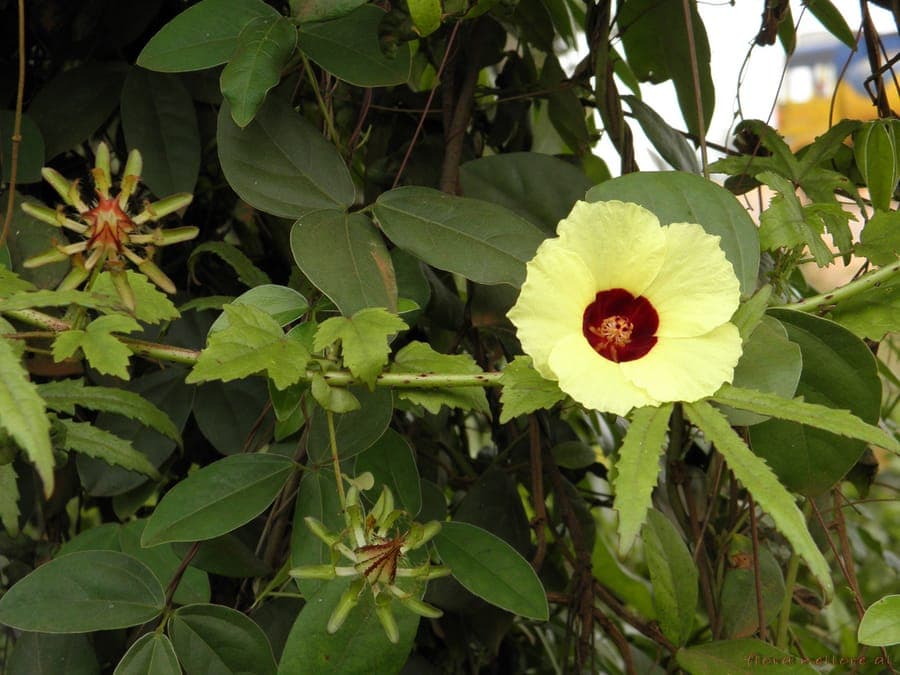
Lalithamba from India / CC BY 2.0, via Wikimedia Commons
Hibiscus surattensis: complete guide
Hibiscus surattensis
¿Quieres ver Hibiscus surattensis: complete guide en tu jardín?
1 minuto, sin tarjeta de crédito
Hibiscus surattensis, commonly known as prickly hibiscus creeper, comfortroot, or pineland hibiscus, is a vigorous tropical climbing vine native to warm regions of Africa and Asia. This plant is prized for its bright yellow flowers and rapid growth, making it excellent for covering trellises, fences, and walls in tropical and subtropical gardens. The plant produces flowers almost continuously during the growing season.
Appearance and bloom
Prickly hibiscus creeper is a fast-growing climber capable of reaching 3 to 4 meters in height under ideal conditions. The stems are armed with small prickles, giving the plant a distinctive textured appearance. Leaves are oval to lance-shaped with softly undulating margins and fresh green color. Flowers are bright yellow and emerge singly or in small clusters from leaf axils. Each bloom features five large, widely-opened petals with prominent stamens creating an open-faced, cheerful appearance. Individual flowers typically last two to three days, but numerous new blooms continuously emerge.
Ideal location
Prickly hibiscus thrives in full sun, requiring at least 6 to 8 hours of direct sunlight daily for optimal flowering. In tropical regions, the plant tolerates partial shade but flowers more prolifically in bright conditions. Ensure good air circulation to minimize fungal issues and pest infestations. Position near a sturdy support structure for climbing.
The plant loves warmth. Maintain temperatures above 10 degrees Celsius year-round; below this, growth slows dramatically and dormancy sets in. In temperate climates, bring the plant indoors from October through May.
Soil
Use well-draining soil rich in organic matter. A blend of garden soil with 20 to 30 percent coco peat, peat moss, and coarse sand provides ideal growing medium. The plant tolerates slightly acidic to neutral soils (pH 5.5-7.5). Waterlogging causes root rot, so drainage is critical. Use containers with ample drainage holes.
Diseño gratis
¿Quieres ver Hibiscus surattensis: complete guide en tu jardín? Crea un diseño gratis ahora.
Watering
Keep soil moderately moist during growing and blooming seasons. Water when the top 2 centimeters of soil feel dry. Reduce watering during winter dormancy, but never allow the root ball to dry completely. During hot summers, daily watering may be necessary. Always ensure excess water drains freely from the container.
Pruning
Regular pruning encourages denser growth and prolific flowering. After blooming periods, cut back vigorous stems to encourage branching. Remove all dead wood and weak growth. Maintain sufficient nodes for future flowering. Pinch back shoot tips periodically to create a fuller, bushier plant.
Maintenance calendar
January-March: Minimal care; moderate watering; prepare for spring growth. April-May: Increase water and light; fertilize every two weeks. June-September: Full growth season; regular watering; biweekly feeding; monitor for pests and diseases. October-November: Flowering declines; heavy pruning; reduce watering and feeding. December: Minimal care; bring indoors in temperate regions; protect from cold.
Winter hardiness
Prickly hibiscus creeper is tender and unsuitable for outdoor winter cultivation in temperate regions. Temperatures below 10 degrees Celsius cause serious damage or death. In USDA zones 9b to 11, the plant can remain outdoors year-round with wind protection and mulching during cool months. Elsewhere, containerized plants must be moved indoors before autumn frosts.
Companion plants
Pair with other heat-loving tropical climbers and flowering plants: jasmine species, passion flower, mandevilla, bougainvillea, and morning glory. All these thrive in full sun and warm conditions.
Conclusion
Prickly hibiscus creeper is an vigorous climbing plant perfect for warm gardens and conservatories. With proper support, adequate sunlight, well-draining soil, and regular feeding, this plant provides continuous yellow flowers throughout the growing season. Purchase quality specimens from reputable garden centres and online retailers. Visit gardenworld.app for more tropical plant guides and design inspiration. This African-Asian native delivers reliable tropical charm and fast growth that transforms ordinary structures into lush, flowering displays.
¿Quieres ver Hibiscus surattensis: complete guide en tu jardín? Crea un diseño gratis ahora.
Sube una foto, elige un estilo y obtén un diseño fotorrealista con lista de plantas en menos de un minuto.
Más de 10.000 jardines diseñados
Sin tarjeta de crédito


Plantas similares
Crimean linden: complete guide
Tilia × euchlora
Crimean linden is an elegant, fast-growing shade tree ideal for large gardens. Discover cultivars, spacing, maintenance tips and winter hardiness.
California flannelbush: complete guide
Fremontodendron californicum
Everything about California flannelbush (Fremontodendron californicum): sunny placement, drainage, pruning and care for this spectacular yellow-flowering shrub.
Hairy rose mallow: complete guide
Hibiscus moscheutos subsp. lasiocarpos
Full growing guide for hairy rose mallow (Hibiscus moscheutos subsp. lasiocarpos): location, soil, watering, winter hardiness and garden design tips.