
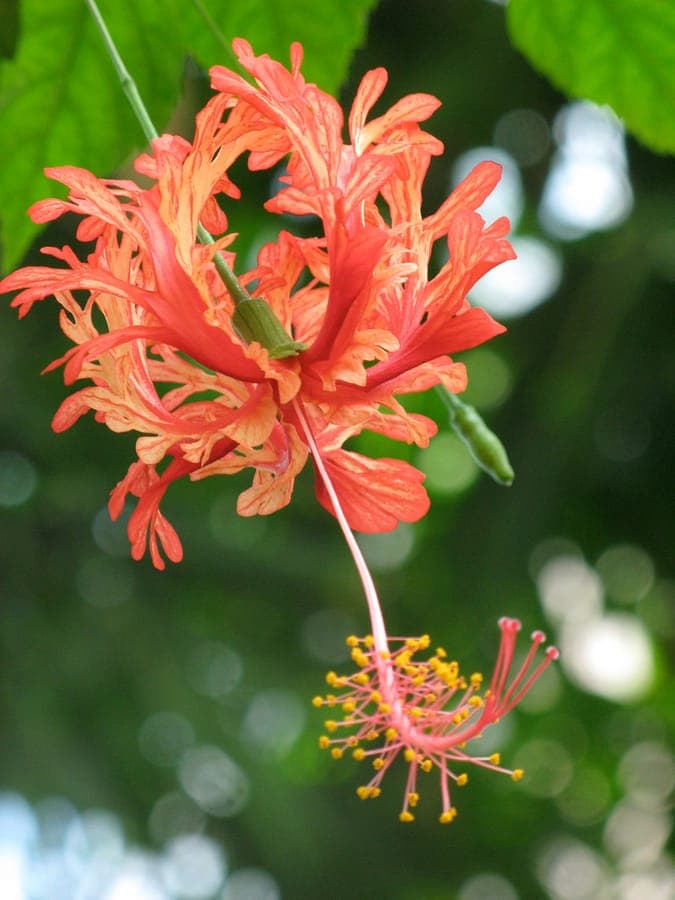
Botanischer Garten TU Darmstadt / CC BY 2.0, via Wikimedia Commons
Hibiscus schizopetalus: complete guide
Hibiscus schizopetalus
¿Quieres ver Hibiscus schizopetalus: complete guide en tu jardín?
1 minuto, sin tarjeta de crédito
Hibiscus schizopetalus, commonly known as coral hibiscus, fringed rosemallow, or campanilla, is a striking tropical flowering shrub native to East Africa, particularly Kenya and Tanzania. This plant is celebrated for its extraordinarily fringed petals that hang elegantly like tiny lanterns, creating a unique silhouette rarely seen in temperate gardens. The flowers are predominantly red to coral-red and bloom almost year-round under ideal conditions, making this shrub a true showstopper whether grown in a conservatory, greenhouse, or warm outdoor garden.
Appearance and bloom
Coral hibiscus grows as a multi-stemmed shrub reaching 1 to 2 meters in height, depending on climate and pruning practices. The foliage consists of lance-shaped, glossy dark-green leaves arranged alternately along the branches. The true spectacle lies in the flowers: they emerge in clusters with deeply fringed, reflexed petals that hang downward, creating an ornamental bell-like form. Flower color ranges from bright red to coral-red, often with a contrasting deep red or yellow throat and prominent red or yellow stamens that extend gracefully beyond the petals. Individual flowers typically last two to four days, but the plant produces new blooms continuously throughout the growing season, often bearing dozens of flowers simultaneously in mid-summer.
Ideal location
Coral hibiscus thrives in bright, sunny positions. In temperate climates, a south-facing wall or conservatory receives ideal conditions with at least 6 to 8 hours of direct sunshine daily. In tropical regions, the plant adapts to partial shade but blooms more abundantly with full sun. Protect from intense afternoon heat in extremely hot climates, as this can cause leaf scorch and reduced flowering.
Warmth is essential. Maintain minimum temperatures above 10 degrees Celsius, preferably 15 degrees or higher year-round. In temperate regions, bring the plant indoors from October through May. Place it near a south-facing window with maximum light to sustain blooming throughout winter.
Soil
Use well-draining, slightly acidic to neutral soil enriched with organic matter. A mixture of garden soil with 30 to 40 percent coco peat or composted bark works excellently. Add perlite or coarse sand to improve drainage further. Target a pH of 5.5 to 7.0. Never allow waterlogging, as roots rot quickly. Ensure containers have ample drainage holes and saucers beneath to catch excess water.
Diseño gratis
¿Quieres ver Hibiscus schizopetalus: complete guide en tu jardín? Crea un diseño gratis ahora.
Watering
Keep soil evenly moist during the growing and blooming season (May through October). Water when the top 2 to 3 centimeters of soil feel dry. Reduce watering significantly in winter, providing just enough to prevent the root ball from drying completely. In hot summers, you may water daily, but always ensure excess water drains freely.
Prefer rainwater or distilled water to avoid mineral deposits that can cloud foliage. Water at the base of the plant to prevent wet flowers, which can cause petal spotting or fungal damage. Avoid heavy misting of foliage.
Pruning
Regular pruning creates a compact, fuller shrub with superior flowering. After blooming ends (October-November), cut back to about two-thirds of original height. Remove all dead wood, crossing branches, and thin growth. Leave sufficient nodes, as flowers emerge from leaf axils. During the growing season, pinch back shoot tips to encourage branching and bushier form.
Remove diseased, yellowed, or damaged leaves promptly to maintain plant health and vigor.
Maintenance calendar
January-March: Minimal watering; light feeding; prepare for spring growth. April-May: Increase watering and light gradually; fertilize every two weeks. June-September: Peak growth and bloom season; water regularly; apply fertilizer every two weeks; monitor for pests. October-November: Blooming continues; prune hard; reduce water and feeding. December: Dormancy period; minimal water; protect from cold drafts; no feeding needed.
Winter hardiness
Coral hibiscus is tender and unsuitable for outdoor cultivation in temperate climates. Temperatures below 10 degrees Celsius cause severe damage, and frost is fatal. In USDA zones 9b to 11, the plant can remain outdoors year-round with wind protection and mulching during cool months. Elsewhere, it must be grown in a container and moved indoors before autumn frosts begin.
Companion plants
Pair coral hibiscus with other heat-loving tropical plants:
Bougainvillea: Demanding full sun and heat; produces vibrant bracts in many colors. Plumbago: Delicate sky-blue flowers; thrives in warmth and strong light. Lantana: Dense flower clusters in warm tones; very sunny locations. Jasmine, Mandevilla, Ixora: All require warmth, sun, and well-drained soil.
Avoid vigorous shade-casting plants and those with invasive root systems.
Conclusion
Coral hibiscus rewards dedicated growers with stunning blooms and elegant form. Provide a warm, sunny location, well-draining soil, consistent moisture, and regular feeding during the growing season. Purchase quality plants from reputable garden centres or specialized online retailers across the UK and Europe. In warm climates, enjoy this tropical treasure outdoors; in cooler regions, cultivate it in a greenhouse or conservatory for year-round enjoyment. Visit gardenworld.app to discover more tropical plant guides and create your own paradise. This African native is truly a masterpiece of natural elegance.
¿Quieres ver Hibiscus schizopetalus: complete guide en tu jardín? Crea un diseño gratis ahora.
Sube una foto, elige un estilo y obtén un diseño fotorrealista con lista de plantas en menos de un minuto.
Más de 10.000 jardines diseñados
Sin tarjeta de crédito


Plantas similares
Crimean linden: complete guide
Tilia × euchlora
Crimean linden is an elegant, fast-growing shade tree ideal for large gardens. Discover cultivars, spacing, maintenance tips and winter hardiness.
California flannelbush: complete guide
Fremontodendron californicum
Everything about California flannelbush (Fremontodendron californicum): sunny placement, drainage, pruning and care for this spectacular yellow-flowering shrub.
Hairy rose mallow: complete guide
Hibiscus moscheutos subsp. lasiocarpos
Full growing guide for hairy rose mallow (Hibiscus moscheutos subsp. lasiocarpos): location, soil, watering, winter hardiness and garden design tips.