
Invertzoo / CC BY-SA 4.0, via Wikimedia Commons
Hibiscus sabdariffa: complete guide
Hibiscus sabdariffa
¿Quieres ver Hibiscus sabdariffa: complete guide en tu jardín?
1 minuto, sin tarjeta de crédito
Overview
Hibiscus sabdariffa, commonly known as roselle or Indian sorrel, is a fascinating tropical plant from the Malvaceae family. This semi-woody shrub thrives in tropical and subtropical climates and is celebrated for its stunning flowers, productive fruits, and diverse uses. The plant has a rich history in African gardening and is now cultivated worldwide for its ornamental and culinary qualities.
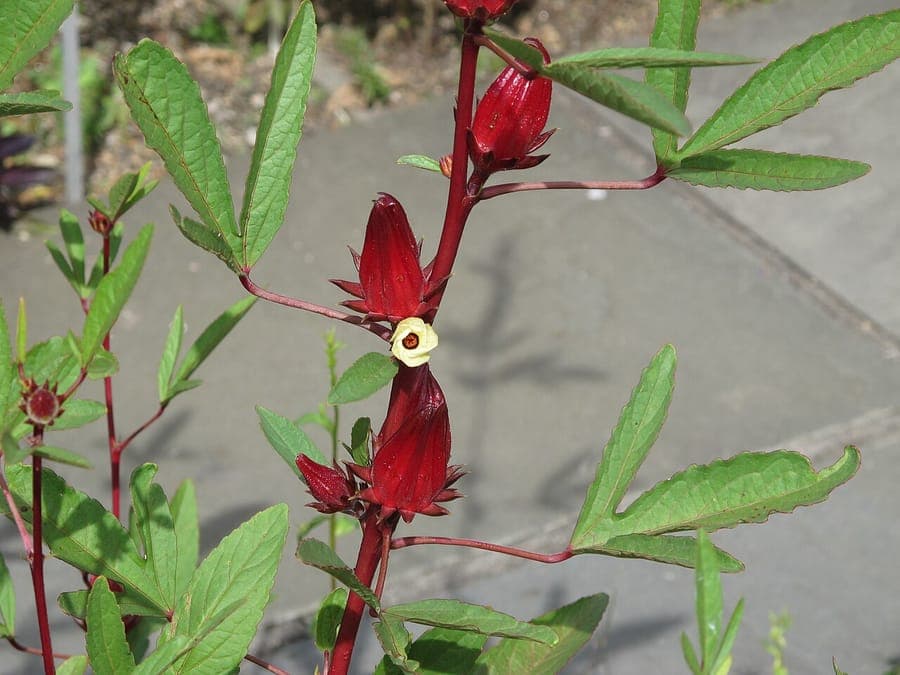
The roselle is especially prized for its vibrant red sepals that create a beautiful, eye-catching display. This plant combines aesthetic appeal with practical utility, making it an excellent choice for gardeners seeking something distinctive and productive.
Appearance and blooming
Hibiscus sabdariffa exhibits striking characteristics with deeply lobed foliage that provides elegant visual interest. The plant typically reaches 1.5 to 2 meters in height, depending on growing conditions. The leaves are greenish, often with red veining that adds extra ornamental value.
The flowers are the plant's crowning glory, appearing in summer and fall with yellowish petals and deep purple to burgundy centers. Each flower lasts just one day, but the plant continuously produces new blooms, ensuring an extended flowering season. After pollination, the distinctive red sepals develop and thicken into fleshy, productive calyces.
The characteristic fruits are capsules surrounded by these vibrant, edible red sepals that you can harvest.
Ideal location
Hibiscus sabdariffa thrives in warm, sunny positions. This plant requires at least 6 to 8 hours of direct sunlight daily to flower prolifically. Less light results in reduced blooming.
Place the plant where it receives protection from strong winds that might damage stems and flowers. In temperate climates, container cultivation is ideal, allowing you to move the plant indoors when temperatures drop below 10 degrees Celsius.
If planting in the ground, ensure excellent drainage to prevent waterlogging.
Soil
This plant prefers fertile, well-draining soil with a pH between 5.5 and 6.5. Incorporate sand into the growing medium to enhance drainage and prevent compaction. An ideal potting mixture consists of three parts potting soil and one part coarse sand.
Enrich the soil with organic matter such as compost or aged manure. This helps retain moderate moisture while maintaining excellent drainage. Apply organic fertilizer several months before planting for optimal establishment.
Diseño gratis
¿Quieres ver Hibiscus sabdariffa: complete guide en tu jardín? Crea un diseño gratis ahora.
Watering
Water requirements are moderate to high. Keep soil consistently moist but never waterlogged. During the active growing season, water more frequently than during dormancy.
Water when the top inch of soil feels dry. In hot periods, daily watering may be necessary, but always ensure excellent drainage to prevent root rot. Container plants require more frequent watering than in-ground specimens.
Pruning
Regular pruning maintains compact form and encourages abundant flowering. Prune in spring before active growth begins. Remove dead or damaged branches and trim approximately one-third of the plant's height to stimulate branching.
Pinching branch tips promotes fuller, more compact growth with increased flower production.
Maintenance calendar
Spring: Prune and repot. Begin regular feeding. Scout for pests. Summer: Water consistently. Enjoy continuous blooms. Harvest ripe sepals. Fall: Reduce feeding. Prepare for dormancy. Monitor temperatures. Winter: Minimize watering. Bring indoors in cool climates. Protect from frost.
Winter hardiness
Hibiscus sabdariffa is frost-sensitive and cannot tolerate temperatures below 10 degrees Celsius. In temperate zones, bring plants indoors before the first frost. In tropical and subtropical regions, outdoor overwintering is possible with protection.
In mild-winter areas, mulch heavily in autumn to protect roots. Young plants are more vulnerable than established specimens.
Companion plants
Hibiscus sabdariffa pairs well with other heat-loving plants:
Bouganvillea - Similar tropical needs and continuous blooming Abelmoschus esculentus (okra) - Family relative with comparable requirements Passiflora - Complementary flowering periods Canna lilies - Bold foliage contrast
Ensure companions share similar water and light requirements.
Closing thoughts
Hibiscus sabdariffa is an extraordinary plant for warm climates or greenhouse cultivation. The spectacular flowers, productive fruits, and versatile applications make it a valuable addition to any tropical or exotic garden. With proper care and placement, this plant will provide years of beauty and bounty.
Available at local garden centers. Visit gardenworld.app/en for more plant guides and garden designs!
¿Quieres ver Hibiscus sabdariffa: complete guide en tu jardín? Crea un diseño gratis ahora.
Sube una foto, elige un estilo y obtén un diseño fotorrealista con lista de plantas en menos de un minuto.
Más de 10.000 jardines diseñados
Sin tarjeta de crédito


Plantas similares
Crimean linden: complete guide
Tilia × euchlora
Crimean linden is an elegant, fast-growing shade tree ideal for large gardens. Discover cultivars, spacing, maintenance tips and winter hardiness.
California flannelbush: complete guide
Fremontodendron californicum
Everything about California flannelbush (Fremontodendron californicum): sunny placement, drainage, pruning and care for this spectacular yellow-flowering shrub.
Hairy rose mallow: complete guide
Hibiscus moscheutos subsp. lasiocarpos
Full growing guide for hairy rose mallow (Hibiscus moscheutos subsp. lasiocarpos): location, soil, watering, winter hardiness and garden design tips.