
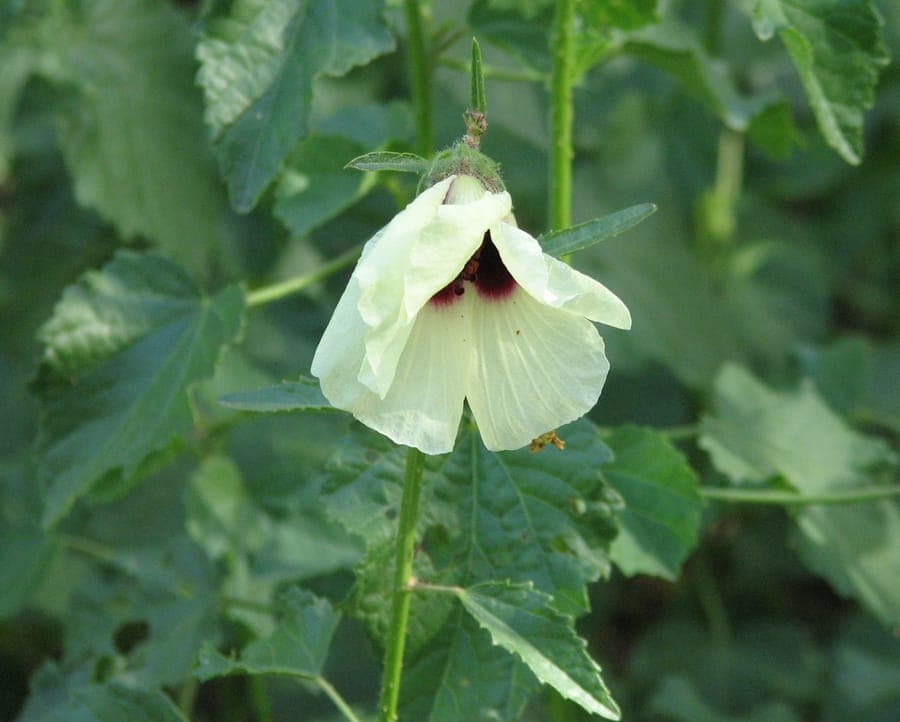
Melburnian / CC BY 3.0, via Wikimedia Commons
Hibiscus diversifolius: complete guide
Hibiscus diversifolius
¿Quieres ver Hibiscus diversifolius: complete guide en tu jardín?
1 minuto, sin tarjeta de crédito
Overview
Hibiscus diversifolius, known as Cape hibiscus or swamp hibiscus, is a spectacular tropical shrub from the Malvaceae family. Originally from Africa - distributed across much of the continent from Southern Africa to West Africa - this plant is prized for its large, colourful flowers and elegant foliage. In warm climates it grows as a robust, prolific shrub; in temperate regions it's a wonderful greenhouse specimen or patio plant in containers.
Hibiscus diversifolius reaches 2 to 4 metres in natural conditions but can be kept much more compact in pots. This makes it suitable for large containers on terraces and in warm, sheltered gardens.
Appearance and Bloom
Hibiscus diversifolius has characteristically diverse leaves - a unique feature that justifies its scientific name. Leaves vary in size and shape, from lance-shaped to more deeply lobed forms on the same plant. They are dark green, glossy and give the plant texture.
Flowers are the true showstopper. They appear in abundance from May to October, especially in warm periods. Each flower is about 8 to 10 centimetres across, in stunning shades of pink to red-orange with a deep purple stamen. Flowers remain open only one day, but continuous new blooms ensure months-long displays.
The plant grows rapidly and forms a dense, bushy shape.
Ideal Location
Hibiscus diversifolius thrives best in full sun to partial sun. Give it at least 6 hours of direct sunlight daily for optimal flowering. In very warm climates some afternoon shade can be beneficial.
The plant feels at home in:
Warm, sheltered gardens in zones 8-11 In large containers on terraces In warm greenhouses or conservatories Areas with good air circulation but shelter from cold winds
Soil
Hibiscus diversifolius thrives in well-draining, fertile soil. Heavy clay is unsuitable; add compost and sand for better drainage. A slightly acidic to neutral pH (5.5 to 7.0) is ideal.
When in containers, use quality potting compost mixed with extra perlite or sand (30-40% drainage material). Annual repotting in spring helps keep the plant vigorous.
Rich soil encourages flowering; add plenty of compost or fertiliser.
Watering
Hibiscus diversifolius loves regular moisture, especially during the growing season. Water thoroughly until water emerges from drainage holes. Do not allow to dry out.
During the growing season (April to October) water regularly, possibly daily in very warm periods. In winter reduce watering but keep slightly moist.
In containers it dries faster than in ground; check regularly. Mulch around the plant with 5-7 centimetres to retain moisture.
Diseño gratis
¿Quieres ver Hibiscus diversifolius: complete guide en tu jardín? Crea un diseño gratis ahora.
Feeding
Feed regularly during the growing season (March to October) with a bloom-promoting formula (higher phosphate). Fortnightly feeding works well. Stop feeding in winter.
Lack of blooms can indicate insufficient feeding or light. Adjust feeding and ensure adequate sunlight.
Use quality greenhouse plant food for pot-growing plants.
Pruning
Hibiscus diversifolius responds well to pruning and flowers more when regularly cut. After winter (March), cut back heavy growth by about a third. This promotes leafy, branched formation.
Maintenance pruning during season to retain shape and remove straggly stems. Remove dead or diseased wood.
The plant regrows quickly after pruning.
Maintenance Calendar
January-February: Rest period. Minimal watering. Check for pests. March: Heavy pruning. Repot in containers. Start feeding. April-October: Growth and flowering period. Regular feeding and watering. Maintenance pruning. November-December: Prepare for winter. Reduce watering and feeding.
Winter Hardiness
Hibiscus diversifolius is frost-sensitive. Temperatures below 10 degrees Celsius can cause leaf drop; below 5 degrees serious damage occurs. It is not hardy in zones colder than 8.
In temperate climates it must be overwintered in a warm greenhouse or house, or indoors on a sunny window. Ensure temperature stays at least 12-15 degrees.
In tropical and subtropical regions (zones 9-11) it can grow year-round outdoors.
Pests and Diseases
Hibiscus diversifolius can be affected by:
Aphids (yellow sap, stickiness) Spider mites (yellowed, speckled leaves) Mealybugs Fungal diseases in humid conditions
Prevention: ensure good air circulation, avoid overcrowding foliage, inspect regularly. Treat with biological insecticide or neem oil when needed.
Companion Plants
In warm climate pair well with Hibiscus:
Bougainvillea - for complementary colour Exacum - for underplanting Plumbago - for blue bloom Thunbergia - for climbers Oleander - for growth scale
In containers: underplant with Dichondra or dwarf lavender.
Propagation
Hibiscus diversifolius can be propagated from semi-ripe cuttings in spring. Take cuttings about 10-15 centimetres long from young growth. Plant in moist seed compost with rooting hormone powder. Keep warm (20-25 degrees) and moist under plastic cover. Root formation takes 2-4 weeks.
Seed can also be used, though cuttings give quicker flowering.
Conclusion
Hibiscus diversifolius is a spectacular plant for warm gardens, terraces and greenhouses. With its diverse foliage and abundant stunning flowers, it offers months of colour and elegance. Plant it in warm locations, give plenty of sun and feeding, and enjoy a tropical show. Find young plants from tropical nurseries or online retailers.
¿Quieres ver Hibiscus diversifolius: complete guide en tu jardín? Crea un diseño gratis ahora.
Sube una foto, elige un estilo y obtén un diseño fotorrealista con lista de plantas en menos de un minuto.
Más de 10.000 jardines diseñados
Sin tarjeta de crédito


Plantas similares
Crimean linden: complete guide
Tilia × euchlora
Crimean linden is an elegant, fast-growing shade tree ideal for large gardens. Discover cultivars, spacing, maintenance tips and winter hardiness.
California flannelbush: complete guide
Fremontodendron californicum
Everything about California flannelbush (Fremontodendron californicum): sunny placement, drainage, pruning and care for this spectacular yellow-flowering shrub.
Hairy rose mallow: complete guide
Hibiscus moscheutos subsp. lasiocarpos
Full growing guide for hairy rose mallow (Hibiscus moscheutos subsp. lasiocarpos): location, soil, watering, winter hardiness and garden design tips.