
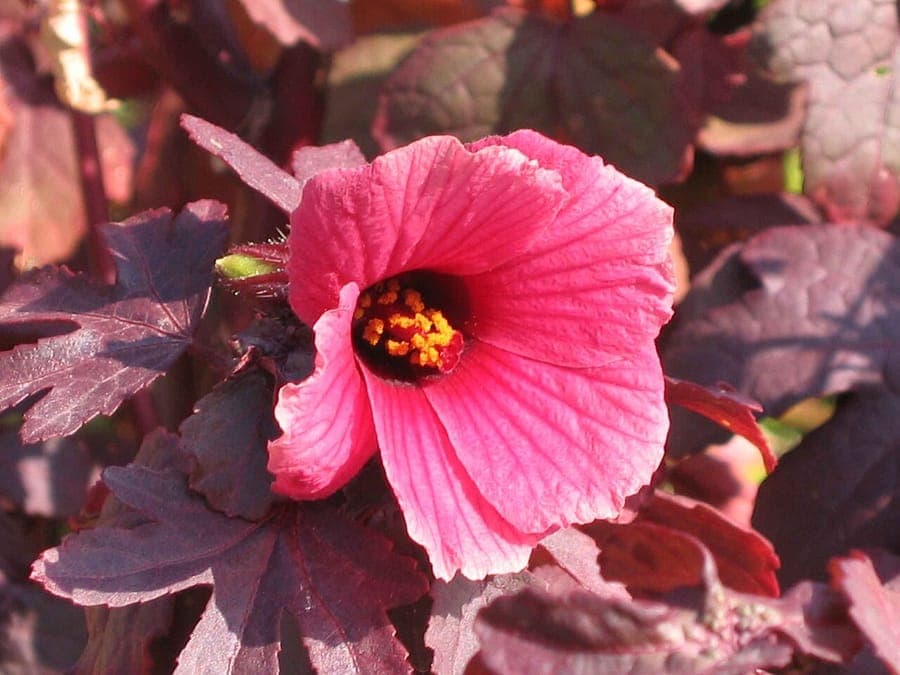
阿橋 HQ / CC BY-SA 2.0, via Wikimedia Commons
False Roselle: complete guide
Hibiscus acetosella
¿Quieres ver False Roselle: complete guide en tu jardín?
1 minuto, sin tarjeta de crédito
Overview
Hibiscus acetosella, called false roselle or red-leaf hibiscus, is a tropical shrub with striking red-purple foliage and attractive coral-pink flowers. This African native (from Burundi to Zimbabwe) forms a compact, densely-foliaged shrub perfect for containers and patios. Red foliage provides dramatic contrast in garden schemes, especially beside other summer bloomers. In Europe, it is almost always grown as a container plant, as it is not winter-hardy.
Appearance and Bloom
False roselle grows 1.2 to 1.5 metres tall as a shrub but may be pruned to stay more compact. Foliage is deep red to purple, deeply cut into three to five lobes, giving a palm-like appearance. Leaves remain vibrant red throughout the growing season. Flowers are roughly 5-7 centimetres wide, coral to rose-pink, sometimes nearly crimson, with a dark central stamen. Blooms appear from July to October, usually in abundance.
Ideal Location
False roselle grows best in full sun, requiring six to eight hours of direct light daily. In less light, foliage becomes less intensely red and flowering is sparse. The plant is very heat-loving and thrives in Mediterranean and tropical climates. In temperate Holland or Belgium, it functions best in containers on south-facing terraces or balconies. Wind causes leaf damage; sheltered placement helps.
Soil
False roselle thrives in well-draining, nutrient-rich soil. Potting compost with added perlite or pebbles is ideal for containers. For ground planting, humus-rich, well-draining soil is preferred. A pH between 6.0 and 7.0 is optimal. Regular feeding during the growing season is important; hibiscus is a heavy feeder and flowers better with supplemental nutrition.
Watering
In containers, say regular watering given high moisture consumption. Check daily that potting mix is moist but not waterlogged. In warm periods, daily watering may be needed. Ground plantings should be watered regularly, especially in the first season. Once established, tolerates brief dry spells, though flowering may lag.
Diseño gratis
¿Quieres ver False Roselle: complete guide en tu jardín? Crea un diseño gratis ahora.
Pruning
False roselle responds well to pruning. In spring (April-May), cut back hard to desired height (usually 60-80 centimetres for containers). This encourages branching and more flowers. Further pruning can be done during the season. Spent flowers may be removed, though the plant doesn't strictly require it. In autumn (September-October), prune carefully before moving indoors.
Maintenance Calendar
May: Place young plants in containers. Apply regular water and feed. June-July: Growth accelerates; increase feeding. July-October: Flowering peak. Water regularly, feed weekly. August: Optional pruning for compact form. October: Autumn treatment; reduce feeding. November: Move indoors for winter (not hardy). December-April: Winter indoors in cool, bright location, minimal water.
Winter Hardiness
False roselle is not winter-hardy in Europe and must overwinter indoors in a cool, bright place (minimum 10 degrees Celsius). The plant loses much foliage in winter but survives. Alternatives: treat as annual and buy new plants each spring, or take cuttings in autumn for propagation.
Companion Plants
In containers, false roselle combines beautifully with other heat-loving plants: Ricinus communis (castor bean, taller for contrast), Coleus for more foliage, and yellow Marigolds for flower contrast. In milder regions, group on terraces with Lantana, Bougainvillea, and other African perennials.
Closing
False roselle is a dramatic choice for those wanting to stand out with red-purple foliage and tropical flowers. Plant in containers in full sun. Source plants from specialist nurseries or online via gardenworld.app in May-June. Enjoy summer-long blooms and spectacular foliage; bring indoors for winter or treat as annual.
¿Quieres ver False Roselle: complete guide en tu jardín? Crea un diseño gratis ahora.
Sube una foto, elige un estilo y obtén un diseño fotorrealista con lista de plantas en menos de un minuto.
Más de 10.000 jardines diseñados
Sin tarjeta de crédito


Plantas similares
Crimean linden: complete guide
Tilia × euchlora
Crimean linden is an elegant, fast-growing shade tree ideal for large gardens. Discover cultivars, spacing, maintenance tips and winter hardiness.
California flannelbush: complete guide
Fremontodendron californicum
Everything about California flannelbush (Fremontodendron californicum): sunny placement, drainage, pruning and care for this spectacular yellow-flowering shrub.
Hairy rose mallow: complete guide
Hibiscus moscheutos subsp. lasiocarpos
Full growing guide for hairy rose mallow (Hibiscus moscheutos subsp. lasiocarpos): location, soil, watering, winter hardiness and garden design tips.