
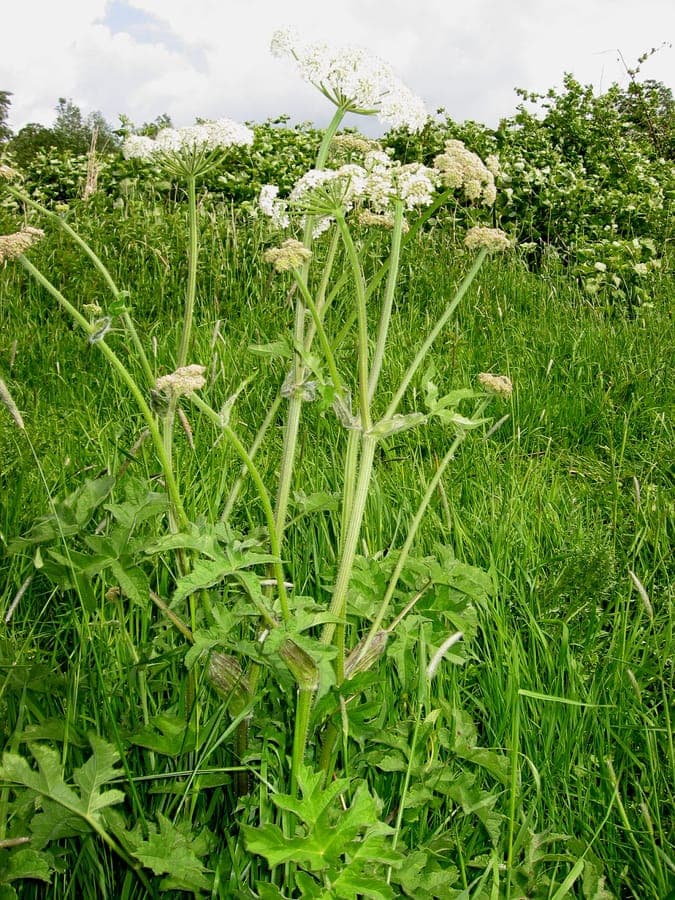
Wikimedia Commons / CC BY-SA 3.0, via Wikimedia Commons
Cow-parsnip: complete guide
Heracleum sphondylium
¿Quieres ver Cow-parsnip: complete guide en tu jardín?
1 minuto, sin tarjeta de crédito
Overview
Cow-parsnip (Heracleum sphondylium), also known as meadow-parsnip or hogweed, is an impressive biennial plant ranging from Europe to Turkey and North Africa. This large plant was traditionally important in European meadow landscapes and flower-rich grasslands. Growing to approximately 1-2 meters with large, deeply incised leaves and striking white flower clusters, this species is much less concerning than its dangerous cousin (giant hogweed).
Appearance and bloom
Cow-parsnip grows to approximately 1-2 meters with thick, hairy, greenish stems. Leaves are large (30-80 cm), three-times compound, with sharply toothed margins. The plant produces large, flat, white to pink flower clusters (15-30 cm diameter) from May to July. After blooming, it produces winged seeds dispersing by wind.
Ideal location
Cow-parsnip thrives in open, sunny to partly shaded locations. It performs optimally in moist meadows, alongside waterways, in rough grasslands, and in damper areas. The plant appreciates full sun but tolerates partial shade. It's ideal for natural meadow gardens and ecological landscapes.
Soil
Cow-parsnip prefers moist, nutrient-rich soils. It grows best on clay and loamy substrates with good organic matter. The plant tolerates neutral to slightly acidic soils. For garden planting: ensure sufficient moisture and nutrients. Dry, poor soils will yield less satisfactory results.
Watering
Cow-parsnip enjoys moist growing conditions, especially during dry summer periods. Water regularly, especially in the first year. The plant tolerates brief drought better than waterlogging. In natural settings, meadows typically receive adequate precipitation.
Pruning and maintenance
Minimal maintenance required. You may harvest flowers before setting seed to prevent excessive spread, helping control invasive tendencies in gardens. The plant dies after seed-set (biennial). Remove dead plant material after winter.
Diseño gratis
¿Quieres ver Cow-parsnip: complete guide en tu jardín? Crea un diseño gratis ahora.
Maintenance calendar
- March-April: Sow seeds directly or start seedlings indoors
- May-June: Vigorous growth, water regularly
- June-July: Bloom period, possibly stake tall plants
- August: Seed ripening, harvest to control dispersal
- September-October: Plant begins declining
- November-December: Plant completely dead, clean up
Winter hardiness
Cow-parsnip is hardy to USDA zone 3. As a biennial, it overwinters as a rosette in the first year, blooming in the second. It tolerates cold winters well.
Companion plants
Cow-parsnip combines beautifully with other meadow plants:
- Ragged-robin (Lychnis flos-cuculi)
- Forget-me-not (Myosotis)
- Meadow buttercup (Ranunculus acris)
- Rough chervil (Chaerophyllum)
- Meadowsweet (Filipendula)
- Water avens (Geum rivale)
These combinations create authentic flower-rich meadows.
Pollinator value
Large flower clusters attract numerous pollinators, especially hover flies and bees. The plant supports diverse insect life, functioning as a food source for many insects.
Precautions
Cow-parsnip may cause very mild skin irritation in some individuals upon sap contact and sun exposure (far less severe than giant hogweed). Wear gloves when handling if sensitive.
Conclusion
Cow-parsnip is a valuable addition to natural meadows and ecological gardens. With its impressive appearance, attractive flower clusters, and support for insect life, it adds both beauty and ecological value. Ideal for gardeners creating sustainable, wildlife-friendly landscapes.
Want to incorporate this plant into your meadow landscape? Visit gardenworld.app for inspiration creating flower-rich meadows. Discover how gardenworld.app helps develop complete natural garden designs!
¿Quieres ver Cow-parsnip: complete guide en tu jardín? Crea un diseño gratis ahora.
Sube una foto, elige un estilo y obtén un diseño fotorrealista con lista de plantas en menos de un minuto.
Más de 10.000 jardines diseñados
Sin tarjeta de crédito


Plantas similares
Whorled carrot: complete guide
Daucus involucratus
Daucus involucratus is a Mediterranean umbellifer with white flower heads framed by lacy bracts. Growing this gravel garden gem.
Daucus muricatus: complete guide
Daucus muricatus
Daucus muricatus, the spiny wild carrot, grows wild on Mediterranean coasts. Discover sowing, June-July bloom, and wildflower meadow use.
Daucus pumilus: complete guide
Daucus pumilus
Daucus pumilus is a dwarf wild carrot relative with white lacy umbels, thriving on dunes and coastal rock in poor, fast-draining soil.