
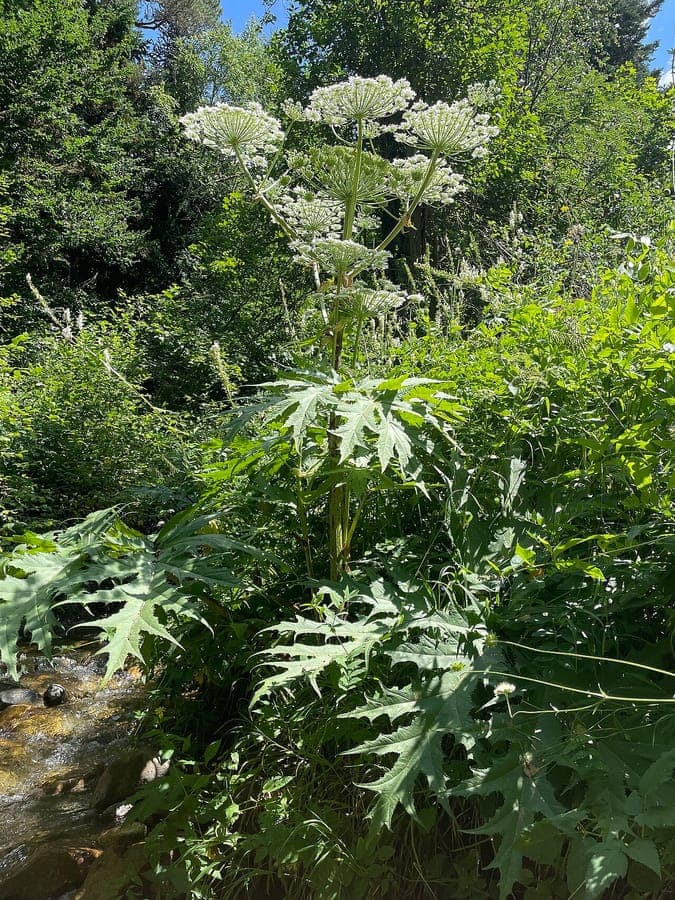
anastasiiamerkulova / CC BY 4.0, via Wikimedia Commons
Giant hogweed: complete guide
Heracleum mantegazzianum
¿Quieres ver Giant hogweed: complete guide en tu jardín?
1 minuto, sin tarjeta de crédito
Overview
Giant hogweed (Heracleum mantegazzianum), also known as Mantegazzi's cow-parsnip or giant cow parsnip, is an extremely large, dramatic plant from the Caucasus region. Though visually spectacular with its enormous leaves (up to 1 meter wide) and impressive white flower clusters, this plant has become seriously invasive throughout Europe and poses severe ecological problems. CRITICAL WARNING: The sap contains phototoxic compounds (furanocoumarines) causing severe skin burns upon exposure to sunlight.
Appearance and bloom
Giant hogweed is an extremely tall plant reaching 1.5-3.5 meters high. Leaves are enormous, three-times compound, with largest leaves 1-1.5 meters wide. Stems are thick, hollow, and spotted with red or purple blotches. Flowering occurs June-August, producing massive, flat white flower clusters (up to 60 cm diameter). After blooming, the plant produces tens of thousands of seeds dispersing widely.
Why it's invasive
Giant hogweed succeeds as invasive species through:
- Massive seed production (up to 100,000 seeds per plant)
- Long seed viability (up to 15 years in soil)
- Rapid growth and superior shading ability
- Tolerance of diverse growing conditions
The plant displaces native vegetation, creating monocultures supporting minimal wildlife.
Toxic properties
THIS PLANT'S SAP IS SKIN TOXIC. It contains furanocoumarines causing severe photosensitivity reactions. Contact followed by sun exposure causes severe, blistering burns. These effects may persist as scars for months. Never handle without gloves and long sleeves.
Diseño gratis
¿Quieres ver Giant hogweed: complete guide en tu jardín? Crea un diseño gratis ahora.
Control and removal
Giant hogweed removal requires:
- Personal protective equipment: gloves, long sleeves, eye protection
- Mechanical removal: deep root excavation or cutting before seed set
- Herbicide treatment: glyphosate on cut stems
- Repetition: multiple years needed as seeds emerge from soil
- Safe disposal: burning or professional removal (NEVER compost)
This plant must NEVER be cultivated as ornamental.
Where occurring
Giant hogweed now established throughout Europe, especially:
- Riverbanks and waterside areas
- Abandoned sites and wasteland
- Roadside verges and embankments
- Park areas and nature reserves
Health measures
If contact occurs:
- Immediately wash with water and soap
- Avoid sun exposure for at least 48 hours
- Seek medical help for severe reactions
- Inform doctor of giant hogweed involvement
Prevention is critical: ALWAYS wear protective clothing when handling.
Regulations
Giant hogweed is legally controlled in many countries:
- Netherlands: notification required to forest authorities
- Belgium: banned for commercial sale or distribution
- France: control mandatory
- Germany: notification required
If found on your property, immediately contact local environmental authority.
Conclusion
Giant hogweed is a plant to avoid, never encourage. If encountered on your property, seek professional assistance. This is not a plant for private gardens and must only be addressed by trained professionals. Visit gardenworld.app for information on safe, native alternatives and responsible garden planning.
Visit gardenworld.app for safe, native border plant options!
¿Quieres ver Giant hogweed: complete guide en tu jardín? Crea un diseño gratis ahora.
Sube una foto, elige un estilo y obtén un diseño fotorrealista con lista de plantas en menos de un minuto.
Más de 10.000 jardines diseñados
Sin tarjeta de crédito


Plantas similares
Whorled carrot: complete guide
Daucus involucratus
Daucus involucratus is a Mediterranean umbellifer with white flower heads framed by lacy bracts. Growing this gravel garden gem.
Daucus muricatus: complete guide
Daucus muricatus
Daucus muricatus, the spiny wild carrot, grows wild on Mediterranean coasts. Discover sowing, June-July bloom, and wildflower meadow use.
Daucus pumilus: complete guide
Daucus pumilus
Daucus pumilus is a dwarf wild carrot relative with white lacy umbels, thriving on dunes and coastal rock in poor, fast-draining soil.