
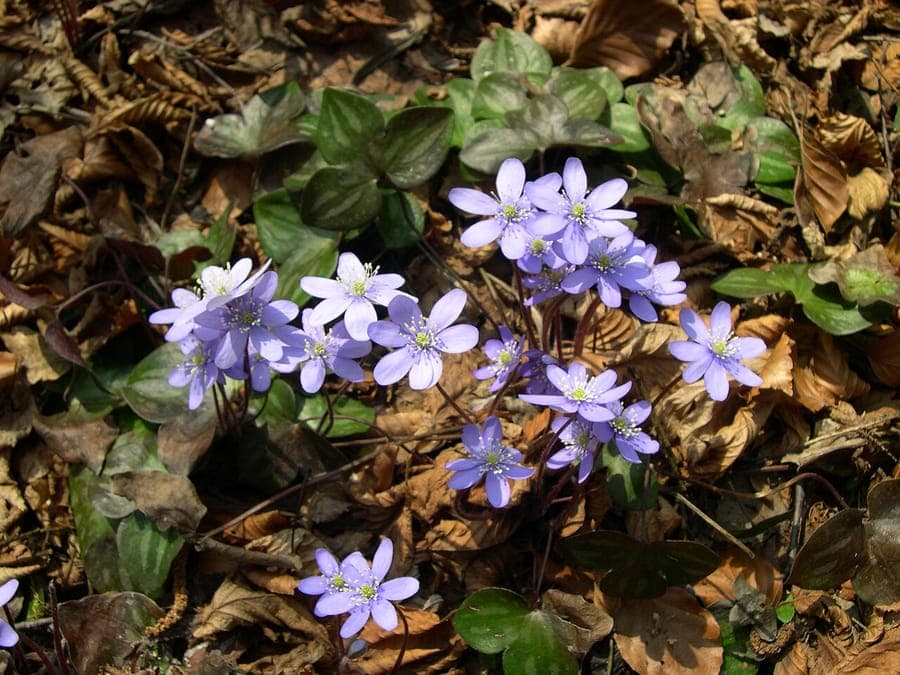
Wikimedia Commons / CC BY-SA 3.0, via Wikimedia Commons
Hepatica: complete guide
Hepatica nobilis
¿Quieres ver Hepatica: complete guide en tu jardín?
1 minuto, sin tarjeta de crédito
Overview
Hepatica nobilis, commonly known as hepatica or liverleaf, is a delightful woodland plant native to Europe extending into Siberia. This elegant perennial has been treasured for centuries for its enchanting blue-violet flowers and distinctive three-lobed leaves. It remains protected in many European countries and is increasingly valued in naturalistic gardens.
Appearance and bloom
Hepatica grows to approximately 10-15 cm in height, forming low mats of persistent foliage. The characteristic three-lobed leaves are red-purple beneath and often persist through winter, creating attractive basal rosettes. Flowers appear remarkably early in spring, typically in March-April, before most other woodland plants emerge. The blooms are approximately 1-1.5 cm in diameter, displaying 6-9 blue-violet petals with golden stamens.
Ideal location
Hepatica is a woodland plant thriving in dappled shade or full shade. It performs best beneath deciduous trees where sufficient light penetrates in early spring. The plant feels at home along natural woodland edges, beneath shrubs, and in shaded garden corners. It cannot tolerate direct afternoon sun in warm climates.
Soil
Hepatica prefers humus-rich, well-draining woodland soil. The plant grows best in slightly acidic to neutral substrates with abundant leaf mold. It appreciates moist soil but tolerates no waterlogging. For home gardens: incorporate generous amounts of leaf mold and compost. A pH of 5.5-6.8 is ideal. Lean, dry soil will not succeed.
Watering
During growth and bloom periods, hepatica requires consistent moisture, especially during dry springs. Never allow soil to remain waterlogged. In summer, when the plant becomes dormant, soil may remain drier. The plant cannot tolerate prolonged drought, particularly in shade where evaporation is limited.
Diseño gratis
¿Quieres ver Hepatica: complete guide en tu jardín? Crea un diseño gratis ahora.
Pruning and maintenance
Hepatica requires minimal maintenance. Remove any damaged or withered leaves in early spring. You may gently prune the plant after blooming to maintain neater appearance, though this isn't essential. The plant will naturally withdraw in summer.
Maintenance calendar
- January-February: Plant initiates growth with new foliage emergence
- March-April: Peak bloom period, water regularly
- May: Blooming diminishes, new foliage expands
- June-August: Plant dormant, reduced watering needed
- September-October: Winter preparation, gradually reduce water
- November-December: Quiet winter period with persistent foliage
Winter hardiness
Hepatica is fully winter hardy (USDA zones 3-8). The plant tolerates cold winters well and will promptly re-emerge in early spring. Foliage often persists through winter, providing decorative interest in dormant gardens.
Companion plants
Hepatica combines beautifully with other shade-loving woodland plants:
- Hellebores (Helleborus)
- Winter aconite (Eranthis)
- Primrose (Primula species)
- Ferns
- Ivy (Hedera helix)
- Ginger (Asarum)
- Solomon's seal (Polygonatum)
These groupings create authentic woodland understory.
Conclusion
Hepatica is a precious addition to shade gardens and naturalistic landscapes. With early, enchanting blue flowers and decorative foliage, it adds winter and spring beauty to every shade-loving environment. Minimal care required once established - ideal for gardeners seeking sustainable, wildlife-friendly plant combinations.
Want to add this rare beauty to your garden? Visit gardenworld.app for inspiration creating woodland edges. Discover how gardenworld.app helps develop complete shade garden designs!
¿Quieres ver Hepatica: complete guide en tu jardín? Crea un diseño gratis ahora.
Sube una foto, elige un estilo y obtén un diseño fotorrealista con lista de plantas en menos de un minuto.
Más de 10.000 jardines diseñados
Sin tarjeta de crédito


Plantas similares
Drummond's anemone: complete guide
Anemone drummondii
Discover Drummond's anemone (Anemone drummondii): a silvery-grey mountain plant for cool rock gardens and alpine troughs.
Korean clematis: complete guide
Clematis serratifolia
Clematis serratifolia is a hardy climber with fragrant yellow bell flowers in August-September. Pruning group 3, location and care tips.
Aquilegia brevistyla: complete guide
Aquilegia brevistyla
Discover Aquilegia brevistyla, the elegant North American columbine. Growing tips, shade tolerance, and design ideas for woodland and shadowed gardens.