
Stefan.lefnaer / CC BY-SA 4.0, via Wikimedia Commons
Creeping marshwort: complete guide
Helosciadium repens
¿Quieres ver Creeping marshwort: complete guide en tu jardín?
1 minuto, sin tarjeta de crédito
Overview
Creeping marshwort or Creeping water celery (Helosciadium repens) is a low-growing marsh herb from the Apiaceae family (Carrot family). This plant naturally grows in marshy areas in West and Central Europe. It is a highly adaptable herb that functions perfectly as a ground cover plant in wet garden areas.
The plant forms a low carpet of 10 to 20 cm height and spreads via creeping stems. The flowers are small and inconspicuous, white to pale pink.
Appearance and bloom
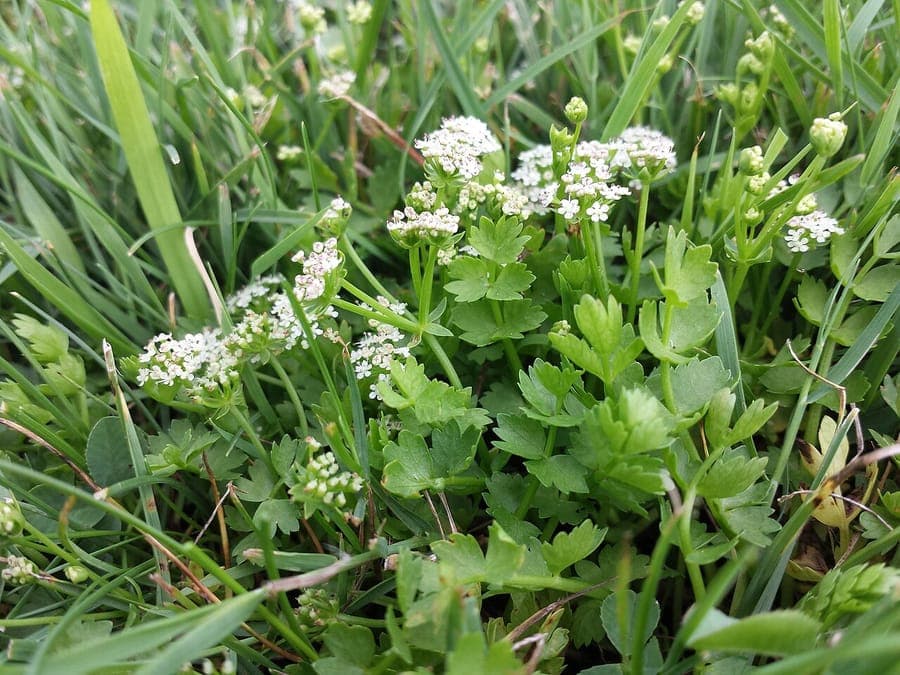
Creeping marshwort has small, glossy, smooth-edged leaflets that grow densely on creeping stems. The foliage has a fresh green appearance. In summer, small, inconspicuous white or pale pink flowers appear in small umbrella-shaped flower clusters.
The plant forms as a compact, flat carpet. This makes it ideal as a ground cover plant in marshes and near water.
Ideal location
Creeping marshwort grows best in partially shaded to shaded locations. Although the plant can tolerate full light, it grows better in light shade.
The plant thrives best near water: ponds, streams, marshes or wet depressions. Look for a location with moist to wet soil.
Soil
Creeping marshwort thrives best in wet to very wet, nutrient-rich soil. The plant copes well with marsh peat. The ideal pH is between 5.5 and 6.5.
Tip: Plant the herb in shallow water or very wet tree base. The plant also accepts muddy soil in seasonal flood areas.
Diseño gratis
¿Quieres ver Creeping marshwort: complete guide en tu jardín? Crea un diseño gratis ahora.
Watering
Adequate water is essential for Creeping marshwort. Always plant in wet to very wet soil. Regular irrigation and high groundwater levels are favorable.
The plant can tolerate short dry periods, but thrives best in consistently wet conditions.
Pruning
Pruning is usually unnecessary. The plant grows slowly and naturally forms as a low carpet. Only aggressively growing parts can be trimmed back in spring.
Remove dead plant material after winter.
Maintenance calendar
March-April: Check water level. Remove dead material. May-September: Regular watering. Check growth. October-November: Winter preparation. Keep watering. December-February: Rest period. Minimal maintenance.
Winter hardiness
Creeping marshwort is very winter hardy. In northern Europe, it grows without problems. In our climate, it easily survives severe winters. The foliage may die back in extreme frost, but the roots remain intact.
In marsh areas where water slowly freezes, the plant can still grow under the ice.
Companion plants
Well-suited for combination with other marsh plants such as Swamp lily, Yellow iris (Iris pseudacorus), Skunk cabbage (Lysichiton americanus) and Water mint.
In shallow ponds combined with small water plants, it creates an attractive water's edge zone.
Conclusion
Creeping marshwort is ideal for those seeking a low-growing marsh herb. Highly suitable for wet garden spots, pond edges and marsh areas. With minimal maintenance, this plant thrives for years.
Creeping marshwort is available from online plant nurseries and natural garden specialists. You can find these plants online at gardenworld.app/en
¿Quieres ver Creeping marshwort: complete guide en tu jardín? Crea un diseño gratis ahora.
Sube una foto, elige un estilo y obtén un diseño fotorrealista con lista de plantas en menos de un minuto.
Más de 10.000 jardines diseñados
Sin tarjeta de crédito


Plantas similares
Whorled carrot: complete guide
Daucus involucratus
Daucus involucratus is a Mediterranean umbellifer with white flower heads framed by lacy bracts. Growing this gravel garden gem.
Daucus muricatus: complete guide
Daucus muricatus
Daucus muricatus, the spiny wild carrot, grows wild on Mediterranean coasts. Discover sowing, June-July bloom, and wildflower meadow use.
Daucus pumilus: complete guide
Daucus pumilus
Daucus pumilus is a dwarf wild carrot relative with white lacy umbels, thriving on dunes and coastal rock in poor, fast-draining soil.