
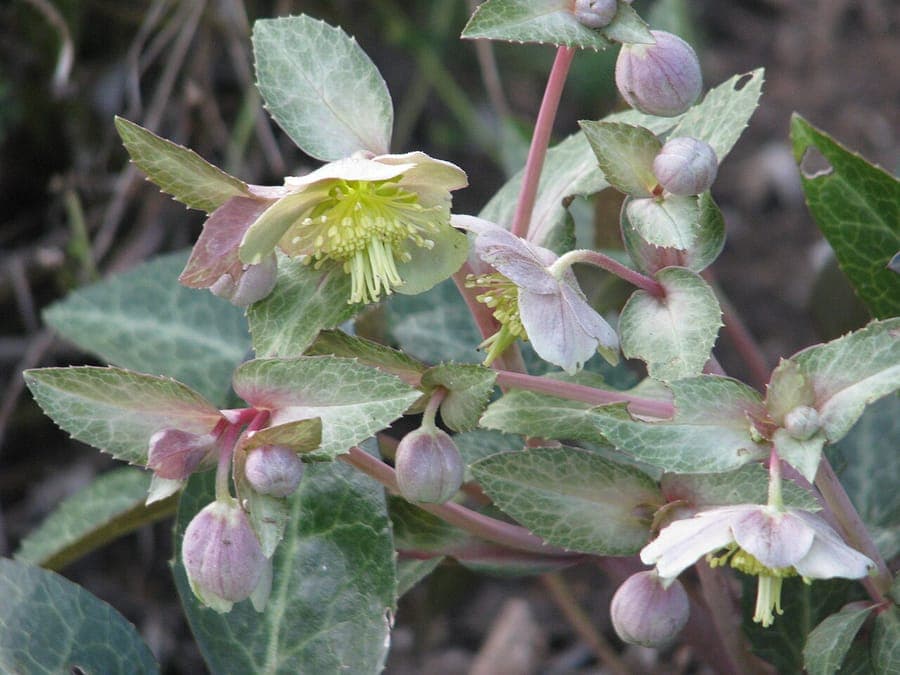
peganum from Small Dole, England / CC BY-SA 2.0, via Wikimedia Commons
Helleborus lividus: complete guide
Helleborus lividus
¿Quieres ver Helleborus lividus: complete guide en tu jardín?
1 minuto, sin tarjeta de crédito
Overview
Helleborus lividus, commonly known as Majorcan hellebore or Balearic hellebore, is a rare and elegant plant from the Ranunculaceae family. This endemic plant of the island of Mallorca in the Balearic Islands is highly prized among plant collectors for its unique appearance and distinctive spotted foliage. With its delicate white flowers and remarkably tinted leaves, it offers understated beauty in warmer, protected gardens.
Appearance and bloom
Helleborus lividus distinguishes itself through its highly decorative foliage that is green with purplish-red spots, especially prominent on new growth. The leaves are deeply cut and give the plant a refined appearance even when not in bloom. Flowers appear from January through April in clusters of 3 to 5 white blooms with greenish tinges. They are persistent and change color as they age. The plant reaches 30 to 40 centimeters in height and forms compact growth. This is a special plant for collectors with appreciation for rare specimens.
Ideal location
Helleborus lividus thrives in warm, protected microclimate. A sunny to partially shaded spot against a warm south-facing wall is ideal. The plant cannot tolerate much wind and exposed conditions. In temperate climates, it typically grows best in a glasshouse or against a warmth-accumulating wall where some thermal warmth occurs. It tolerates partial shade but prefers some direct sunlight in cold seasons. This is not a plant for Northern Europe outdoors without greenhouse protection.
Soil
Helleborus lividus prefers moisture-retentive, well-draining soil. Heavy clay must be heavily amended with sand and grit. The plant cannot tolerate waterlogging and should be grown in containers in warm areas. A potting mix of garden soil with extra drainage material like perlite and grit is recommended. It grows better in neutral to slightly acidic soils. Regular feeding helps maintain vigor.
Watering
Helleborus lividus loves moisture-retentive soil but not waterlogging. After planting, water regularly until established, approximately three to four weeks. Subsequently maintain moist conditions more than you might expect - this plant prefers moister conditions than many other helleborus species. In winter water less but never let soil dry out completely. In containers, water regularly with well-draining potting mix.
Diseño gratis
¿Quieres ver Helleborus lividus: complete guide en tu jardín? Crea un diseño gratis ahora.
Pruning
Helleborus lividus requires very little pruning. Remove yellowed leaves seasonally. Spent flowers can be trimmed if desired. The plant grows compactly and rarely needs drastic cutting. However, the plant can be susceptible to fungal infections, so ensure good air circulation through careful positioning.
Maintenance calendar
August-September: Plant new seedlings in containers. October-November: Growth begins. Keep more moist. December-March: Blooming period. Water regularly. Protect from hard frosts. April-May: Blooming fades. Transition to summer rest. June-July: Summer dormancy. Less water. August: Preparation for new season.
Winter hardiness
Helleborus lividus is less hardy than other helleborus species, tolerating only temperatures of -8 to -10 degrees Celsius. In temperate climates, protection is needed, such as in a greenhouse or against a heat-accumulating wall. This is especially true in Northern Europe where this plant is only suitable for collectors who can provide controlled conditions. In southern Europe along the Mediterranean, it can grow outdoors.
Companion plants
Helleborus lividus can grow well with other Balearic endemics and Mediterranean plants. In warmer situations, combine it with Cistus, Helianthemum, and other sunny steppes plants. With other helleborus species in warm spots, it creates varied height combinations. In containers, it pairs well with low-growing succulents. Avoid dark, damp conditions that encourage fungal growth.
Closing
Helleborus lividus is a plant for discerning plant collectors who appreciate rarities and some horticultural challenge. With its distinctive spotted foliage and white flowers, it is a conversation starter in the garden. The plant is difficult to obtain but sometimes available from specialized nurseries. For inspiration on garden design with rare Mediterranean plants, visit gardenworld.app. Provide warm protection and moisture-retentive soil, and you will have a unique plant for your collection. Find more ideas at gardenworld.app.
¿Quieres ver Helleborus lividus: complete guide en tu jardín? Crea un diseño gratis ahora.
Sube una foto, elige un estilo y obtén un diseño fotorrealista con lista de plantas en menos de un minuto.
Más de 10.000 jardines diseñados
Sin tarjeta de crédito


Plantas similares
Drummond's anemone: complete guide
Anemone drummondii
Discover Drummond's anemone (Anemone drummondii): a silvery-grey mountain plant for cool rock gardens and alpine troughs.
Korean clematis: complete guide
Clematis serratifolia
Clematis serratifolia is a hardy climber with fragrant yellow bell flowers in August-September. Pruning group 3, location and care tips.
Aquilegia brevistyla: complete guide
Aquilegia brevistyla
Discover Aquilegia brevistyla, the elegant North American columbine. Growing tips, shade tolerance, and design ideas for woodland and shadowed gardens.