
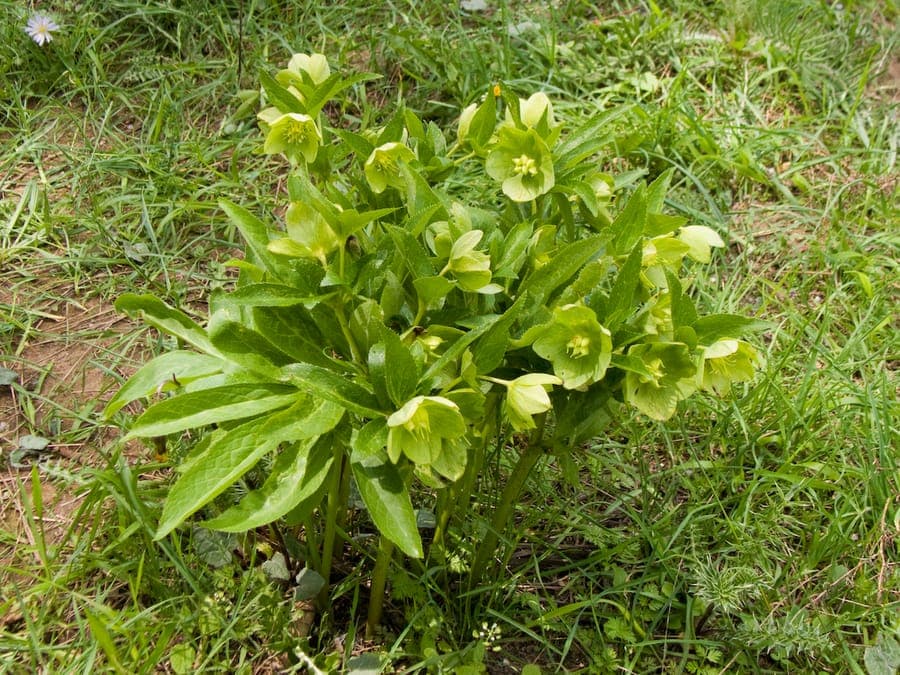
Peter Billinghurst / CC BY-SA 3.0, via Wikimedia Commons
Helleborus cyclophyllus: complete guide
Helleborus cyclophyllus
¿Quieres ver Helleborus cyclophyllus: complete guide en tu jardín?
1 minuto, sin tarjeta de crédito
Overview
Helleborus cyclophyllus, commonly known as Greek hellebore, is a beautiful early-flowering perennial from the Ranunculaceae family. This elegant plant originates from the Balkan region of Greece, Albania, and Bulgaria. With its characteristic greenish flowers that appear as early as March, it brings color and movement to shaded gardens when few other plants are blooming. The deeply divided foliage adds fine texture even outside the blooming season.
Appearance and bloom
Helleborus cyclophyllus distinguishes itself through its distinctive greenish to yellow-green flowers that open as early as March through April. The flowers grow in loose clusters and are persistent, meaning they remain on the plant for months, gradually changing color. The leaves are deeply cut and display the characteristic "cyclic" pattern that gives the plant its scientific name. This pattern makes it easily recognizable among other Helleborus species. The plant reaches 40 to 60 centimeters in height and possesses an understated beauty.
Ideal location
Greek hellebore thrives in partial to full shade locations. It tolerates deep shade beneath deciduous trees, making it ideal for partially shaded borders and woodland gardens. It can also tolerate some midday sun if the soil remains adequately moist. For best blooming, provide at least three to four hours of indirect light daily. Avoid direct midday sun, especially in warm climates. The plant is excellent beneath shrubs and against north-facing walls.
Soil
Helleborus cyclophyllus prefers rich, moisture-retentive soil. For best results, amend heavy sand or clay with generous amounts of compost and humus-rich material. The plant cannot tolerate waterlogging around roots, so ensure some drainage with sand. A pH of 6.5 to 7.5 is ideal. In containers, a mixture of garden soil with one-third perlite works well. Regular organic fertilizer helps maintain vigor.
Watering
Helleborus cyclophyllus loves growing in moisture-retentive soil. After planting, water regularly until well established, approximately four weeks. Subsequently, maintain moist conditions - this is a mountain plant naturally receiving consistent moisture. During dry periods, water regularly. In the growing season (October to May), water more than in summer. Even during dry winters, occasional watering is sometimes necessary.
Diseño gratis
¿Quieres ver Helleborus cyclophyllus: complete guide en tu jardín? Crea un diseño gratis ahora.
Pruning
Helleborus cyclophyllus requires very little pruning. Remove yellowed leaves in autumn. Old flowers can be trimmed if desired, but many gardeners leave them as they remain ornamental as they change color. After blooming ends, remove damaged or dead leaves. The plant grows compactly and rarely needs drastic cutting.
Maintenance calendar
August-September: Plant new young specimens. October-November: Growth begins. Ensure adequate water. December-February: Blooming period. Water regularly. Remove dead leaves. March-April: Blooming fades. Remove spent flowers. May-July: Quiet growth. Minimal maintenance. August: Preparation for next season.
Winter hardiness
Helleborus cyclophyllus is very hardy, tolerating temperatures to -20 degrees Celsius. It is ideal for temperate climates in Northern Europe. The plant actually blooms during winter and is therefore well-adapted to cold seasons. It requires no protection and grows even in harsh climates. The sturdy structure helps resist snow and ice damage.
Companion plants
Helleborus cyclophyllus works excellently with other shade-loving perennials. Place alongside other helleborus species for extended winter blooming. Combines beautifully with Epimedium, Heuchera, or Carex for interesting foliage combinations. With low-growing groundcovers like Soleirolia, it spreads attractively. Also pairs well with bulbs like snowdrops and winter-blooming Mahonia. Avoid overly vigorous growers that would overwhelm it.
Closing
Helleborus cyclophyllus is an essential plant for shaded gardens seeking color during winter. With its minimal maintenance requirements and winter hardiness, it is ideal for almost any garden. Available at major garden centers. For more ideas on garden design with early-blooming perennials, visit gardenworld.app and discover how to integrate this Balkan beauty perfectly. Provide shade and moisture-retentive soil, and you will enjoy this beautiful plant for many decades. See gardenworld.app for more garden ideas. Note: all parts of this plant are toxic!
¿Quieres ver Helleborus cyclophyllus: complete guide en tu jardín? Crea un diseño gratis ahora.
Sube una foto, elige un estilo y obtén un diseño fotorrealista con lista de plantas en menos de un minuto.
Más de 10.000 jardines diseñados
Sin tarjeta de crédito


Plantas similares
Drummond's anemone: complete guide
Anemone drummondii
Discover Drummond's anemone (Anemone drummondii): a silvery-grey mountain plant for cool rock gardens and alpine troughs.
Korean clematis: complete guide
Clematis serratifolia
Clematis serratifolia is a hardy climber with fragrant yellow bell flowers in August-September. Pruning group 3, location and care tips.
Aquilegia brevistyla: complete guide
Aquilegia brevistyla
Discover Aquilegia brevistyla, the elegant North American columbine. Growing tips, shade tolerance, and design ideas for woodland and shadowed gardens.