
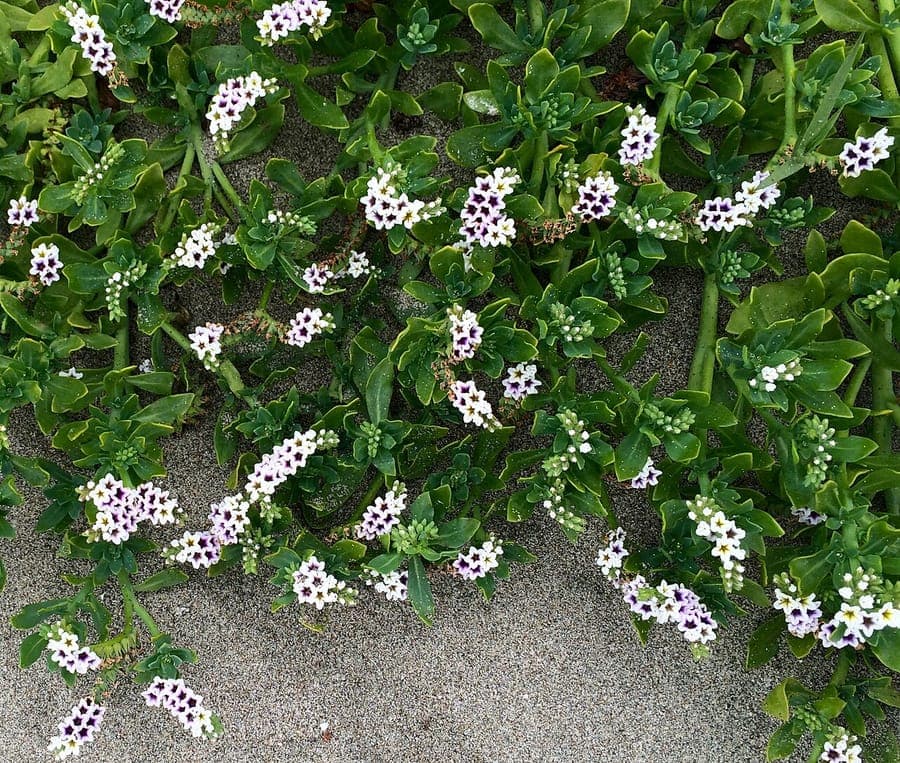
Peter D. Tillman (self) / CC BY-SA 4.0, via Wikimedia Commons
Heliotropium curassavicum: complete guide
Heliotropium curassavicum
¿Quieres ver Heliotropium curassavicum: complete guide en tu jardín?
1 minuto, sin tarjeta de crédito
Overview
Heliotropium curassavicum, commonly known as smooth heliotrope, is a tropical plant native to tropical Americas, Australia and Hawaii. This Boraginaceae family member is prized for its delicate white to purple flowers and compact growth habit. It is a popular choice for warm, sunny gardens.
Originally from tropical regions, this plant thrives in warm climate conditions.
Appearance and Bloom
Heliotropium curassavicum grows as a compact, low-growing plant to about 20-30 cm tall. The plant has soft, smooth leaves with yellow-green to grey-green coloration. Stems are smooth and somewhat succulent.
Flowers are very small, approximately 3-4 mm in diameter, white to light purple in color, appearing in dense, spiral clusters at branch tips. Bloom period extends from May through October.
Ideal Location
Heliotropium curassavicum thrives in very sunny locations. The plant requires minimum 6-8 hours direct sunlight daily. A south-facing bed or location is ideal.
The plant performs poorly in partial shade or shade. For optimal growth and flowering, always choose full sun.
Good air circulation helps prevent fungal disease in humid conditions.
Soil
Heliotropium curassavicum prefers very well-draining soil. The plant thrives in poor, sandy, stony soils with a neutral to slightly alkaline pH (7.0-8.0).
The plant is adapted to dry, coastal conditions. It even tolerates saline soils, making it an excellent choice for coastal gardens.
Avoid heavy, clay-like soil with poor drainage.
Diseño gratis
¿Quieres ver Heliotropium curassavicum: complete guide en tu jardín? Crea un diseño gratis ahora.
Watering
Heliotropium curassavicum is highly drought-tolerant. Water sparingly. The plant tolerates long dry periods well and can even thrive without supplemental water once established.
During the first growing season, water regularly until the plant is strong. After establishment, water only in extreme drought.
Avoid waterlogged conditions; this can result in root rot.
Pruning
Heliotropium curassavicum requires minimal pruning. The plant has a naturally compact, neat form.
Cut back in spring to stimulate more compact growth. Remove faded flowers for a neater appearance.
Maintenance Calendar
May-June: Plant young plants in warm gardens.
June-October: Blooming. Minimal water needed.
October-November: Growth slows in cooler conditions.
Winter: In frost regions, dig plants up and bring indoors, or treat as annual.
Winter Hardiness
Heliotropium curassavicum is not winter hardy in most regions above zone 10. In colder climates, dig plants in autumn and bring indoors during winter, or treat as annual.
In warm, frost-free areas, the plant can remain outdoors year-round.
Companion Plants
Heliotropium curassavicum combines well with other heat-loving, drought-tolerant plants:
Lavandula (Lavender) Artemisia (Wormwood) Salvia Santolina
The white flowers contrast beautifully with silver and grey-leaved companions.
Closing Remarks
Heliotropium curassavicum is an elegant, low-maintenance plant perfect for warm, dry gardens and coastal areas. Its delicate white flowers bring subtle beauty. This plant is ideal for gardenworld.app/en visitors with tropical or Mediterranean garden aspirations.
Available at: Retail garden centers Online plant specialists
¿Quieres ver Heliotropium curassavicum: complete guide en tu jardín? Crea un diseño gratis ahora.
Sube una foto, elige un estilo y obtén un diseño fotorrealista con lista de plantas en menos de un minuto.
Más de 10.000 jardines diseñados
Sin tarjeta de crédito


Plantas similares
Western waterleaf: complete guide
Hydrophyllum occidentale
Full growing guide for western waterleaf (Hydrophyllum occidentale): shade tolerance, soil needs, watering, winter hardiness and naturalistic garden use.
Limestone phacelia (Phacelia affinis): complete guide
Phacelia affinis
Full guide to Phacelia affinis, the limestone phacelia: sowing tips, purple-blue bee flowers, drought tolerance and uses in dry or wildlife gardens.
Pyrenean viper's bugloss: complete guide
Echium asperrimum
Echium asperrimum is a striking biennial from the western Mediterranean with rough bristly stems and vivid blue flowers. A magnet for bees and a bold border plant.