
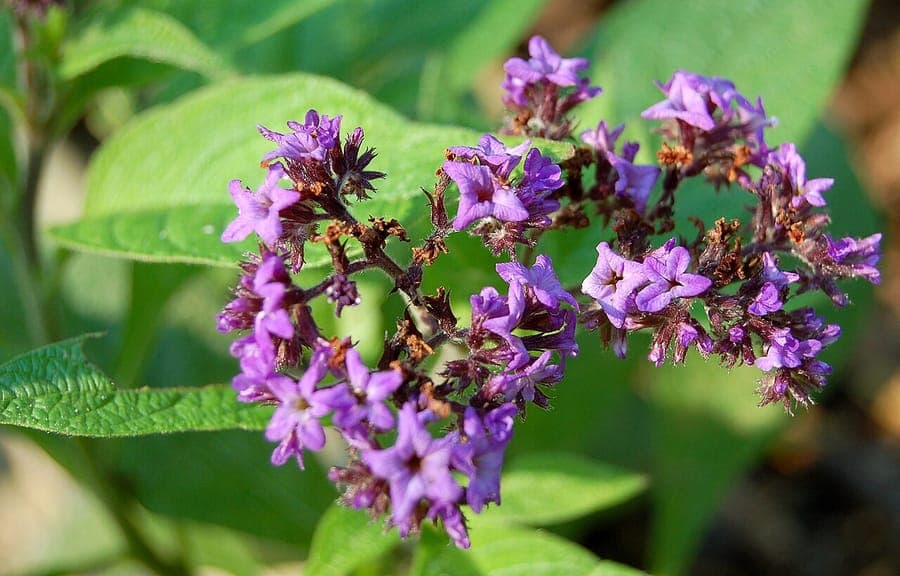
Photo (c)2006 Derek Ramsey (Ram-Man) / CC BY-SA 2.5, via Wikimedia Commons
Heliotropium arborescens: complete guide
Heliotropium arborescens
¿Quieres ver Heliotropium arborescens: complete guide en tu jardín?
1 minuto, sin tarjeta de crédito
Overview
Heliotropium arborescens, better known as garden heliotrope or cherry pie, is a fragrant shrub native to Peru and Colombia in South America. This plant is famous for its intense, delightful vanilla fragrance that grows stronger especially in the evening. With its deep purple to lilac flowers and compact growth habit, it is an excellent choice for borders, containers, and small gardens.
The plant is a classic favorite in garden design and is widely used in historic gardens. On gardenworld.app, this is perfect for gardeners who want to add fragrant elements to their garden. It is a plant that is not only visually attractive but also brings pure olfactory joy.
Appearance and bloom cycle
Heliotropium arborescens typically reaches heights of 30 to 90 centimeters, depending on cultivation conditions. The plant grows compact and dense, with small, dark green, wrinkled leaves that resemble the texture of velvet.
The flowers are the true highlight: small, five-petaled flowers in deep purple to lilac tones, arranged in dense, flat or slightly domed flower clusters (umbels). Flowering begins in June and lasts until the first frost in autumn, providing this plant with continuous visual appeal.
More important still is the fragrance: a sweet, vanilla-like aroma that is strong without being overwhelming. The scent is strongest on warm evenings and in the morning.
Ideal location
Heliotropium arborescens blooms best in full-sun locations with at least 6 to 8 hours of direct sunlight daily. Position this shrub in sunny borders, against sunny walls, or in the open garden.
The plant also grows in part shade, but blooms less and the fragrance may be less intense. Heat helps - the plant appreciates warm, sheltered spots where it blooms beautifully in the evening and releases fragrance.
Avoid cold, windy locations where the plant will not thrive. The plant particularly feels at home in gardens with a Mediterranean or southern European feel.
Soil requirements
Heliotropium arborescens grows best in rich, well-drained soils with adequate organic matter. Add compost or leaf mold when planting. The plant accepts both acidic and alkaline soils, with a preference for neutral to slightly alkaline pH.
Sandy soils can be amended by adding organic material. Avoid waterlogging - the plant prefers good drainage. In containers, use quality potting soil mixed with extra drainage material.
Regular feeding contributes significantly to flowering and growth. Add monthly nutrition during the growing season.
Diseño gratis
¿Quieres ver Heliotropium arborescens: complete guide en tu jardín? Crea un diseño gratis ahora.
Watering
Heliotropium arborescens requires regular watering, especially during growing season and flowering. Ensure the soil maintains consistent moisture, but is not waterlogged.
In containers, water more frequently than in ground - check daily in hot periods. In normal growth, water when the top layer of soil feels dry to the touch.
In winter, especially in cold-sensitive regions, water much less or bring the plant indoors. The plant can tolerate some drought, but will bloom less.
Pruning
Heliotropium arborescens responds well to pruning. In late spring (May) you can lightly cut back the plant to keep it compact and encourage more branching, which leads to more flowers.
During the growing season you can remove faded flower clusters to encourage more blooms (deadheading). This significantly extends the flowering period.
At the end of the growing season, remove dead or damaged parts. Old plants can be cut back more severely in spring.
Maintenance calendar
May: Light pruning for shape, start feeding. June-October: Regular watering, monthly feeding, deadheading to promote flowering. November-December: Reduce watering, prepare for winter, possible protection. January-April: Winter dormancy, minimal watering, prepare for spring.
Winter hardiness
Heliotropium arborescens is not winter-hardy in the UK and many parts of Europe. The plant can tolerate only brief periods of light frost (down to approximately minus 5 degrees Celsius).
In most European gardens, treat this as an annual plant or bring it indoors for winter. In warm climates it can overwinter, but protection is recommended even there.
The best approach is to grow it in containers so you can move it indoors. In warm homes or greenhouses it survives winters well and can continue growing.
Companion plants
Heliotropium arborescens pairs beautifully with other summer-flowering shrubs and perennials. The purple flowers match well with white-flowering plants such as white Petunias, white Jasmine, or white Lavender.
In Mediterranean gardens, it grows well with other fragrant plants such as Lavender, Rosemary, and Santolina. The fragrance also makes it suitable for gardens close to seating areas.
Yellow-flowering Rudbeckias and orange Calendulas provide nice contrasts.
Closing remarks
Heliotropium arborescens is a first-rate choice for gardeners who want their garden to not only look beautiful but also smell heavenly. With its intense vanilla fragrance, purple flowers, and relatively low-maintenance character, it is a valuable addition to any sunny garden.
For fragrant gardens designed with gardenworld.app, this is a must-have. Find young material at major garden centers in spring. Plant it near seating areas where you can enjoy the fragrance. Provide full sun, regular water, and monthly feeding, and you will enjoy these enchanting flowers and fragrance from June through October.
¿Quieres ver Heliotropium arborescens: complete guide en tu jardín? Crea un diseño gratis ahora.
Sube una foto, elige un estilo y obtén un diseño fotorrealista con lista de plantas en menos de un minuto.
Más de 10.000 jardines diseñados
Sin tarjeta de crédito


Plantas similares
Western waterleaf: complete guide
Hydrophyllum occidentale
Full growing guide for western waterleaf (Hydrophyllum occidentale): shade tolerance, soil needs, watering, winter hardiness and naturalistic garden use.
Limestone phacelia (Phacelia affinis): complete guide
Phacelia affinis
Full guide to Phacelia affinis, the limestone phacelia: sowing tips, purple-blue bee flowers, drought tolerance and uses in dry or wildlife gardens.
Pyrenean viper's bugloss: complete guide
Echium asperrimum
Echium asperrimum is a striking biennial from the western Mediterranean with rough bristly stems and vivid blue flowers. A magnet for bees and a bold border plant.