
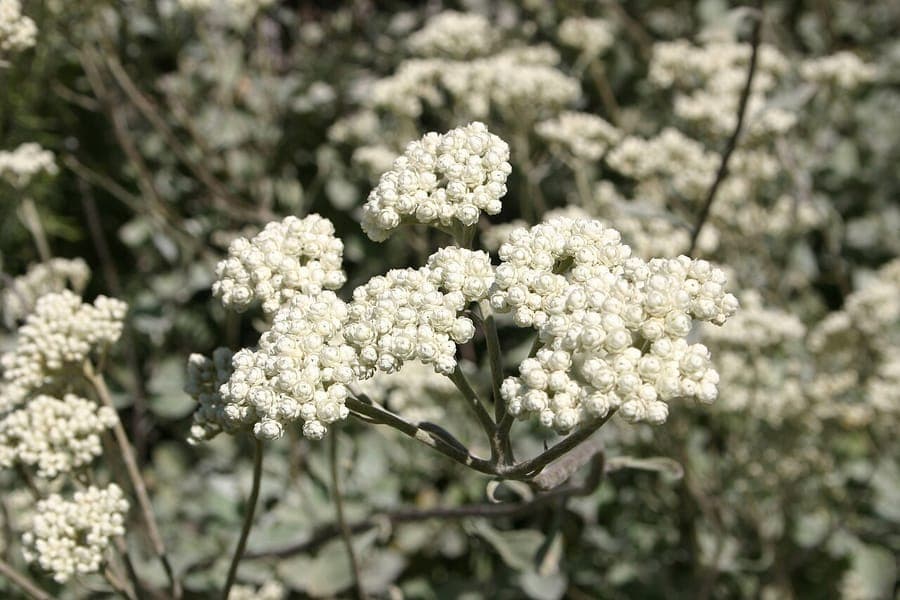
Paul venter / CC BY-SA 3.0, via Wikimedia Commons
Helichrysum petiolare: complete guide
Helichrysum petiolare
¿Quieres ver Helichrysum petiolare: complete guide en tu jardín?
1 minuto, sin tarjeta de crédito
Overview
Helichrysum petiolare, better known as licorice plant or immortelle, is a delicate, trailing plant from the Asteraceae family. Native to South Africa, it is an elegant species with fine, silvery-gray foliage that carries a subtle, herbal fragrance. Though technically a shrub, it grows as a soft trailing plant, making it perfect for hanging baskets, window boxes, and container gardens.
Helichrysum petiolare is a classic choice for balcony and container design because of its ornamental value, ease of care, and ability to complement other plants beautifully. On gardenworld.app, this is a plant that adds texture and softness to compositions.
Appearance and growth habit
Helichrysum petiolare does not achieve great height on its own, but trails and cascades 30 to 60 centimeters or more, depending on nutrition and growing conditions. The stems are fine and flexible, creating a graceful, trailing growth pattern.
The most characteristic feature is the foliage: small, round to heart-shaped leaves covered with fine hairs that give the leaves a silvery, velvety texture. When backlit, the leaves seem to shimmer. The color varies from soft gray-green to white-silver, making it ideal for breaking up and contrasting with more vibrantly colored flowering plants.
The flowers are small and yellow, appearing in summer, but are honestly less striking than the foliage.
Ideal location
Helichrysum petiolare grows best in full sun to part-shade locations. While it can tolerate full sun, part shade (especially in very hot regions) helps prevent leaf scorch and helps retain some moisture.
This plant is ideal for balconies, terraces, window boxes, and hanging baskets. In gardens, you can use it as a ground cover or allow it to cascade from the edges of borders.
The plant feels at home and is perfect for display in Mediterranean-style gardens or modern, clean-lined designs.
Soil requirements
Helichrysum petiolare is not fussy about soil type, but prefers well-drained, fairly light soil. In containers, use quality potting soil with extra drainage (add sand or perlite).
The plant tolerates sandy, acidic to neutral soils. Waterlogging is absolutely taboo - it quickly leads to root rot. This is probably the biggest killer factor for this plant.
In gardens, it can grow in amended, well-drained soils. Mulching helps moisture regulation, but ensure water doesn't pool around the roots.
Watering
Helichrysum petiolare is moderately drought-tolerant once established, but during the growing season (spring and summer), water regularly so the top soil layer is moist but not waterlogged.
In containers (where this plant typically grows), you need to apply more rigorous moisture management - check regularly and water when the top centimeter of potting soil feels dry. In hot periods, this may be necessary daily.
In winter or during dormancy, water minimally - the plant tolerates dry periods much better than moisture excess. Overwatering is the number one killing factor.
Diseño gratis
¿Quieres ver Helichrysum petiolare: complete guide en tu jardín? Crea un diseño gratis ahora.
Pruning
Helichrysum petiolare requires regular pinching and pruning to stay compact and full. Pinch back regularly (every two weeks) the growing tips to encourage more branching and bushy growth.
After flowering in summer, you can prune to maintain shape. If the plant becomes too long, you can cut it back hard - it tolerates this well.
In spring, as you bring the plant out of winter, apply light pruning to restore shape and remove any winter damage.
Maintenance calendar
March-April: Prune for shape, recover from winter, start watering regimen. May-June: Regular pinching for bushiness, water as needed, monitor. July-August: Continue with watering, enjoy possible flowering, keep pinching. September-October: Reduce watering as growth slows, prepare for winter. November-February: Minimal watering, winter protection where needed, minimal maintenance.
Winter hardiness
Helichrysum petiolare is not winter-hardy outdoors in the UK and most temperate European regions. The plant can tolerate only brief periods of light frost (down to approximately minus 2 degrees).
In most of Europe, treat this as an annual plant or bring it indoors for winter. In warm regions (southern Europe, southern France) it can stay outside, but even there winters warrant caution.
The best approach is to grow it in containers that you can move indoors. In warm homes or greenhouses, it survives winters fine.
Companion plants
Helichrysum petiolare pairs beautifully with almost any flowering plant. The silvery-gray foliage is the perfect backdrop for purple, red, or dark flowers. Try it with purple Lobelias, red Pelargoniums, or blue Petunias.
In containers, it works well in a "thriller, filler, spiller" design - place it at the bottom of the basket to cascade, place flowering plants above.
It also combines well with other silver-foliaged plants like Senecio or Plectranthus.
Closing remarks
Helichrysum petiolare is an indispensable plant for balcony and container gardens. With its silvery-gray texture, elegant trailing habit, and reliable character, it adds sophistication to any composition. It's not a difficult plant - just ensure well-drained soil and not excessive water, and you have a beautiful trailing plant.
For container gardens designed on gardenworld.app, this is a must-have element. Find the licorice plant at major garden centers in spring. Plant it in baskets with your favorite flowering plants and enjoy the whole summer with elegant, silvery texture.
¿Quieres ver Helichrysum petiolare: complete guide en tu jardín? Crea un diseño gratis ahora.
Sube una foto, elige un estilo y obtén un diseño fotorrealista con lista de plantas en menos de un minuto.
Más de 10.000 jardines diseñados
Sin tarjeta de crédito


Plantas similares
Calendula stellata: complete guide
Calendula stellata
Complete guide to Calendula stellata, the star-flowered marigold from Sicily: location, soil, watering and companion planting tips.
Korean chrysanthemum: complete guide
Chrysanthemum x rubellum
Chrysanthemum x rubellum is a hardy autumn perennial with single pink to copper flowers from August to November. Care and combinations.
Helianthus divaricatus: complete guide
Helianthus divaricatus
Helianthus divaricatus is a North American woodland sunflower with yellow summer blooms, ideal for naturalistic borders and shady edges.