
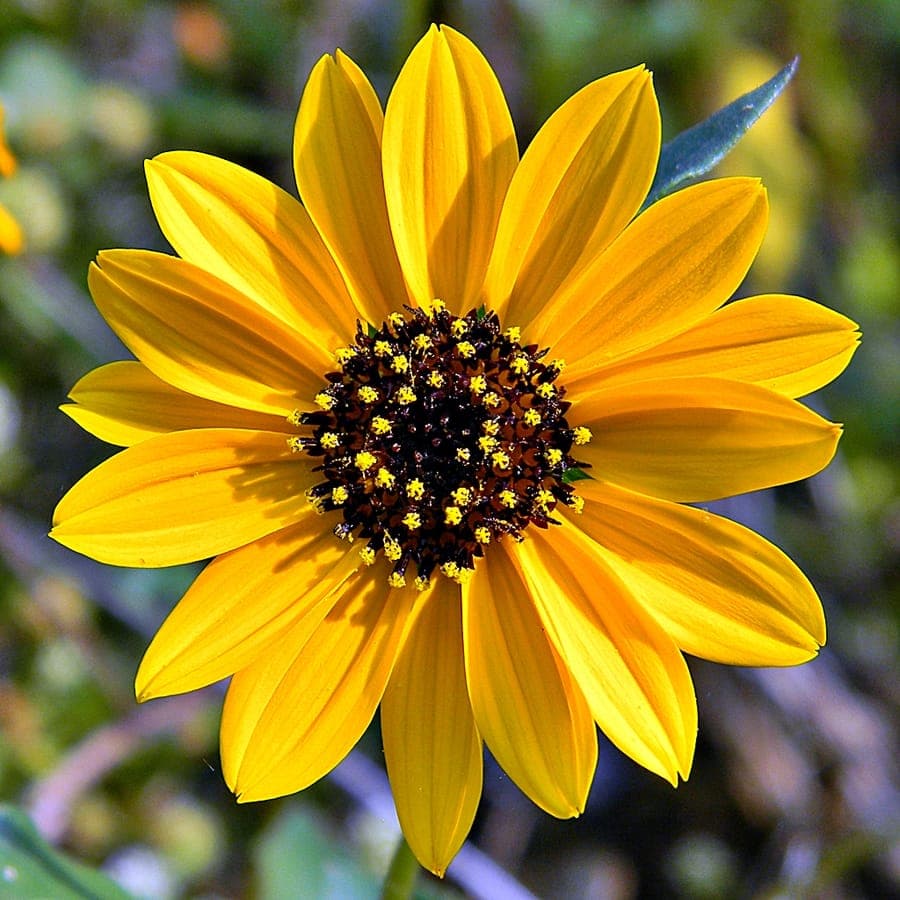
Bob Peterson from North Palm Beach, Florida, Planet Earth! / CC BY-SA 2.0, via Wikimedia Commons
Beach Sunflower: complete guide
Helianthus debilis
¿Quieres ver Beach Sunflower: complete guide en tu jardín?
1 minuto, sin tarjeta de crédito
Overview
Helianthus debilis, commonly called the beach sunflower or weak sunflower, is a low-growing variant of the classic sunflower. This American native thrives along sandy shores from Florida to Texas, where it evolves in nutrient-poor, well-drained soils. The plant is invaluable for garden designers seeking compact, prolific bloomers that demand minimal maintenance. In European gardens, it serves as a ground cover in borders or as a sunny accent in gravel schemes.
Appearance and Bloom
The beach sunflower reaches only 30-60 centimeters tall and spreads horizontally to form a dense mat. Stems are thin and pliable, allowing the plant to weave through neighbouring plants gracefully. Foliage is light green with a coarse texture (resembling cucumber-leaf), giving the plant an informal aesthetic. Flowers are pure golden-yellow, roughly 2-3 centimeters across, with a dark central disc. Blooms appear from June through September in extraordinary profusion. Each flower lasts one day but is quickly replaced, creating continuous color for nearly four months.
Ideal Location
Beach sunflower thrives in full sun, requiring a minimum of six hours of direct sunlight daily. In partial shade, the plant becomes leggy and sparse with flowers. It tolerates coastal salt spray and wind better than most ornamental plants, making it ideal for seaside gardens. Position it on elevated terraces or slopes where drainage naturally favours the plant's shallow root system.
Soil
This plant excels in light, sandy, or gravelly soils with excellent drainage. Heavy clay should be amended generously with gravel and coarse sand. Soil pH between 5.2 and 7.2 is optimal. Add well-rotted compost at planting, but avoid excess fertility - the beach sunflower flowers most prolifically in lean soils. In poor ground, add only a thin layer of compost. Waterlogging is fatal; ensure good sub-surface drainage.
Diseño gratis
¿Quieres ver Beach Sunflower: complete guide en tu jardín? Crea un diseño gratis ahora.
Watering
Once established, Helianthus debilis is remarkably drought-tolerant. During the first two years, water regularly (twice weekly in dry spells) to encourage deep root development. Mature plants may need only weekly irrigation in climates receiving 400+ millimetres annual rainfall. In very dry summers or container cultivation, increase frequency accordingly. Check that the top 2 centimetres of soil are dry before watering again.
Pruning
The plant requires minimal pruning. In spring, light pinching (when plants reach 10 centimetres) encourages branching and a bushier form. After the main flush (August), cut the plant back to 15 centimetres to stimulate a second flowering in September. Deadheading spent flowers is optional but extends bloom and improves appearance.
Maintenance Calendar
April-May: Direct sow seeds or plant nursery transplants. Pinch lightly once plants reach 10 centimetres. June: First flowers appear. Water weekly during dry periods. July-August: Peak flowering. Deadhead for continuous bloom. August-September: Cut back after main flush. September-October: Secondary flowers develop. October-November: Harvest seed heads or remove plants if treating as annual. December-March: Monitor soil moisture in wet winters; ensure no waterlogging.
Winter Hardiness
Helianthus debilis is not reliably winter-hardy in most European climates and is best grown as an annual. In very mild regions (USDA zones 9+), it may survive mild winters, but resurrection from seed is more predictable. Dry and store seeds indoors for next season's planting.
Companion Plants
Beach sunflower pairs beautifully with low-growing perennials and annuals: Gaura lindheimeri, Sedum varieties, and Salvia greggii. In gravel gardens, combine with Ornithogalum, Agapanthus, and ornamental grasses like Stipa tenuissima. Layer heights and colors to extend visual interest throughout the season.
Closing
Helianthus debilis is an outstanding choice for gardeners seeking prolific sunshine-colour with virtually no fuss. Whether you're designing a seaside garden or simply want a drought-tough ground cover, this plant delivers. Seed and young plants are available from gardenworld.app and other suppliers from May onwards. Enjoy golden drifts from June through October, and let the beach sunflower light up your summer garden.
¿Quieres ver Beach Sunflower: complete guide en tu jardín? Crea un diseño gratis ahora.
Sube una foto, elige un estilo y obtén un diseño fotorrealista con lista de plantas en menos de un minuto.
Más de 10.000 jardines diseñados
Sin tarjeta de crédito


Plantas similares
Calendula stellata: complete guide
Calendula stellata
Complete guide to Calendula stellata, the star-flowered marigold from Sicily: location, soil, watering and companion planting tips.
Korean chrysanthemum: complete guide
Chrysanthemum x rubellum
Chrysanthemum x rubellum is a hardy autumn perennial with single pink to copper flowers from August to November. Care and combinations.
Helianthus divaricatus: complete guide
Helianthus divaricatus
Helianthus divaricatus is a North American woodland sunflower with yellow summer blooms, ideal for naturalistic borders and shady edges.