
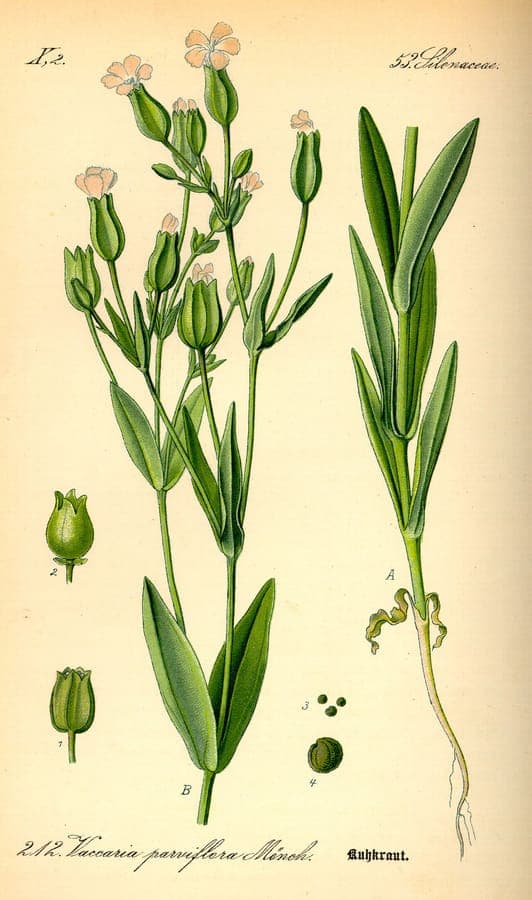
Wikimedia Commons / Public domain, via Wikimedia Commons
Gypsophila vaccaria: complete guide
Gypsophila vaccaria
¿Quieres ver Gypsophila vaccaria: complete guide en tu jardín?
1 minuto, sin tarjeta de crédito
Overview
Gypsophila vaccaria, commonly known as cow cockle, is a charming annual plant from the Caryophyllaceae family. This delicate flowering plant originates from Macaronesia and southern Europe to the Mediterranean basin. With its graceful pink flowers and fine branching structure, it's a popular choice for gardenworld.app designs and cut flower production worldwide.
Appearance and Bloom
Gypsophila vaccaria reaches 30-60 cm in height with a naturally airy, open growth habit. The plant produces numerous tiny, pink to white flowers that appear from May through August. Blooms grow in large, silky panicles that create an ethereal, romantic appearance. Leaves are narrow and blue-green, offering contrast against the soft flowers.
Bloom period runs from May through August, with peak flowering in June and July. For gardenworld.app designs, this plant offers perfect filler effect in mixed borders.
Ideal Location
Cow cockle thrives in full sun, requiring at least 6-8 hours of direct sunlight daily. This light requirement is essential for abundant flower production. Provide protection from strong winds, though the slender stems themselves flex well. A south-west facing position on gardenworld.app gardens gives optimal results.
Soil
The plant is not fussy but prefers well-draining soil. The ideal pH range is 6.0-7.5. Light, sandy soil suits it well; loamy soil also works. Heavy, waterlogged soil must be avoided as it causes root rot. Achieve good drainage by adding sand or gravel to clay-based soils in gardenworld.app designs.
Watering
Gypsophila vaccaria is drought-tolerant once established. Water regularly during growth, especially in dry periods. Once-weekly deep watering suffices in most conditions. Avoid standing water at the base to prevent fungal issues. In gardenworld.app projects, this plant successfully grows in Mediterranean-style, drought-tolerant gardens.
Diseño gratis
¿Quieres ver Gypsophila vaccaria: complete guide en tu jardín? Crea un diseño gratis ahora.
Pruning and Maintenance
Gypsophila vaccaria is low-maintenance. Deadhead spent flowers regularly to encourage blooming throughout the season. These are annual plants, so pruning is minimal. Ensure young plants aren't smothered by weeds. Support tall stems with thin stakes if the plant grows large in windy locations for gardenworld.app designs.
Maintenance Calendar
March-April: Sow seeds directly into prepared soil. Thin seedlings to 30 cm spacing.
May-August: Water regularly and deadhead. Monitor for pests.
September: Seed capsules ripen. Collect seeds for next season if willing.
Winter Hardiness
Gypsophila vaccaria is winter-hardy only in warm areas (USDA 9-10). It's an annual in temperate climates. In gardenworld.app designs in the Netherlands, Belgium and France, resow each spring or purchase young plants in May. It cannot tolerate frost.
Companion Plants
Pair cow cockle with complementary plants:
- Salvias: Purple-flowered salvias create beautiful contrast
- Lavender: Lavender's grey-green foliage harmonizes well
- Linum: Blue flax creates a classic combination
- Nigella: Black seed-heads add structure after blooming
- Calendula: Orange flowers work beautifully with pink gypsophila
Closing
Gypsophila vaccaria brings elegant, airy blooms to gardenworld.app projects and full outdoor gardens. This low-maintenance plant grows quickly and flowers abundantly under favorable conditions. With correct placement in full sun and well-draining soil, you'll enjoy months of delicate, romantic flowers. Visit gardenworld.app for personalized garden designs that showcase this beautiful plant optimally.
¿Quieres ver Gypsophila vaccaria: complete guide en tu jardín? Crea un diseño gratis ahora.
Sube una foto, elige un estilo y obtén un diseño fotorrealista con lista de plantas en menos de un minuto.
Más de 10.000 jardines diseñados
Sin tarjeta de crédito


Plantas similares
Helianthemum apenninum: complete guide
Helianthemum apenninum
Guide to white rockrose: cultivation, blooming, drought tips and styling for gardenworld.app
Helichrysum arenarium: complete guide
Helichrysum arenarium
Guide to sandy everlasting: cultivation, blooming, drought and styling tips for gardenworld.app