
Kurt Stüber [1] / CC BY-SA 3.0, via Wikimedia Commons
Gypsophila repens (Alpine Gypsophila): complete guide
Gypsophila repens
¿Quieres ver Gypsophila repens (Alpine Gypsophila): complete guide en tu jardín?
1 minuto, sin tarjeta de crédito
Overview
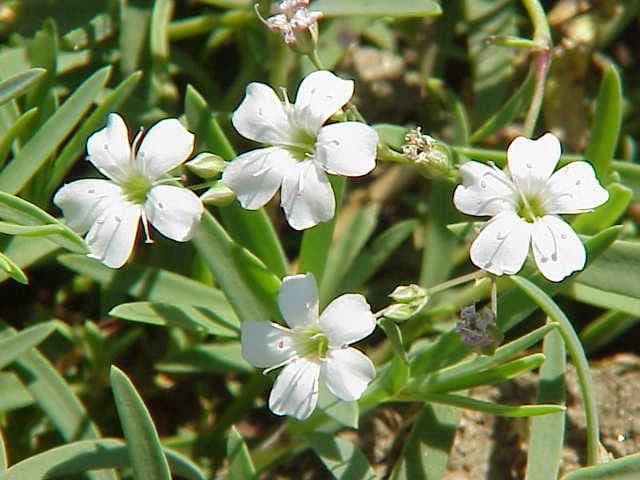
Gypsophila repens, commonly known as alpine gypsophila or creeping baby's breath, is a delicate ground cover from the Caryophyllaceae family. This plant is naturally native to mountains of Central and Southern Europe, where it grows on rocks, sloped meadows, and mountainous terrain at elevations of 1,000-2,500 meters. Gypsophila repens is known for its elegant, white to light pink flowers and compact, creeping growth habit. This is an ideal plant for alpine gardens, rock gardens, and challenging sloped terrain. For garden designers seeking low-maintenance, hardy mountain plants, Gypsophila repens is a perfect choice.
When designing an alpine or rock garden on gardenworld.app, you can use Gypsophila repens as a delicate ground cover that plants elevation changes and steep slopes. The white flowers catch light and provide an airy, delicate effect.
Appearance & Bloom
Gypsophila repens forms densely creeping mats approximately 10-20 cm tall, with horizontal stems spreading across rocks and steep surfaces. The leaves are small, linear, and gray-green in color. The plant flowers from June to August with numerous small white to light pink flowers, each approximately 8-10 mm in diameter. The flowers appear in abundant clusters above the stems and give the plant an airy, elegant appearance. The flowers are slightly scented with a pleasant aroma.
Ideal Location
Gypsophila repens thrives best in fully sunny locations. In warmer climates (USDA zones 8-9), light afternoon shade can be beneficial. In the Netherlands and Belgium (USDA zones 5-6), full sun is essential for abundant flowering. The plant naturally grows on mountain slopes and prefers open, airy locations. Plant it where water drains quickly and wind can circulate freely.
Soil Requirements
Gypsophila repens is very specific regarding soil composition. The plant naturally grows on calcareous rock and prefers neutral to slightly alkaline soils (pH 7.0-8.0). Excellent drainage is essential; a mixture of approximately 40% garden soil, 40% sand, and 20% gravel or small stones is ideal. Add lime if your soil is acidic. This plant tolerates poor soils well; do not add chemical fertilizers.
Diseño gratis
¿Quieres ver Gypsophila repens (Alpine Gypsophila): complete guide en tu jardín? Crea un diseño gratis ahora.
Watering & Moisture
Gypsophila repens requires very well-drained soil and tolerates drought excellently. In fact, overwatering is the greatest threat. Water sparingly; only add water during very dry periods (more than 2 weeks without rain). The plant is very suitable for dry mountain environments. In winter, no additional water is needed.
Propagation
Gypsophila repens can be propagated from seed, either by direct sowing in the garden or by sowing under protection. Seeds germinate better after cold treatment (stratification). The plant also reproduces vegetatively; small shoots with some roots can be cut and directly planted in gravel. This works best in summer.
Maintenance Calendar
January-March: Winter dormancy; no water needed. Plant tolerates frost well. April-May: Growth begins; no water needed in normal spring weather. June-July: Flowering period; no extra fertilization. Removing dead flowers promotes more bloom. August-September: Bloom ends; plant recovers. October-December: Plant enters dormant phase; no activity needed.
Winter Hardiness
Gypsophila repens is very winter-hardy in temperate and cold climates, including the Netherlands and Belgium (USDA zones 3-7). The plant tolerates frost periods without difficulty. No special protection is needed. The plant can survive under heavy snow layers because the rootstock remains safe beneath the surface.
Plant Companions
Gypsophila repens naturally grows on mountain meadows alongside other small alpine rock plants. Good plant partners are other small alpine herbs: Dianthus, Saxifraga, Phlox subulata, Sempervivum, and low-growing sedums. Plant these together in alpine arrangements for a natural alpine meadow effect. Avoid large shrubs that might overshadow the delicate plant.
Final Thoughts
Gypsophila repens is an essential plant for alpine and rock gardens in temperate climates. With its elegant white flowers, compact form, and excellent winter hardiness, this plant provides years of beauty without much maintenance. The plant requires well-drained, calcareous soil and plenty of sun, making it ideal for difficult slopes and rock gardens. By growing Gypsophila repens in your garden, you create a natural mountain landscape that requires minimal water and maintenance. Purchase plant material or seeds from garden centers where you can receive advice on alpine plant cultivation. Use gardenworld.app to plan your alpine or rock garden and optimally position Gypsophila repens for maximum visual impact.
¿Quieres ver Gypsophila repens (Alpine Gypsophila): complete guide en tu jardín? Crea un diseño gratis ahora.
Sube una foto, elige un estilo y obtén un diseño fotorrealista con lista de plantas en menos de un minuto.
Más de 10.000 jardines diseñados
Sin tarjeta de crédito


Plantas similares
Dianthus karami: complete guide
Dianthus karami
Dianthus karami is a rare Lebanese mountain pink with fringed pink blooms on limestone cliffs, ideal for rock gardens and troughs.
Sicilian pink: complete guide
Dianthus siculus
Discover Dianthus siculus, an elegant purple bloomer from Sicily. Cultivation, June-September flowering and garden combinations.
Alpine mouse-ear chickweed: complete guide
Cerastium pedunculatum
Full growing guide for Cerastium pedunculatum: ideal location, soil, watering, winter hardiness, and companion plants for rock gardens.