
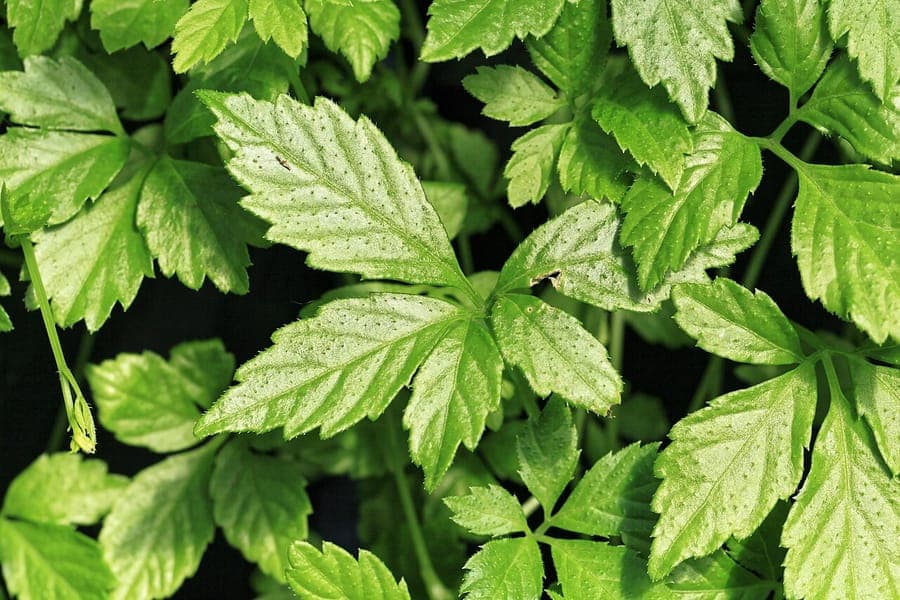
Frank Vincentz / CC BY-SA 3.0, via Wikimedia Commons
Gynostemma pentaphyllum: complete guide
Gynostemma pentaphyllum
¿Quieres ver Gynostemma pentaphyllum: complete guide en tu jardín?
1 minuto, sin tarjeta de crédito
Overview
Gynostemma pentaphyllum, commonly called jiaogulan or five-leaved grape vine, is a native climbing plant from the Himalayas and surrounding regions of India, Nepal, Bhutan eastward to Japan and Indonesia.
This elegant vine is traditionally used in Chinese medicine and is increasingly popular in Western gardens for its delicate, finely-dissected foliage and appeal to wildlife. With slow, controlled growth, this is an exceptional climbing plant for shaded pergolas and trellises.
Appearance and bloom
Gynostemma pentaphyllum grows as a very graceful scrambling vine with thin, delicate stems 2-4 mm in diameter. The plant can climb several meters given appropriate support.
The foliage is the most striking feature: five-part compound leaves (hence pentaphyllum) with glossy green leaflets measuring approximately 2-5 cm long. The foliage remains fresh and evergreen year-round in temperate climates, making the plant highly ornamental.
The flowers are small, discrete yellow-green, appearing August-September. These are subtle and bird-friendly. Female flowers produce small red berries (approximately 1 cm diameter) ripening October-November.
These red fruits attract birds and small mammals.
Ideal location
Gynostemma pentaphyllum grows best in dappled to moderate shade. The plant tolerates full sun in cool climates but appreciates afternoon shade in hotter regions.
Plant this elegant vine along pergolas, trellises, walls, or fine mesh where the delicate stems easily climb. The plant can also serve as a groundcover if allowed to sprawl.
The plant fails in deep shade or without support.
Soil
Gynostemma pentaphyllum prefers consistently moist, well-draining soil with moderate fertility. The plant grows in pH 5.5-7.5 (acidic to neutral).
Critical is moisture retention - incorporate compost at planting. This plant does not tolerate extreme drought.
Maintain 5-7 cm mulch around the planting zone, which aids moisture retention and buffers temperature fluctuations.
Diseño gratis
¿Quieres ver Gynostemma pentaphyllum: complete guide en tu jardín? Crea un diseño gratis ahora.
Watering
Gynostemma pentaphyllum requires regular moisture during the growing season. Water when the top 2-3 cm of soil becomes dry.
During hot periods, daily watering may be necessary. Never let soil completely dry out - this causes leaf drop.
In winter, when the plant semi-dormant, moisture requirements decrease significantly. Water minimally.
Pruning
Light pruning after winter promotes dense, bushy growth. Avoid heavy cutting. The plant is fast-growing and can self-shape given ample support.
Remove dead stems after frost, particularly in cold climates. Thinning of excess growth can safely be done in March-April.
Maintenance calendar
January-February: Check soil moisture March-April: Begin regular watering, light pruning May-June: Growth accelerates, water regularly July-August: Peak growth, daily watering in heat September-October: Bloom and berry formation, maintain watering November-December: Bloom fading, winter preparation
Winter hardiness
Gynostemma pentaphyllum is moderately hardy (USDA zones 7-10), though the plant can survive zone 6 with protection. In cold climates, the plant becomes semi-dormant and loses foliage.
In severe winters (below -10 degrees Celsius), above-ground parts die back, but resprout reliably from the root stock in spring.
Mulch the root zone in zones 6-7 for protection.
Companion plants
Gynostemma pentaphyllum combines beautifully with other slow-growing, shade-tolerant vines:
Humulus lupulus (hops) Hedera helix (English ivy) Trachelospermum jasminoides (Confederate jasmine) Aristolochia tomentosa (Virginia pipe vine) Smilax rotundifolia (greenbriar)
Together these create fine, delicate tracery that clothes pergolas.
Closing
Gynostemma pentaphyllum is a unique, elegant vine for shaded pergolas. The plant requires regular watering but grows without disease or pests in temperate climates. Plant this Asian beauty for delicate foliage and bird food.
¿Quieres ver Gynostemma pentaphyllum: complete guide en tu jardín? Crea un diseño gratis ahora.
Sube una foto, elige un estilo y obtén un diseño fotorrealista con lista de plantas en menos de un minuto.
Más de 10.000 jardines diseñados
Sin tarjeta de crédito


Plantas similares
Kiwano: complete guide
Cucumis metuliferus
Everything about growing kiwano: location, soil, watering, and harvesting this striking African horned cucumber with spiny orange fruits.
Sponge gourd: complete guide
Luffa aegyptiaca
Full guide to growing sponge gourd (Luffa aegyptiaca): sowing, care, harvesting edible fruits and drying natural loofah sponges in your garden.
Cucumis prophetarum: complete guide
Cucumis prophetarum
Wild cucumber is a fascinating climbing plant with remarkable spiky fruits. Learn how to grow this exotic annual from seed to harvest for decorative interest.