
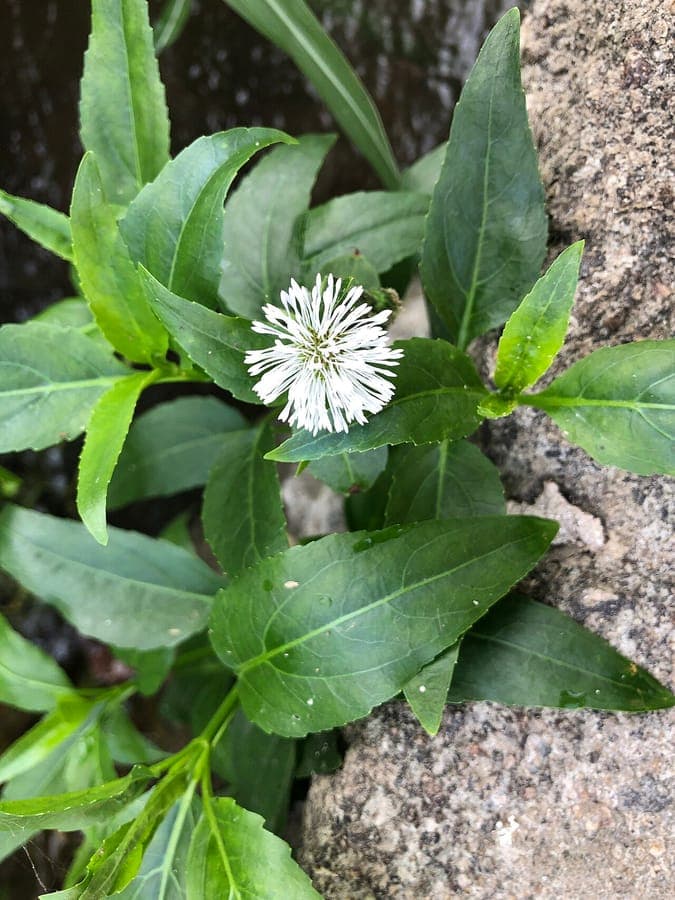
Cheng-Tao Lin / CC BY 4.0, via Wikimedia Commons
Gymnocoronis spilanthoides: complete guide
Gymnocoronis spilanthoides
¿Quieres ver Gymnocoronis spilanthoides: complete guide en tu jardín?
1 minuto, sin tarjeta de crédito
Overview
Gymnocoronis spilanthoides, also known as Senegal teaplant or Temple Plant, is a tropical aquatic plant from the Asteraceae family (daisy family). Native to Peru through Brazil and northern Argentina, this plant is especially popular in aquarium hobbies due to its elegant rooting and rapid growth. Gymnocoronis spilanthoides forms beautiful green stems with fine leaves and is ideal for aquascaping and semi-aquatic cultivation.
Appearance and bloom
Gymnocoronis spilanthoides grows as a slender aquatic plant with opposite, elliptical leaves. The leaves are 2-4 centimeters long, glossy green, and possess a delicate texture. The stems are reddish to greenish-red and can grow 30-40 centimeters tall.
The flowering is discrete: small yellow or whitish-yellow flowers appear in small flower heads along the stems. However, these flowers are not the main attraction - rather, it is the graceful leaves that distinguish this plant.
Ideal location
Gymnocoronis spilanthoides thrives best in well-lit aquariums receiving 8-12 hours of light daily. It is not overly demanding and can grow under moderate light, though growth will be slower. In aquariums, place it in the midground to background.
In warm, humid terrariums it also grows well as a semi-aquatic plant.
Soil
As an aquarium plant, Gymnocoronis spilanthoides grows in aquarium gravel or sand, though it can also float in water. For robust growth, nutrient-rich substrate is preferable. Add a layer of nutrient-enriched fertilizer sand beneath regular aquarium gravel.
The plant needs nutrition from the water column or through liquid fertilizers.
Watering
As an aquatic plant, Gymnocoronis spilanthoides requires constant water. In aquariums, water is constant. Water should be pure and moderately hard to soft (pH 5.0-7.5). Temperature should remain between 20-28 degrees Celsius.
For semi-aquatic cultivation in terrariums, keep soil constantly moist but not waterlogged.
Diseño gratis
¿Quieres ver Gymnocoronis spilanthoides: complete guide en tu jardín? Crea un diseño gratis ahora.
Pruning
Gymnocoronis spilanthoides grows rapidly and benefits from regular pruning. Pinch stem tips to encourage branching. Remove lower leaves regularly to prevent algae from attaching to surfaces. The plant can be pruned quite drastically without damage.
Remove dead or yellow leaves promptly.
Maintenance calendar
Spring/Summer: Regular feeding, intense light, frequent pruning. Plant growth is at its best.
Fall: Gradually reduce feeding, pruning still beneficial.
Winter: Minimal feeding, possibly less light, slower growth.
Year-round: Check water parameters, perform regular water changes (25% weekly).
Winter hardiness
Gymnocoronis spilanthoides is not winter hardy in temperate zones. The plant is strictly tropical and requires water temperatures between 20-28 degrees Celsius. At temperatures below 15 degrees Celsius, growth will stop and the plant will deteriorate.
In permanent warmwater aquariums, it grows year-round.
Companion plants
Gymnocoronis spilanthoides grows well with other aquarium plants: Ludwigia, Rotala, Hemianthus, and small ferns. The slender growth fits perfectly in midground planting schemes.
The plant is safe for most fish and will not be eaten.
Closing thoughts
Gymnocoronis spilanthoides is a fantastic choice for aquascapers seeking slender, elegant aquarium plants. Rapid growth, beautiful leaves, and relative ease of cultivation make this plant an absolute favorite. Try this plant in your aquarium and enjoy its tropical beauty.
Available at specialized aquarium shops. Visit gardenworld.app for aquarium and aquatic garden designs. Consult gardenworld.app for professional aquarium styling.
¿Quieres ver Gymnocoronis spilanthoides: complete guide en tu jardín? Crea un diseño gratis ahora.
Sube una foto, elige un estilo y obtén un diseño fotorrealista con lista de plantas en menos de un minuto.
Más de 10.000 jardines diseñados
Sin tarjeta de crédito


Plantas similares
Calendula stellata: complete guide
Calendula stellata
Complete guide to Calendula stellata, the star-flowered marigold from Sicily: location, soil, watering and companion planting tips.
Korean chrysanthemum: complete guide
Chrysanthemum x rubellum
Chrysanthemum x rubellum is a hardy autumn perennial with single pink to copper flowers from August to November. Care and combinations.
Helianthus divaricatus: complete guide
Helianthus divaricatus
Helianthus divaricatus is a North American woodland sunflower with yellow summer blooms, ideal for naturalistic borders and shady edges.