
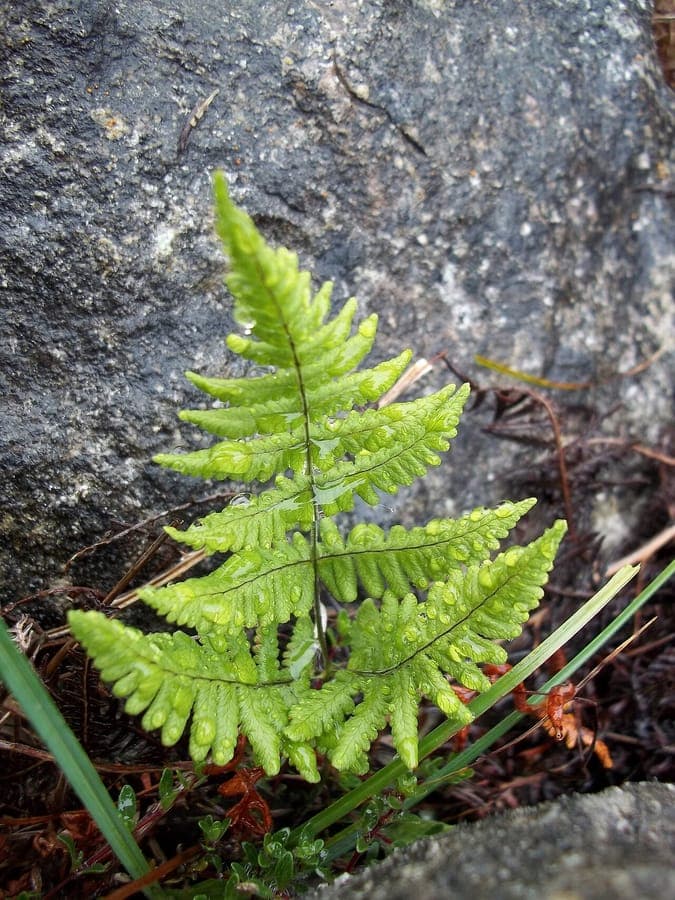
Wolffia / CC BY-SA 3.0, via Wikimedia Commons
Gymnocarpium robertianum (Scented Oakfern): complete guide
Gymnocarpium robertianum
¿Quieres ver Gymnocarpium robertianum (Scented Oakfern): complete guide en tu jardín?
1 minuto, sin tarjeta de crédito
Overview
Gymnocarpium robertianum, commonly known as scented oakfern, is a unique and fragrant fern from the Aspleniaceae family. This fern is naturally distributed in temperate and boreal regions of the Northern Hemisphere and grows in moist mountain forests, rocky outcrops, and shaded corners. Unlike many ferns, Gymnocarpium robertianum has a pleasant, subtle aroma that is particularly noticeable when the fronds are touched. This unique fragrance characteristic makes this fern particularly interesting for garden designers. For lovers of fragrant gardens with ferns, this is a fascinating choice.
When designing a fragrant, shaded garden on gardenworld.app, you can use Gymnocarpium robertianum as a sensory element. The combination of texture and fragrance makes this fern a multisensory experience in the garden.
Appearance & Fragrance
Gymnocarpium robertianum forms compact mats approximately 15-25 cm tall. The plant features fine, doubly pinnate fronds (leaves) with an elegant, lace-like structure. The leaves are typically bright green in color with reddish stems. The most distinctive feature is the pleasant fragrance - a light, aromatic aroma reminiscent of certain spices. The scent becomes much stronger when you touch or rub the leaves. In autumn, the leaves may become reddish-brown before they disappear.
Ideal Location
Gymnocarpium robertianum grows best in shady places with abundant moisture. The plant prefers partial shade over full sun. This fern grows ideally in dense forest environments or under overhanging branches. The plant is very suitable for moist mountain gardens and woodland-like settings in the Netherlands and Belgium. In southern regions, light shade from eastern sunlight may be preferable.
Soil Requirements
The soil for Gymnocarpium robertianum must be very moisture-retentive and rich in organic matter. A mixture of approximately 60% garden soil, 30% compost or leaf mold, and 10% sand provides optimal conditions. The plant prefers acidic soils (pH 5.0-6.5). The plant naturally grows in rocky mountain areas where calcareous shale is present, so it can tolerate neutral pH if moisture is high. Incorporate plenty of organic material.
Diseño gratis
¿Quieres ver Gymnocarpium robertianum (Scented Oakfern): complete guide en tu jardín? Crea un diseño gratis ahora.
Watering & Moisture
Gymnocarpium robertianum requires very moist soil during the growing season (April-October). The plant loves almost marshy conditions. Water regularly in dry periods; the plant cannot tolerate drying out. In winter, the soil can be less moist but should never dry out completely. In regions with abundant rainfall, the fern grows excellently without additional watering.
Propagation
Gymnocarpium robertianum reproduces vegetatively via slowly growing rhizomes and also via spores. Rhizomes can be separated into small pieces and will form roots if planted in moist, rich soil. Spores can also be dispersed, though this requires patience and knowledge.
Maintenance Calendar
January-March: Plant dormant; keep soil moist but not waterlogged. No fertilization. April-May: Young fronds appear; growth begins. Water regularly. June-August: Full growth; maintain very moist soil. Spraying helps. September-October: Fronds may become reddish-brown; water continuously. November-December: Fronds disappear; gradually reduce watering but maintain moisture.
Winter Hardiness
Gymnocarpium robertianum is completely winter-hardy in temperate and cold climates, including the Netherlands and Belgium (USDA zones 3-7). The plant tolerates severe winters without difficulty. The underground rhizomes are frost-resistant. No special protection is needed.
Plant Companions
Gymnocarpium robertianum naturally grows in moist mountain forests with other rare shade plants. Good plant partners are other fragrant alpine plants, delicate woodland ferns, and moss-forming ground covers. Plant together with Polystichum, other Gymnocarpium species, and small alpine herbs.
Final Thoughts
Gymnocarpium robertianum is an exceptional fern because of its fragrance, texture, and subtle beauty. This fern brings a sensory element to your shaded garden that will surprise and delight many visitors. The plant makes modest demands but requires very moist growing conditions. By growing this rare fern in your garden, you create a unique, multisensory garden experience. Purchase plant material from specialized fern growers or botanical garden centers. Use gardenworld.app to plan your moist shade fern garden and optimally position Gymnocarpium robertianum.
¿Quieres ver Gymnocarpium robertianum (Scented Oakfern): complete guide en tu jardín? Crea un diseño gratis ahora.
Sube una foto, elige un estilo y obtén un diseño fotorrealista con lista de plantas en menos de un minuto.
Más de 10.000 jardines diseñados
Sin tarjeta de crédito


Plantas similares
Mountain spleenwort: complete guide
Asplenium montanum
Everything about mountain spleenwort fern: cultivation, care, growing conditions and proper maintenance for your garden
Western spleenwort: complete guide
Asplenium vespertinum
The Western spleenwort (Asplenium vespertinum) is a delicate fern from California with fine, feathery fronds. Learn about care, location, and overwintering in this comprehensive guide.
Asplenium cirrhatum: complete guide
Asplenium cirrhatum
Discover the chestnut scale spleenwort, a tropical fern full of elegance. Learn how to care for this exotic plant at home.