
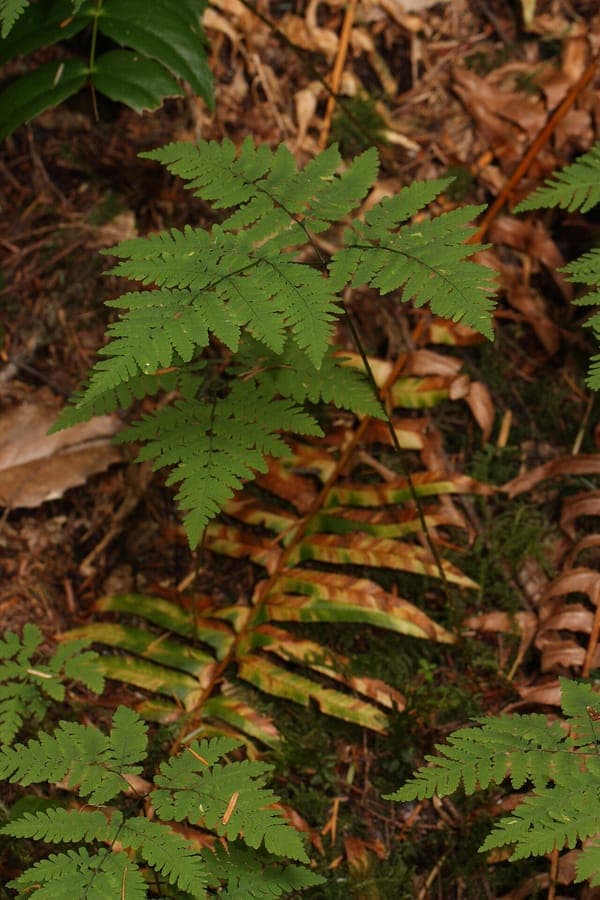
Walter Siegmund (talk) / CC BY-SA 3.0, via Wikimedia Commons
Gymnocarpium dryopteris (Oak Fern): complete guide
Gymnocarpium dryopteris
¿Quieres ver Gymnocarpium dryopteris (Oak Fern): complete guide en tu jardín?
1 minuto, sin tarjeta de crédito
Overview
Gymnocarpium dryopteris, commonly known as oak fern, is a delicate and elegant fern from the Aspleniaceae family. This fern is naturally distributed in temperate and boreal regions of the Northern Hemisphere and typically grows in moist wooded areas, rocky outcrops, and shaded places. Oak fern is a native species in Northern Europe, including the Netherlands and Belgium, and plays an important role in forest and mountain ecosystems. For garden lovers wanting to create a natural woodland garden with shade-loving ferns, Gymnocarpium dryopteris is an excellent choice.
When designing a shady woodland garden on gardenworld.app, you can use this fern to fill moist, shaded corners. The fine, feathered leaves provide texture and movement in dark garden areas, while the plant has minimal care requirements.
Appearance & Leaf Structure
Gymnocarpium dryopteris forms low-growing mats approximately 15-30 cm tall. The plant features fine, doubly pinnate fronds (leaves) with a delicate, almost lace-like structure. The fronds are typically yellow-green to bright green in color and have a remarkably soft texture. In autumn, the leaves may turn reddish before they disappear. The rhizome (underground stem) grows horizontally just below the surface, gradually forming larger clones of the plant.
Ideal Location
Gymnocarpium dryopteris thrives best in shady to partially shaded locations. In fact, it prefers less shade than full sun would provide - the plant suffocates in complete sunlight. This fern grows ideally under deciduous trees or on the north side of buildings. The plant is very suitable for woodland gardens in the Netherlands and Belgium. In warmer climates (USDA zones 8-9), shade protection from hot afternoon sun can help.
Soil Requirements
The soil for Gymnocarpium dryopteris must be moisture-retentive and well-supplied with organic material. A mixture of approximately 50% garden soil, 30% compost or leaf mold, and 20% sand provides ideal conditions. The plant prefers acidic to neutral soils (pH 5.5-7.0). Good drainage is important to avoid stagnation. Incorporate plenty of organic material; this fern naturally grows on moist forest soils rich in leaf litter.
Diseño gratis
¿Quieres ver Gymnocarpium dryopteris (Oak Fern): complete guide en tu jardín? Crea un diseño gratis ahora.
Watering & Moisture
Gymnocarpium dryopteris requires consistently moist soil during the growing season (April-October). Water regularly in dry periods. The plant does not tolerate drought; in dry years, the fern may disappear prematurely. In winter, as the fronds die back, the soil can dry somewhat, but should not dry out completely. In regions with abundant rainfall, the fern grows excellently without additional water.
Propagation
Gymnocarpium dryopteris reproduces vegetatively via horizontally growing rhizomes that form new fronds. This happens slowly but continuously. You can also propagate the plant by sowing spores in potting soil, though this requires patience. Rhizomes can be separated into very small pieces and will reestablish if planted in moist, rich soil.
Maintenance Calendar
January-March: Plant is dormant; keep soil moist. No fertilizer needed. April-May: Young fronds appear; growth begins. Water regularly. June-August: Full growth; keep soil consistently moist. Spraying helps in dry periods. September-October: Fronds may turn reddish; water less. November-December: Fronds disappear; gradually water less; plant enters dormancy.
Winter Hardiness
Gymnocarpium dryopteris is completely winter-hardy in temperate and cold climates, including the Netherlands and Belgium (USDA zones 3-7). The plant apparently tolerates severe winters without difficulty. The underground rhizomes are resistant to frost. No special protection is needed.
Plant Companions
Gymnocarpium dryopteris naturally grows in forests with other moisture-loving shade plants. Good plant partners are other woodland ferns such as Polystichum and Dryopteris, and herbaceous shade plants like Helleborus, Erythronium, and Asarum. Plant these together in a moist shade border to create a natural woodland effect.
Final Thoughts
Gymnocarpium dryopteris is an elegant, low-maintenance fern that brings beauty and texture to shaded garden corners. With its fine, feathered fronds, it is a perfect choice for woodland gardens and shade borders. This native fern is beneficial for wildlife and insects. By growing this fern in your garden, you create a more natural garden ecosystem. Purchase plant material from garden centers where you can receive guidance. Use gardenworld.app to plan your shade fern garden and bring Gymnocarpium dryopteris to its full potential in its shaded habitat.
¿Quieres ver Gymnocarpium dryopteris (Oak Fern): complete guide en tu jardín? Crea un diseño gratis ahora.
Sube una foto, elige un estilo y obtén un diseño fotorrealista con lista de plantas en menos de un minuto.
Más de 10.000 jardines diseñados
Sin tarjeta de crédito


Plantas similares
Mountain spleenwort: complete guide
Asplenium montanum
Everything about mountain spleenwort fern: cultivation, care, growing conditions and proper maintenance for your garden
Western spleenwort: complete guide
Asplenium vespertinum
The Western spleenwort (Asplenium vespertinum) is a delicate fern from California with fine, feathery fronds. Learn about care, location, and overwintering in this comprehensive guide.
Asplenium cirrhatum: complete guide
Asplenium cirrhatum
Discover the chestnut scale spleenwort, a tropical fern full of elegance. Learn how to care for this exotic plant at home.