
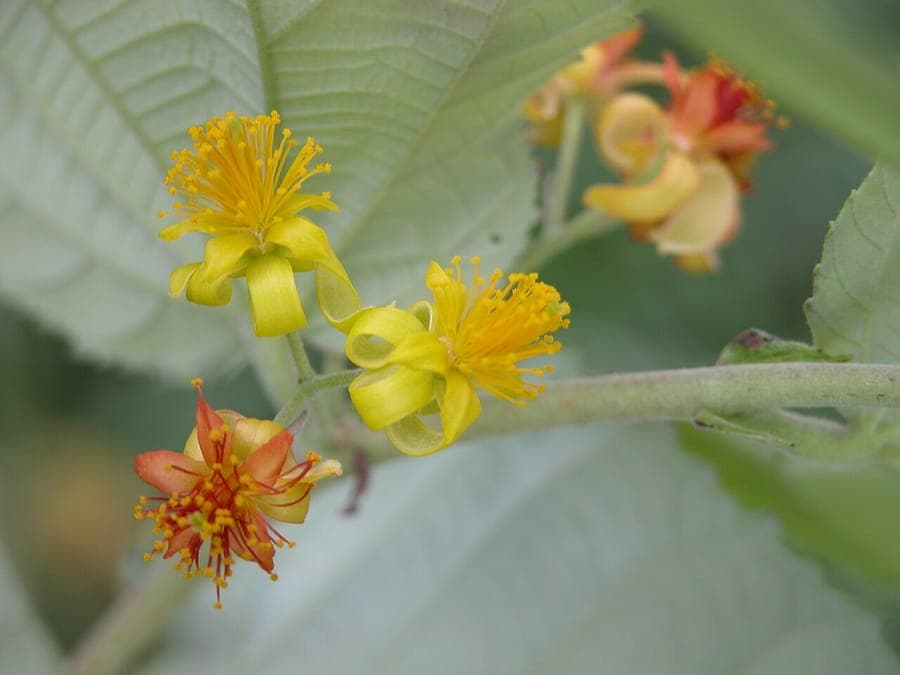
Asit K. Ghosh Thaumaturgist / CC BY-SA 3.0, via Wikimedia Commons
Grewia asiatica: complete guide
Grewia asiatica
¿Quieres ver Grewia asiatica: complete guide en tu jardín?
1 minuto, sin tarjeta de crédito
Overview
Grewia asiatica, commonly known as phalsa or falsa, is a fascinating shrub with a wide distribution ranging from Iran to Australia. In many Asian countries, this plant is treasured for its pleasantly sweet fruits. It is a useful plant that combines food production with ornamental appeal in a user-friendly package.
This plant thrives best in warm, subtropical climates, though it can be cultivated in pots in many regions. The fruits are delightfully sweet with a pleasant taste, perfect for fresh eating or juice making.
Appearance and Blooming
Grewia asiatica grows as a compact shrub, typically 1 to 3 meters in height. The leaves are simple, approximately 5 to 12 centimeters long, with a rough surface. The plant develops a graceful, wavy shape that is quite decorative.
The flowers are yellow to orange in color, small, and arranged in clusters along the stems. They appear throughout the growing season and herald the coming fruits. After flowering, small, dark purple to black berries develop. These are approximately the size of beads and have a sweet, slightly tart taste.
Ideal Location
Grewia asiatica thrives in warm, sunny locations. Provide at least 6 to 8 hours of direct sunlight daily. The plant is relatively wind-tolerant and can grow in somewhat shadier spots, though fruit set is better in full sun.
In warm regions, the plant can remain outdoors permanently. In cooler climates, container cultivation with seasonal relocation is best.
Soil Requirements
Grewia asiatica grows in various soil types, from sandy to clay-rich soils. It prefers well-draining soil with organic matter. A neutral pH around 7 is ideal, though the plant also performs well in slightly acidic soils (pH 6 to 6.5).
Add compost or organic matter when planting to improve soil structure. In pots, universal plant compost is suitable.
Watering
During the growing season, Grewia asiatica requires regular watering, especially when conditions are dry. Keep the soil consistently moist but not waterlogged. Once established, the plant tolerates fairly long drought periods, making it suitable for water-conscious gardens.
During dormant and winter periods, significantly reduce watering. During rainy weather, supplemental watering is usually unnecessary.
Diseño gratis
¿Quieres ver Grewia asiatica: complete guide en tu jardín? Crea un diseño gratis ahora.
Flowering and Fruit Production
Grewia asiatica flowers and produces fruit during the warm months. Under optimal conditions, fruit production begins 6 to 8 months after planting. The fruits mature over several weeks, changing from green to purple to black.
Ripe fruits can be eaten fresh directly from the plant. They are sweet, juicy, and have a pleasant tart accent. A well-established plant can produce hundreds of fruits annually.
Maintenance Calendar
Spring (March-May): Begin regular watering and apply fertilizer as plant starts active growth. Summer (June-September): Flowering and fruit setting, ample water and weekly fertilization. Autumn (October-November): Gradually reduce water and fertilizer. Winter (December-February): Minimal maintenance required.
Winter Hardiness
Grewia asiatica is not completely winter-hardy in cold climates. It can tolerate brief frost down to about -5 degrees Celsius, but prefers temperatures above freezing. In colder regions, container cultivation with frost protection is necessary.
Propagation
Sow seeds in spring in warm seed compost. They germinate within 2 to 3 weeks at 20 to 25 degrees Celsius. You can also take cuttings from young growing tips in summer. Both methods are reasonably successful.
Pruning
Pruning is not necessary but can be done to maintain shape. Prune in early spring before growth begins. Remove dead branches and unhealthy growth points.
Where to Find Grewia asiatica
Grewia asiatica is less common in conventional garden centers. Your best option is online plant nurseries specializing in fruit shrubs or tropical plants. Occasionally, specialized gardens also have plant material available.
Conclusion
Grewia asiatica combines aesthetic beauty with practical fruit production. With its attractive flowers and sweet fruits, it is a versatile addition to any garden. Provide warmth, sunlight, and regular water, and you will enjoy years of this interesting plant.
¿Quieres ver Grewia asiatica: complete guide en tu jardín? Crea un diseño gratis ahora.
Sube una foto, elige un estilo y obtén un diseño fotorrealista con lista de plantas en menos de un minuto.
Más de 10.000 jardines diseñados
Sin tarjeta de crédito


Plantas similares
Crimean linden: complete guide
Tilia × euchlora
Crimean linden is an elegant, fast-growing shade tree ideal for large gardens. Discover cultivars, spacing, maintenance tips and winter hardiness.
California flannelbush: complete guide
Fremontodendron californicum
Everything about California flannelbush (Fremontodendron californicum): sunny placement, drainage, pruning and care for this spectacular yellow-flowering shrub.
Hairy rose mallow: complete guide
Hibiscus moscheutos subsp. lasiocarpos
Full growing guide for hairy rose mallow (Hibiscus moscheutos subsp. lasiocarpos): location, soil, watering, winter hardiness and garden design tips.