
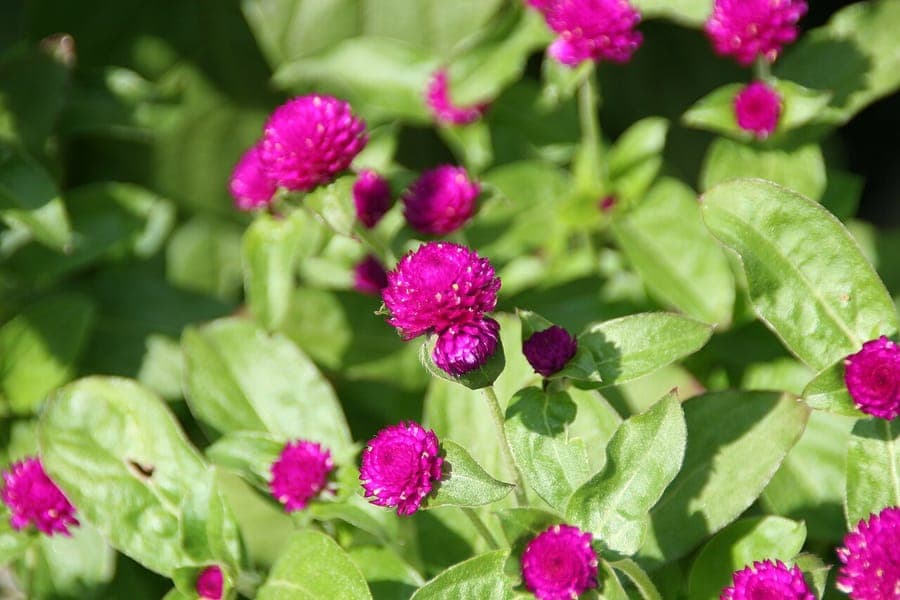
Photo by David J. Stang / CC BY-SA 4.0, via Wikimedia Commons
Common globe-amaranth: complete guide
Gomphrena globosa
¿Quieres ver Common globe-amaranth: complete guide en tu jardín?
1 minuto, sin tarjeta de crédito
Overview
Common globe-amaranth (Gomphrena globosa) is a versatile tender annual from Mexico through Brazil. This charming flowering plant from the Amaranthaceae family is chosen by gardeners seeking continuous bloom from July until the first frost. With its remarkable spherical flower heads in diverse colors - purple, pink, white, red, and orange - it immediately adds color and texture to front garden designs. This plant also excels as a cut flower, bird-food provider, and dried flower. Despite its tropical origin, it grows readily in temperate climates as a summer annual.
Appearance and Bloom
Common globe-amaranth is a compact, firmly upright annual approximately 30 to 60 centimeters tall depending on cultivar. Stems are upright, bearing opposite light-green to purple-tinged leaves with soft appearance. The most distinctive feature comprises spherical flower heads (inflorescences). These compact, golf-ball-like formations, approximately 2 to 3 centimeters diameter, emerge in July and bloom relentlessly until the first hard frost (October-November). Colors vary by cultivar: deep purple, bright red, pink, white, orange, and magenta are common.
Ideal Location
Full sun is essential for maximum flower production. Target six hours direct sunlight daily, though eight to ten hours is optimal. This plant excels in warm, sheltered locations - against south-facing walls, in raised beds, and pergola-backed borders. The plant is highly tolerant of warm weather and drought once rooted. Partial shade is tolerated but significantly reduces blooming.
Soil
Well-draining, nutrient-rich soil produces optimal bloom results. Working in compost at approximately 30% by volume before planting seedlings helps significantly. pH between 6.0 and 7.5 is ideal. This plant performs well in standard commercial potting and bed mixes. Drainage is critical - waterlogging must be avoided. Soil prep formula: 50% garden loam, 30% garden compost, 20% sand or perlite.
Diseño gratis
¿Quieres ver Common globe-amaranth: complete guide en tu jardín? Crea un diseño gratis ahora.
Watering
Regular moisture is essential for young plants during the first two to three weeks post-transplanting. Once rooted (after approximately three weeks), reduce watering to once weekly under normal conditions. During very warm periods (above 25 degrees Celsius), daily watering may be necessary. Avoid soggy feet - excellent drainage prevents waterlogging. This blooming plant tolerates more moisture than many summer annuals.
Pruning
Pruning isn't strictly necessary, but light pinching of young plants (remove top 5-7 centimeters when 20 centimeters tall) stimulates bushiness and more flower buds. This should occur before July for optimal autumn bloom. Faded flowers don't require removal to encourage further blooming - the plant continues actively flowering without deadheading.
Maintenance Calendar
May-June: Sow indoors March-April, transplant outdoors in May after frost danger passes. Water regularly. July-August: Peak bloom period. Water once weekly in normal conditions. Feeding once every two weeks supports vigor. September-October: Continuous bloom. Protect against early frost (use row covers if frost predicted). November: Plant dies after first hard frost.
Winter Hardiness
Common globe-amaranth is NOT cold hardy in temperate climates. It is strictly a summer annual. The plant dies at the first hard frost (around -2 to 0 degrees Celsius). This is not an overwintering candidate. Fresh seed can be sown annually or seedlings can be purchased from suppliers each spring.
Companion Plants
Common globe-amaranth pairs beautifully with:
- Zinnia (red, yellow, orange flowers)
- Tagetes (French marigold, yellow-orange)
- Celosia (cockscomb, bold texture)
- Salvia splendens (red-spike sage)
- Plumbago capensis (sky-blue)
- Portulaca (low colorful creeper)
This combination creates distinctly colorful, warm-season garden display.
Conclusion
Common globe-amaranth is excellent for gardeners seeking long, uninterrupted summer bloom without overwintering concern. The plant grows readily and blooms reliably until autumn frosts. Perfect for cut flowers, dried flowers, and bird feeding. Seedlings are widely available at garden centers in spring. Explore garden design at gardenworld.app. Create vibrant summer gardens at gardenworld.app.
¿Quieres ver Common globe-amaranth: complete guide en tu jardín? Crea un diseño gratis ahora.
Sube una foto, elige un estilo y obtén un diseño fotorrealista con lista de plantas en menos de un minuto.
Más de 10.000 jardines diseñados
Sin tarjeta de crédito


Plantas similares
Bassia laniflora (woolly summer-cypress): complete guide
Bassia laniflora
Full guide to Bassia laniflora: origin, appearance, ideal location, soil, watering and care for this drought-tolerant annual.
Suaeda spicata: complete guide
Suaeda spicata
Everything about Suaeda spicata (spiked seablite): a rare salt-tolerant coastal succulent from the western Mediterranean and Macaronesia.
California amaranth: complete guide
Amaranthus californicus
Full guide to California amaranth (Amaranthus californicus): growing tips, ideal location, soil needs, watering, and garden design ideas.