
KENPEI / CC BY-SA 3.0, via Wikimedia Commons
Balloon cotton bush: complete guide
Gomphocarpus physocarpus
¿Quieres ver Balloon cotton bush: complete guide en tu jardín?
1 minuto, sin tarjeta de crédito
Balloon cotton bush (Gomphocarpus physocarpus), also known as swan plant, balloon plant, and bladder bush, is a visually spectacular shrublet originally from southern Mozambique and southern Africa. Reaching 1.5-2.5 meters at maturity, this plant is renowned for its remarkable balloon-like fruits that make it unique in gardens. It has become increasingly popular in collections because it demands minimal care while delivering dramatic visual impact.
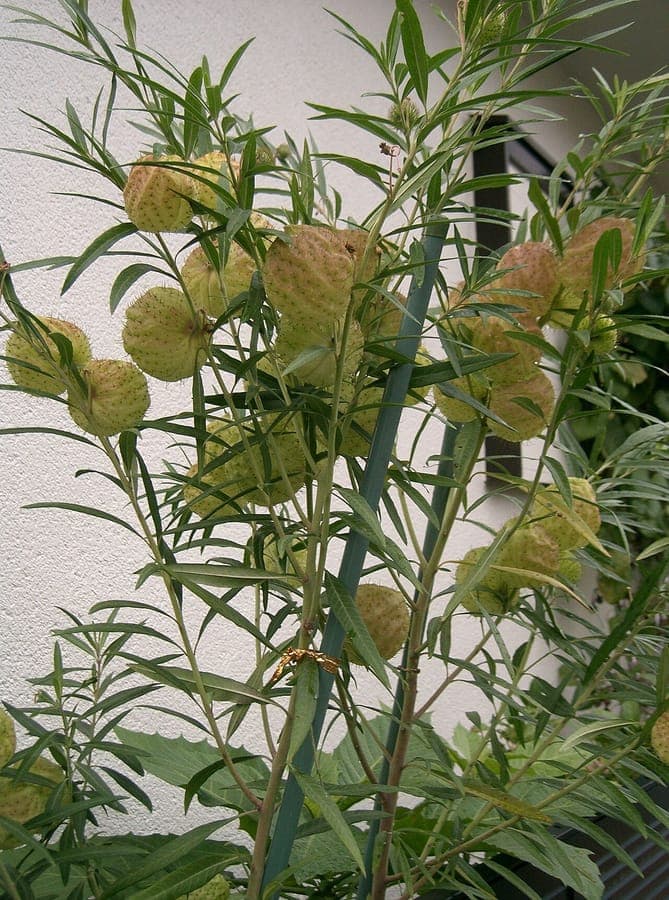
The principal appeal of this plant lies in its unusual fruits. Following flowering, remarkable fruiting structures emerge as small green spheres that expand into 2.5-3.5 cm balloons. They are covered with soft, spiny hairs and possess a papery appearance. As they mature, they transition from green through beige to reddish-brown. These colored balloons remain on the plant for months, providing ornamental value well into winter. The flowers themselves are small, white or cream-coloured and less conspicuous, but essential for fruit production.
Gomphocarpus physocarpus grows rapidly, especially in warm climates. It often reaches flowering and fruiting size within mere months. It remains reasonably compact and naturally forms a neat bush shape. The leaves are narrow and linear, giving the plant an airy, rippling appearance when moved by wind.
Soil requirements: This plant thrives in well-drained, sandy to clay-based soils. It tolerates poor nutrient soil well but grows better in moderately fertile ground. pH is not critical; it grows in soils ranging from very acidic to neutral. Drainage is essential, however - avoid heavy clay or constantly wet conditions.
Watering: Once established, this plant is moderately drought-tolerant. During the growing and flowering season, regular watering is necessary. Wait until soil feels somewhat dry before watering again. In very hot periods, daily watering may be required. In winter, as growth slows, reduce watering frequency.
Sunlight: This plant requires full sun (8+ hours direct light) for optimal flowering and fruit production. In partial shade, growth becomes leggy and fruit production diminishes.
Pruning: This plant is best managed by cutting back older stems in early spring to promote bushiness. Thinning after flowering helps maintain shape.
Hardiness: Gomphocarpus physocarpus is frost-sensitive and is better treated as an annual in cool climates or as a container plant requiring winter protection. In Mediterranean regions (zones 9-11), it can grow as a perennial. In the Netherlands, Belgium, and France, it is typically grown as an annual despite being technically perennial. In warmer Spain and southern Europe, it can overwinter successfully.
This plant attracts seed-eating birds attracted to the balloon-like fruits, which birds peck open to access the seeds. This makes it valuable for bird gardens.
Availability: Balloon cotton bush is not always available at traditional garden centres, but it is becoming increasingly popular. Intratuin and Gamma occasionally stock it, especially in spring and summer. German retailers sometimes offer it as seedlings. Gardenworld.app can help you locate this remarkable plant and integrate it meaningfully into your garden design.
¿Quieres ver Balloon cotton bush: complete guide en tu jardín? Crea un diseño gratis ahora.
Sube una foto, elige un estilo y obtén un diseño fotorrealista con lista de plantas en menos de un minuto.
Más de 10.000 jardines diseñados
Sin tarjeta de crédito


Plantas similares
Asclepias speciosa: complete guide
Asclepias speciosa
Showy milkweed: striking pink-white flowers, fragrant blooms. Essential monarch butterfly host plant.
Plumeria obtusa: complete guide
Plumeria obtusa
Discover the Singapore graveyard flower: an exotic evergreen with mesmerizing white blooms and exquisite fragrance. Expert cultivation, care, and maintenance tips.
Wrightia arborea: complete guide
Wrightia arborea
Wrightia arborea, known as doodhi, is an elegant tree from South Asia with delicate white flowers. Discover how to cultivate this exotic plant.