
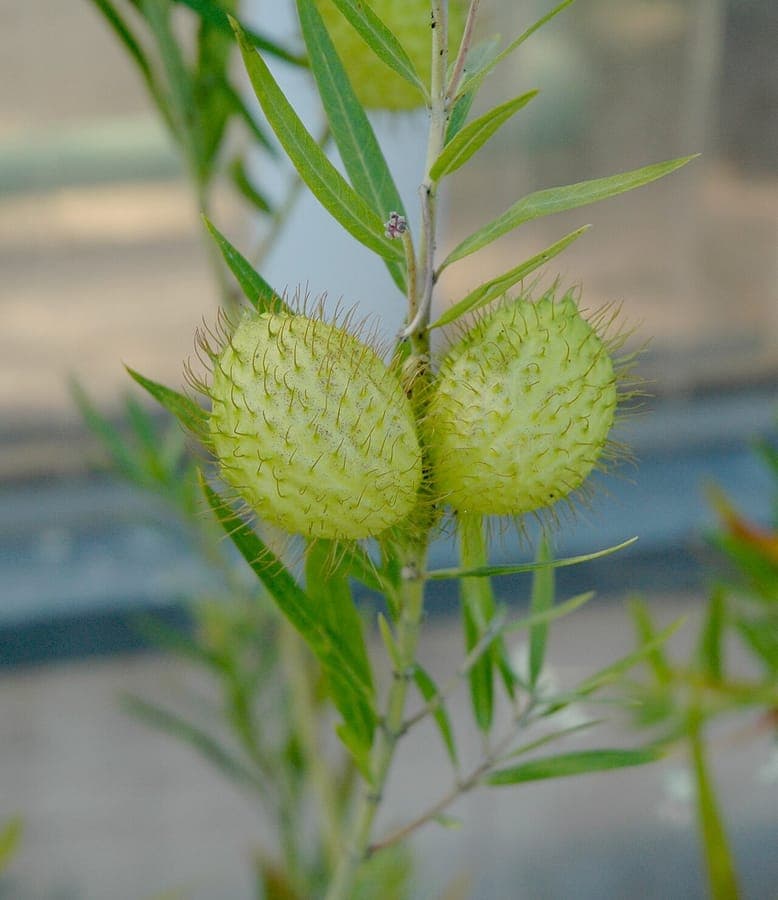
User:Carstor / CC BY-SA 3.0, via Wikimedia Commons
Gomphocarpus fruticosus: complete guide
Gomphocarpus fruticosus
¿Quieres ver Gomphocarpus fruticosus: complete guide en tu jardín?
1 minuto, sin tarjeta de crédito
Overview
Gomphocarpus fruticosus, commonly known as swan plant or milkweed, is a striking ornamental shrub native to Africa. This plant is renowned for its extraordinary seed pods that resemble delicate balloons floating on thin stems. Originating from southern Africa and the Arabian Peninsula, this distinctive species has now found its way into gardens across temperate regions worldwide.
The swan plant is truly an eye-catcher and perfect for gardeners seeking something beyond conventional flowering shrubs. It is relatively easy to maintain and grows at a satisfying pace, making it suitable for both experienced and novice gardeners.
Appearance and Bloom
Gomphocarpus fruticosus grows as a compact, bushy shrub with slender, upright branches. The plant typically reaches 1 to 2 meters in height, depending on growing conditions. The narrow, lanceolate leaves are green and provide an elegant fine-textured backdrop.
The flowers appear from June through August and are small and white, sometimes with subtle pink undertones. They grow in clusters and while not particularly showy, the real magic lies in what follows. After flowering, the characteristic seed pods develop: inflated, papery, white structures that resemble small lanterns or hot air balloons.
These seed pods can reach up to 2.5 centimeters in length and significantly enhance the plant's ornamental value. They hang gracefully on thin stems, creating an airy, summery atmosphere in any garden.
Ideal Location
Position Gomphocarpus fruticosus in a sunny spot in your garden. The plant thrives best in locations receiving at least 6 to 8 hours of direct sunlight daily. In shadier conditions, growth slows considerably and seed pod development becomes less impressive.
The plant is reasonably wind-resistant due to its compact growth habit, though strong winds may affect how gracefully the seed pods display.
Soil Requirements
Swam plant is not fussy about soil composition but grows best in well-draining substrate. Heavy clay soil is not ideal as it can cause waterlogging. Amend your garden soil generously with sand or gravel for improved drainage.
This plant thrives even in poor soil. This means you need not add much fertilizer, making the swan plant pleasantly low-maintenance. A slightly acidic to neutral pH range of 6.0 to 7.5 is suitable.
Watering
During the first year after planting, Gomphocarpus fruticosus requires regular watering, especially during dry periods. Keep the soil consistently moist but not waterlogged. Once well-established (after 1 to 2 years), the plant becomes considerably more drought-tolerant and less dependent on frequent watering.
During the growing seasons of spring and summer, water more frequently. In autumn and winter, you can significantly reduce watering. During rainy periods, supplemental watering is usually unnecessary.
Diseño gratis
¿Quieres ver Gomphocarpus fruticosus: complete guide en tu jardín? Crea un diseño gratis ahora.
Pruning
Pruning is not strictly necessary, but you can lightly cut back the plant in early spring to maintain a more compact form. Remove about one-third of the new growth. This encourages branching and creates a fuller silhouette.
Remove dead or damaged branches throughout the year. Since the plant's seed pods are beautiful, prune conservatively to avoid removing these stunning structures.
Maintenance Calendar
Spring (March-April): Adjust watering levels and apply moderate fertilizer. Summer (June-August): Peak flowering and seed pod formation periods require sufficient water. Autumn (September-October): Gradually reduce watering. Winter (November-February): Dormant season with minimal maintenance needs.
Winter Hardiness
Gomphocarpus fruticosus is not winter-hardy in cold climates. In temperate regions, it survives outdoors only in warmest locations. In most areas, grow the plant in containers and bring them indoors for overwintering.
When potted indoors, keep plants in cool, bright spaces at temperatures around 10-12 degrees Celsius. Avoid temperatures below 5 degrees. If you wish to keep plants outdoors, protect them thoroughly against frost using burlap or plant cloths.
Cut Flowers and Decoration
The seed pods are perfect for dried arrangements. Harvest them just before they reach maximum size and hang them upside down to dry in a cool, dark location. They retain their form for months and make beautiful additions to dried flower and branch arrangements.
Propagation
Sow seeds in spring (March-May) in seed compost or propagation medium. Seeds germinate well in warmth (around 20 degrees Celsius) with adequate light. Protect seedlings from direct sun until they are stronger. You can also take cuttings from young growing tips during summer.
Where to Find Gomphocarpus fruticosus
Find swan plant at specialized garden centers and plant nurseries. Many retailers stock this popular plant. For more unusual varieties, consult online specialty plant nurseries.
Conclusion
Gomphocarpus fruticosus brings a touch of exotic African charm to your garden. With its unique seed pods and undemanding nature, it is a perfect choice for those seeking something different. Provide sun, good drainage, and moderate water, and your plant will reward you for years with its delicate, floating beauty.
¿Quieres ver Gomphocarpus fruticosus: complete guide en tu jardín? Crea un diseño gratis ahora.
Sube una foto, elige un estilo y obtén un diseño fotorrealista con lista de plantas en menos de un minuto.
Más de 10.000 jardines diseñados
Sin tarjeta de crédito


Plantas similares
Asclepias speciosa: complete guide
Asclepias speciosa
Showy milkweed: striking pink-white flowers, fragrant blooms. Essential monarch butterfly host plant.
Plumeria obtusa: complete guide
Plumeria obtusa
Discover the Singapore graveyard flower: an exotic evergreen with mesmerizing white blooms and exquisite fragrance. Expert cultivation, care, and maintenance tips.
Wrightia arborea: complete guide
Wrightia arborea
Wrightia arborea, known as doodhi, is an elegant tree from South Asia with delicate white flowers. Discover how to cultivate this exotic plant.